
Tulika Ladsariya
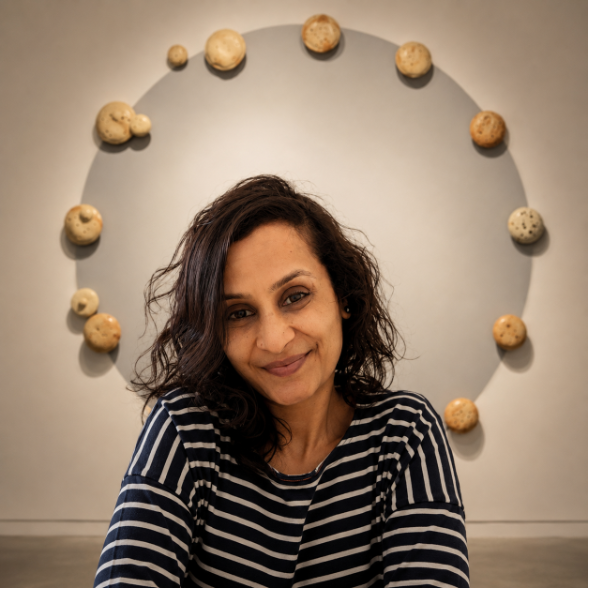
Tulika Ladsariya is an interdisciplinary artist who works with ceramics, painting, botany and mixed-media installation to explore memory, belonging, and layered identities. Her tactile and socially engaged creative practice is informed by her experiences from growing up in Mumbai and as a first generation immigrant artist and mother in Chicago, with her work engaging with questions of invisibilized labor, migration, and caregiving through the lens of ecology and by blending nature and art.
Ladsariya is a qualified Chartered Accountant and pivoted to the art world and self-driven practice after working in the finance world in Mumbai. Since then her studio practice has been supplemented by institutional exhibitions, community and public art projects, teaching in Chicago Public Schools through CAPE (Chicago Arts Partnerships in Education) and residency programs including those at the Hyde Park Art Center, BOLT, Threewalls and Ragdale.
Currently, Ladsariya’s work is being showcased as part of the Ukrainian Institute of Modern Art’s exhibition Home Grown Vol.III (July 11-Sept 6, 2026) featuring her work with risographs and the enmeshment of human and plant ecology.
In this installment of SAI’s Community Conversations, intern Shireen Amna Waraich speaks with Ladsariya about her artistic journey, passion for ecology, and the way her practice weaves together personal memory, material heritage, and the shared experiences of belonging
Tell me a little bit about your background. What are some moments from your childhood that stand out in your memory as early interactions with art, a passion for ecology, or other interests that manifest in your work today?
I grew up in Mumbai as the younger daughter in a family centered around finance, accounting, and practical careers. Academic success was always encouraged, and after watching my older sister become a Chartered Accountant, I followed a similar path. I worked in wealth management at a multinational bank for several years before eventually finding my way to the arts.
Looking back, though, the seeds of my artistic practice were planted much earlier. I grew up on the southern tip of Mumbai, where the Arabian Sea was part of my everyday life. I spent countless evenings walking along the waterfront to watch the sunset, collecting rocks, shells, and other small treasures, filling sketchbooks with drawings, and paying close attention to the natural world around me. Those quiet rituals taught me to observe, gather, and find meaning in ordinary materials.
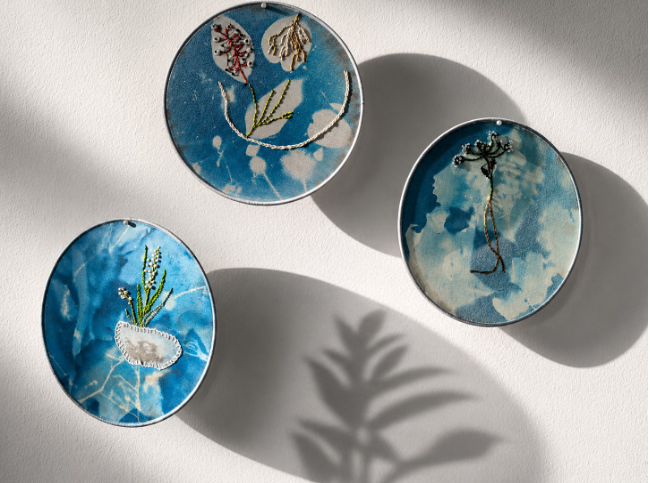
My mother gave up her dream of becoming a doctor to become a homemaker and encouraged her daughters to pursue independent careers. Ironically, after moving to the United States and becoming a mother myself, I came to see nurturance as a form of world-building. Today my practice embraces skills she cherished — embroidery, cooking, propagation, and caregiving. My interest in ecology and plants has become a way of rooting myself in the place I now call home and exploring belonging through the living world.
You formalized your art training at institutions like the Chelsea College of Art & Design after working in the finance world and coming from a family of accountants. What was it like to pivot towards art and did entering the art community from a non-traditional path present any hurdles in establishing yourself as an artist and your network?
My path into the arts was certainly non-traditional. I took a one-year sabbatical from my finance career to study at Chelsea College of Art & Design, where I immersed myself in making work for the first time. Although the experience was transformative, I returned without an established network or a clear pathway into the art world.
After Chelsea, I got a job at an art auction house in Mumbai, which became an unexpected bridge between my finance background and my artistic practice. I also got a small studio space, had access to materials, and had a strong commitment to developing my ideas. Around the same time, I invited a gallerist to visit my studio after nearly a year of independent work. That visit led to a group exhibition, which was followed by a solo exhibition the following year. Those early opportunities resulted in press coverage and recognition, including being named one of Elle India's "30 Under 30" artists to watch.
That experience taught me that there is no single route into the art world. Relationships, persistence, and the quality of the work can create opportunities in unexpected ways.
Ironically, the greater challenge came after I moved to Chicago. I arrived without a network, formal credentials in the U.S., or institutional connections, and had to rebuild from the ground up. That experience has shaped how I think about community, mentorship, and creating more accessible pathways for artists who come from unconventional backgrounds.
You have worked extensively with students through Chicago Public Schools and other educational initiatives. What drew you to teaching, and what has working with young people contributed to your own artistic practice?
I never really considered myself a teacher. At heart, I'm a studio artist—I could happily spend all my time making things with my hands, reading, experimenting, and following ideas wherever they lead. Teaching wasn't something I initially sought out.
That changed after I became a mother. Watching my daughter and her friends make art in my studio made me appreciate the incredible curiosity children bring to the creative process. Some days they crave structure and guidance; other days they instinctively teach one another, inventing their own rules about what art can be. Witnessing that made me realize I did have something I wanted to share—not technical skills as much as ways of thinking. I'm interested in introducing open-ended ideas about world-building, collaboration, and how abstract thoughts can take shape through materials and making.
That curiosity led me to work with Chicago Public Schools, CAPE, and other educational initiatives. Right now, I don't see teaching as a full-time path for myself, as caregiving and my studio practice remain my priorities. Instead, I enjoy developing individual projects and workshops that create spaces for playful exploration, collaboration, and questions rather than predetermined outcomes.
Working with young people continually feeds my own practice. Their observations are often surprisingly insightful, and they remind me to stay open, experimental, and attentive. They have challenged the way I think about storytelling, collective making, perfectionism and our relationship with the natural world, reinforcing my belief that learning is most meaningful when it moves in both directions.
You consistently move between making art and creating spaces for dialogue, participation, and collective storytelling. Having been on the board of the Chicago Public Art Group and a member of the SpaceShift Collective, you’ve collaboratively worked on many public art projects and community engaged projects like Aao Mil Baithen and Shamiana. You have also previously talked about how ceramics allowed you to move your work directly into community spaces and conversations. Why is it vital for you to take art out of traditional galleries and into the public or commercial spaces like Devon Avenue? How have these projects shaped your understanding of public space, community and belonging?
For me, community-engaged projects aren't separate from my studio practice- they're an extension of it. While institutions are important spaces for contemplation, they can also feel inaccessible or intimidating to many people. I'm interested in creating work that meets people in safe, in-between spaces, whether that's on a neighborhood street, in a community garden, or along a commercial corridor like Devon Avenue.
As an immigrant, I've always been interested in how we create a sense of belonging in “third” places that become home-like. Devon Avenue is one of those places where culture is lived every day- through food, language, commerce, and everyday interactions. Projects with the SpaceShift Collective invited people to gather, share stories, and participate rather than simply observe. Those experiences reinforced my belief that art can act as a social connector, creating conversations between people who might not otherwise meet.
I'm less interested in social practice as a genre than I am in creating rituals of gathering and care. Whether it's sharing a meal, making something together, exchanging stories, or simply sitting alongside one another, these gestures become the artwork as much as any object that remains. I'm increasingly interested in art as something that doesn't just represent community but actively builds it/ holds it.
These public projects have taught me that belonging isn't a fixed condition—it's something we create together through repeated acts of care, generosity, and participation. I hope the work offers people not only something to look at, but a space in which they feel seen, welcomed, and connected to one another.
You’ve also emphasized the importance of building community rather than simply building networks. What communities have sustained you as an artist in Chicago?
One of the things that has fundamentally sustained me as an artist is the communities I've been fortunate to be part of. When I first moved to Chicago, my husband was attending school in Hyde Park, and I found my way to Hyde Park Art Center. I immediately felt a sense of belonging there. It was a place where professional exhibitions, artist studios, and education existed under one roof, making it feel both aspirational and welcoming. I went on to have a studio there for two years, and that's where I really began building my community—not simply my network.
From there, one relationship led to another. I was part of the BOLT residency at Chicago Artists Coalition, participated in programs with Threewalls, joined the SpaceShift Collective, and became part of Praxis, an artist collective that continues to be an important source of dialogue and support. I've also found community through groups of artist mothers, educators, and, more recently, through the alumni networks of the Ragdale Foundation and the Center Program.
What all of these communities have in common is that they aren't transactional. They are as much about advancing careers as much as they are about showing up for one another through studio visits, conversations, collaborations, and shared experiences. As someone who arrived in Chicago without an established art-world network, these communities also shaped the kind of artist I wanted to become. They continue to sustain both my practice and my sense of belonging in this city.
Labor is a central throughline in your work, but its focus has shifted from the visible labor of others to the “invisible labor” of the home. Can you talk about that evolution? In works like Invisible Labor, where the figures are anonymous and partially obscured or within your general painting style that follows the principles of figurative abstraction, why was it important for the laboring body to be anonymized?
Labor has always been central to my work, but over time my understanding of it has changed. My earlier paintings were inspired by the streets of Mumbai and focused on the visible labor that shapes a city — construction workers, street vendors, domestic workers, and people carrying impossible loads. I was interested in the dignity, endurance, and physicality of their work, but I intentionally kept the figures anonymous. They weren't portraits of specific individuals; they stood for the countless people whose labor makes our lives possible yet often goes unseen or unacknowledged. By obscuring faces and simplifying forms, I wanted viewers to see the universality of labor rather than the identity of any one worker.
After moving to the United States, becoming a mother, and establishing a home, my attention shifted. I began to realize that some of the most essential forms of labor weren't taking place in public at all. They happened in kitchens, gardens, laundry rooms, and around dining tables. They were repetitive acts of caregiving—raising a child, preparing meals, tending plants, maintaining relationships, creating rituals, and holding a household together. This work is no less demanding, yet it is rarely measured, compensated, or celebrated.
Looking back, I don't see these as two separate bodies of work but as part of the same inquiry. I've always been interested in the systems that sustain life and the people whose work remains invisible within those systems. The focus has simply moved from the public sphere to the domestic one. Today, I think of caregiving as a form of labor with profound social and ecological value. By bringing it into my work, I'm asking viewers to reconsider what kinds of work we choose to see, honor, and remember.
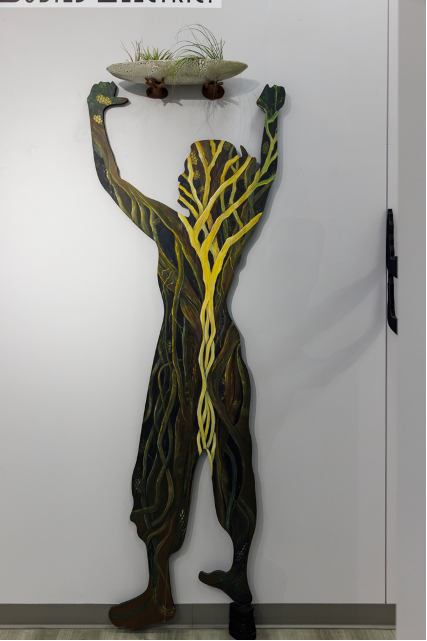
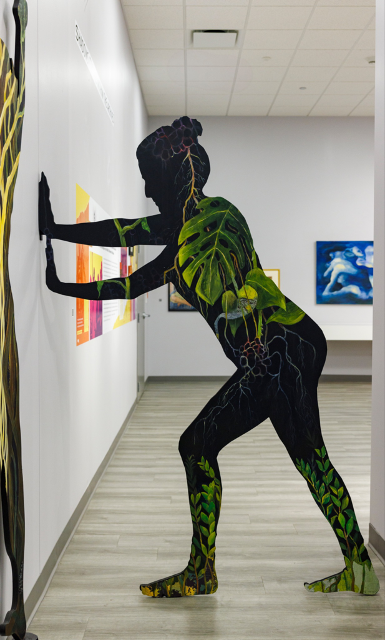
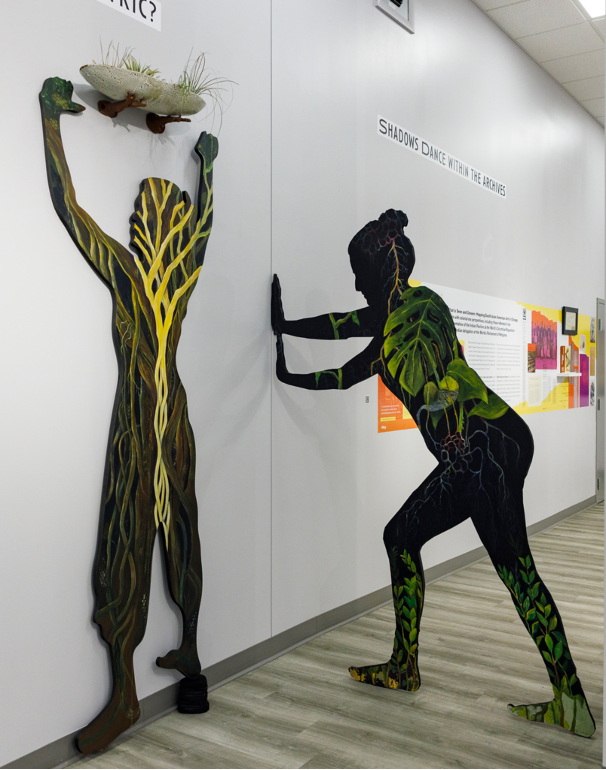
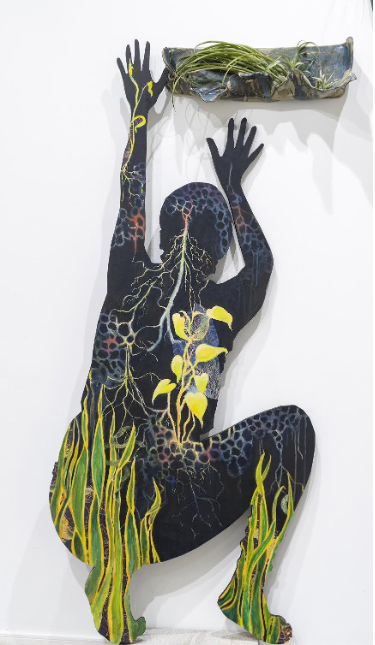
In your installation The Mother Tree for Not a Soft Thing you used silhouettes of your own body and your work often elevates everyday acts of care that are rarely documented or celebrated. Why and how did you decide to use your literal body to make the labor of caregiving visible? Do you see this as politically important?[1] [2]
The Mother Treeemerged from thinking about the body not as an isolated individual but as a living ecosystem. I used silhouettes of my own body because it was the most honest place to begin. As a mother, immigrant, and caregiver, my own body has become the site through which I experience care, vulnerability, resilience, and transformation. Rather than making a self-portrait, I wanted the body to become a universal vessel—one that viewers could enter and recognize inthemselves[3] .
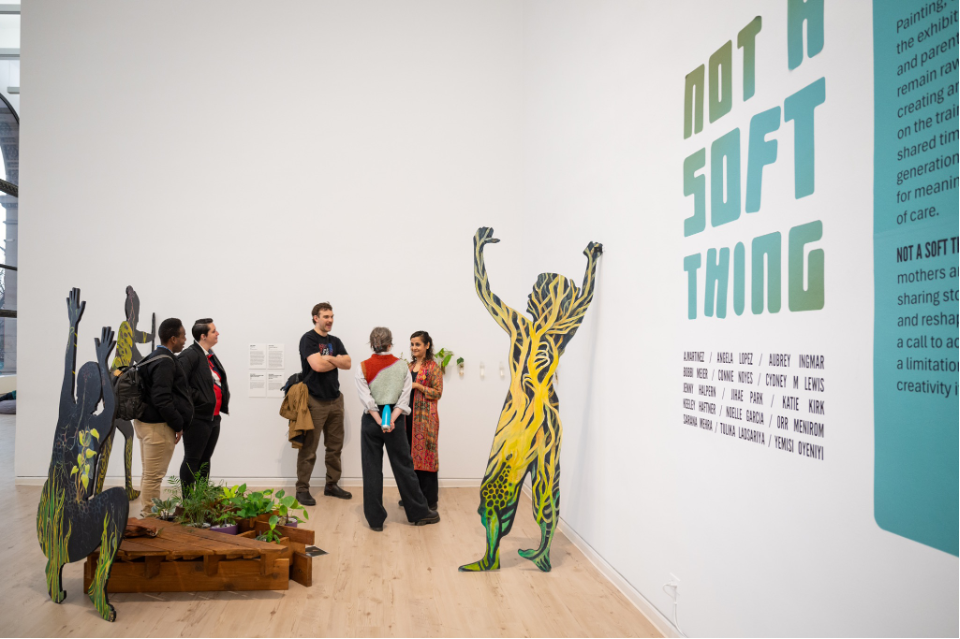
The figures are intertwined with roots, mycelial networks, and plants because I see caregiving as an ecological act. Like a forest, it is sustained through invisible systems of support. Much of this labor—raising children, tending plants, cooking, nurturing relationships, caring for aging parents or communities—is repetitive, embodied work that is often overlooked because it takes place in domestic spaces. Yet it is the labor that allows everything else to exist.
In The Mother Tree, the gestures of reaching, kneeling, and tending are intentionally monumental. I wanted these everyday acts to occupy the scale and presence that history has traditionally reserved for heroes, monuments, or acts of conquest. In that sense, I do see the work as political—not because it offers a direct critique, but because it asks us to reconsider what kinds of labor, bodies, and relationships deserve to be visible.
Ultimately, the installation invites viewers to imagine care not as something soft or secondary, but as an active, resilient force that binds communities together and connects us to the more-than-human world.
In your work, you’ve moved from viewing the immigrant experience as a state of “loss” to an acceptance of living in a “liminal space.” A lot of your work also examines the impact of defining a space and by extension what or who falls in or outside of it. How has your art helped you navigate the feeling of being “neither here, nor there”? How did motherhood change your relationship to migration and belonging?
When I first moved to the United States, I understood migration through the lens of loss. I had left behind my family, my language, familiar rhythms, and the city that had shaped me. My early work reflected that rupture, exploring what it meant to leave one place without yet belonging to another. I often thought of identity as something divided—as if I had to choose between "here" and "there."
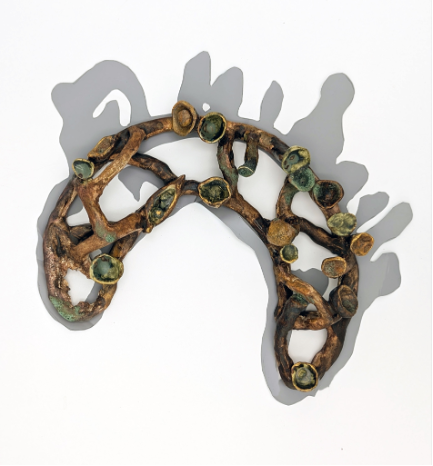
Over time, my perspective shifted. Rather than trying to resolve that tension, I began to embrace what I think of as a liminal space—a place where multiple identities, histories, and ways of belonging can coexist. I'm interested in thresholds and boundaries, not just geographical ones, but the invisible lines that determine who belongs, who is welcomed, and who remains outside.
Motherhood transformed that understanding. Before becoming a parent, I was searching for where I belonged. After having my daughter, the question became:How do we create belonging?Home was no longer simply a place I missed; it became something I was actively building through everyday rituals of care—food, gardening, storytelling, language, and community. I realized that belonging is less about geography than about relationships.
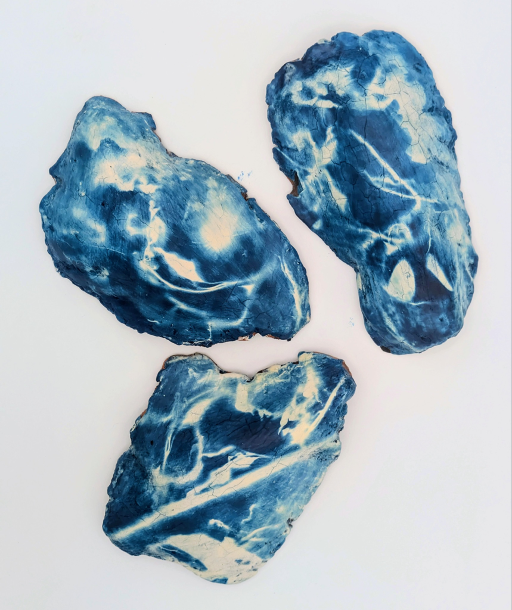
That shift also deepened my connection to ecology. Plants adapt to new environments without abandoning where they came from. Their roots remember one place while their branches grow toward another. I began to see my own immigrant experience reflected in those living systems.
Today, my work no longer tries to resolve the feeling of being "neither here nor there." Instead, it embraces liminality as a space of creativity, resilience, and possibility—a place where belonging is not inherited or found, but continually cultivated through care, connection, and our relationships with both people and the more-than-human world.
Maps appear throughout your work, but they rarely function as objective documents. Instead they become records of migration, memory, conflict, and connection as borders shift from being rigid political lines to what you call ‘layered abstract spaces. What interests you about maps as storytelling devices? Similarly, how do you attempt to define/redefine or dismantle boundaries in your work? Has the way you approached these questions changed throughout your immigrant experience ?
I've always been fascinated by maps because they present themselves as objective, yet they are deeply subjective. Every map reflects a particular way of seeing the world—what is included, what is omitted, who has the power to draw boundaries, and whose stories become invisible. In my work, I'm less interested in maps as tools of navigation than as records of memory, migration, care, and ecological relationships.
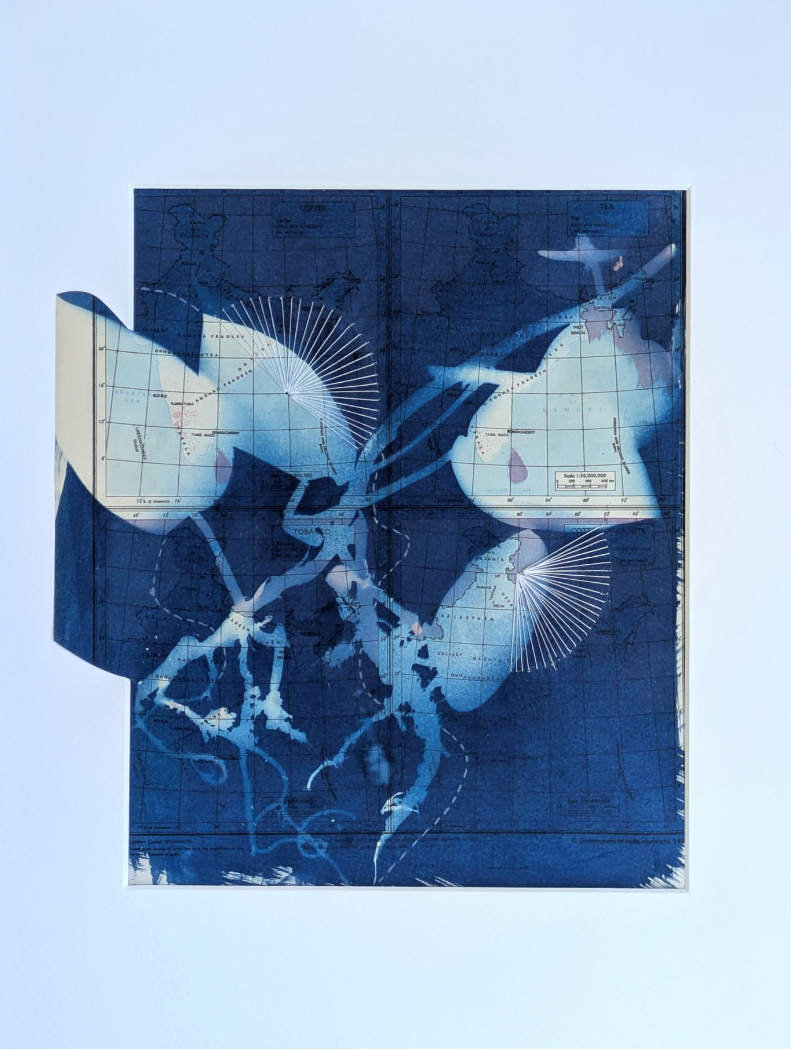
Rather than depicting fixed borders, I create layered landscapes where roots, rivers, fungal networks, stitched lines, and human pathways overlap. These become emotional and ecological maps that acknowledge movement rather than permanence. They ask us to consider that boundaries are rarely absolute; they are negotiated, porous, and constantly reshaped through lived experience.
My own immigrant journey has profoundly influenced this way of thinking. When I first moved to the United States, I understood borders primarily as geopolitical realities—lines that determined where I could live, work, and belong. Over time, those external boundaries became internal questions. I became more interested in the invisible maps we carry within us: memories of home, inherited traditions, relationships, languages, and acts of care that travel with us across continents.
Increasingly, my work attempts to dissolve the distinction between human and more-than-human worlds. Plant roots ignore national borders, fungal networks connect across invisible distances, and seeds migrate without passports. Nature continually reminds us that connection is often more fundamental than division. Through these layered, abstract cartographies, I'm interested in imagining new ways of belonging—not rooted in ownership or territory, but in reciprocity, interdependence, and care.
You have said that many of your works are attempts to create kinship with other immigrants and to incorporate narratives that escape the dominant culture. What conversations have emerged when immigrant audiences encounter your work?
One of the most rewarding aspects of exhibiting my work is seeing how quickly it becomes a catalyst for conversation. Immigrant audiences often don't begin by talking about the artwork itself—they begin by sharing their own stories. A ceramic roti might remind someone of their grandmother's kitchen, embroidered plants and propagation carts evoke memories of a garden left behind, or a familiar spice, stitch, or ritual becomes a starting point for conversations about home, language, and belonging.
Those exchanges have taught me that nostalgia isn't simply about longing for a place. It's also about carrying fragments of culture into new contexts and finding ways to keep them alive. While my work often begins with my own experiences as an immigrant, I hope it creates enough openness for others to locate themselves within it.
What moves me most is when people from very different backgrounds recognize something of themselves in the work. Although the materials and references may be rooted in my Indian upbringing, the questions they raise—about memory, care, displacement, family, and connection—are deeply human. Those conversations remind me that art doesn't have to provide answers; sometimes its greatest role is to create the conditions for people to listen to one another and feel a little less alone.
During the pandemic, you collaborated with your daughter and your mother on to make composite projects of your mother’s crochet, your daughter’s drawing and your own painting. What did creating art across three generations and across borders teach you about memory, inheritance, and family legacy?
The pandemic was a time of profound isolation, especially as an immigrant with family on the other side of the world. Collaborating with my mother in Mumbai and my daughter in Chicago became a way of collapsing that distance through making. The work brought together three generations of women using three different visual languages—my mother's crochet, my paintings, and my daughter's drawings and sewing. Rather than creating a seamless collaboration, I wanted each voice to remain distinct, allowing the works to become conversations across age, geography, and lived experience.
The project also changed the way I think about inheritance. We don't inherit only objects or traditions—we inherit gestures, ways of caring, ways of making, and ways of seeing the world. My mother's work reflects decades of patience, precision, and technical mastery. My own practice is more fluid, intuitive, and experimental, while my daughter's contributions are wonderfully uninhibited. Watching her create, I could already see her absorbing both of our approaches, striving for her grandmother's precision while embracing my sense of play. It made me realize that family legacy is constantly being reshaped rather than simply passed down.
Looking back, I see these works as an archive of relationships. They reaffirmed my belief that making is an act of care—one that can bridge distance, preserve memory, and create new forms of connection across generations and borders.
Your artistic style has been developed by working in many media, such as photography, painting, ceramics, installation, cyanotype, live botany materials and more recently with fabric and sewing. What has each medium taught you and how do you approach learning a new medium while trying to maintain a thread that ties your body of work together?
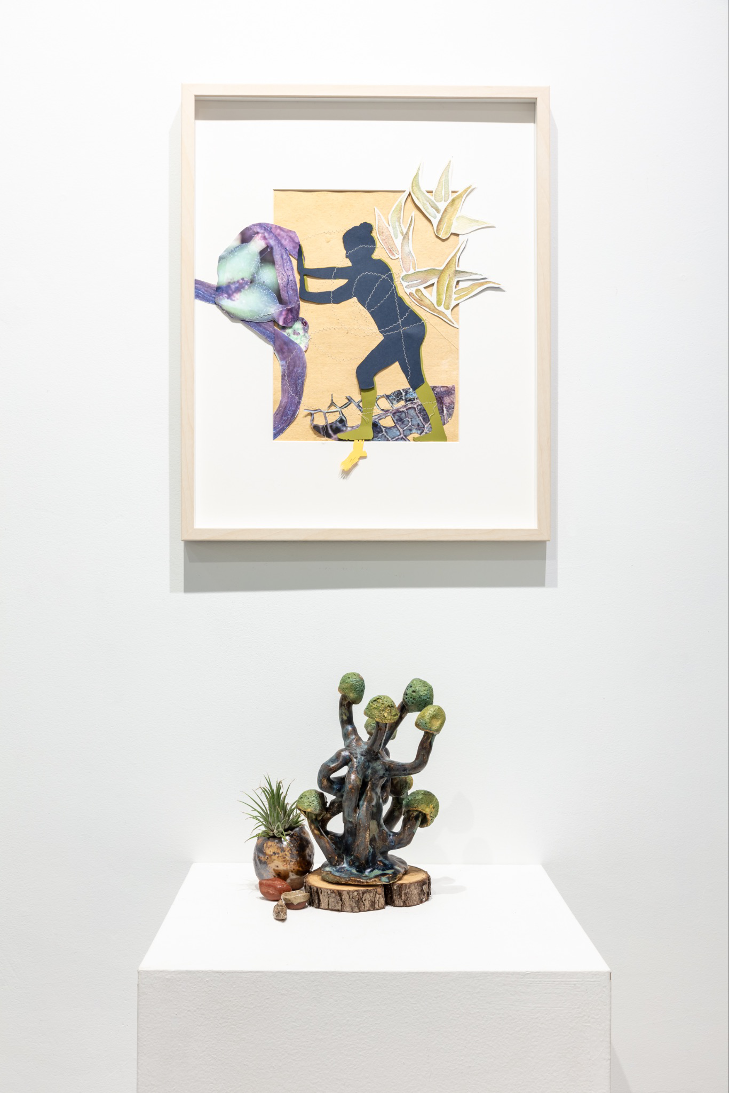
I've never thought of medium as the starting point of my work. For me, the question always comes first, and then I ask what material is best suited to express it. Each medium offers its own vocabulary, and learning a new one has less to do with mastering a technique than with discovering a new way of thinking.
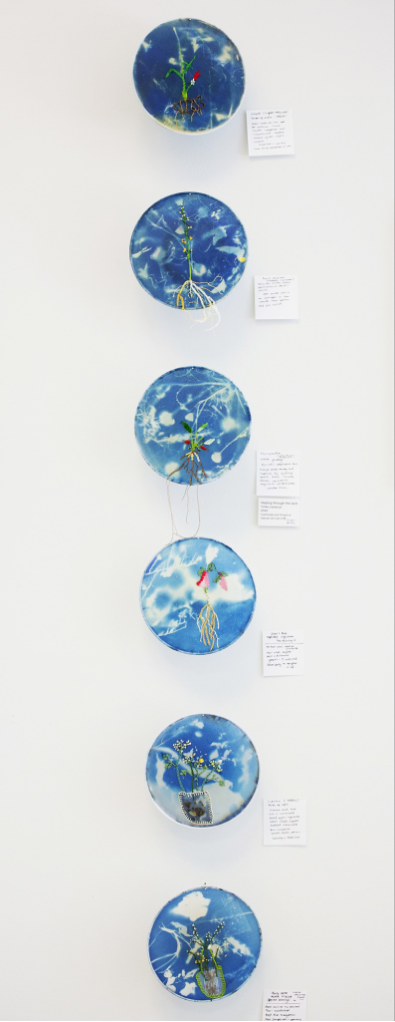
Painting taught me how to build metaphor through image, gesture, and abstraction. Ceramics fundamentally changed my practice because clay introduced me to touch, collaboration, and the possibility of creating work that people could gather around rather than simply look at. Cyanotype taught me to surrender a degree of control and to collaborate with sunlight, water, and time. Sewing and textiles have connected me to traditions of domestic labor, repair, and intergenerational knowledge, while working with living plants has shifted my understanding of art as something that grows, changes, and requires ongoing care rather than remaining static.
Increasingly, I think of my practice itself as a form of collage. I'm not interested in mastering a single medium so much as allowing different materials, processes, and histories to coexist. Bringing together clay, fabric, paint, botanical matter, found objects, and printmaking creates an evolving visual language that mirrors the way I experience the world. It also reflects the realities of motherhood, where time rarely unfolds in long uninterrupted stretches. Ideas are developed in fragments, revisited over weeks or months, and woven together from moments of making. That process of assembling disparate pieces into something whole has become central to both my art and my life.
Although the materials continue to evolve, I don't see my practice as changing directions. The thread that connects everything is an enduring curiosity about care, ecology, belonging, and our relationship with the more-than-human world. Whether I'm working with clay, fabric, paint, or living plants, I'm asking the same questions through different materials.
I also think it's important to remain a beginner. Learning a new medium keeps me humble and curious. It prevents me from relying on habit or style and instead invites experimentation, risk, and play. Each material teaches me something new, but together they form one continuous conversation rather than separate bodies of work.
Throughout your work, nature is more than a subject — it often becomes a way of thinking about migration, memory, caregiving, and community. What draws you to the use of botany, earth materials and the natural world as a framework for understanding human experience and to pair the static with the living in your installations?
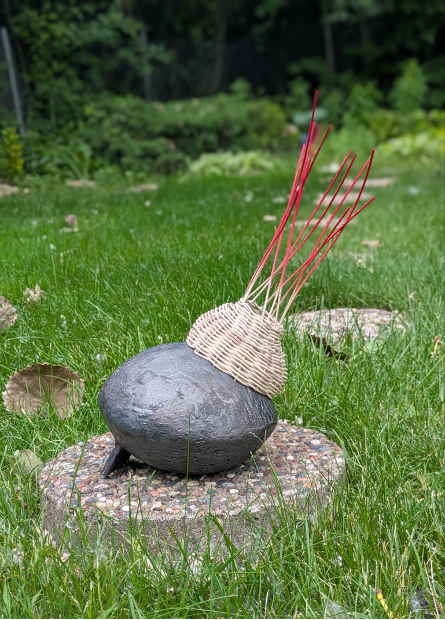
Nature is much more than subject matter in my work—it's a way of understanding how we exist in relationship to one another. The more I study plants and ecological systems, the more I realize that many of the questions I'm asking about migration, caregiving, memory, and belonging already exist within the natural world.
Plants don't recognize the boundaries that humans create. Seeds travel, roots intertwine beneath the soil, fungi communicate through underground networks, and ecosystems depend on reciprocity rather than independence. These systems have become powerful metaphors for the immigrant experience. Like plants, we adapt to new environments while carrying the memory of where we came from, establishing new roots without entirely severing the old ones.
I'm also interested in how natural materials challenge our ideas of permanence. While ceramics, thread, and prints endure, living plants continue to grow, wilt, and regenerate. Pairing the static with the living allows my installations to exist in a constant state of becoming. They remind us that care is not a single act but an ongoing relationship that requires attention, patience, and an acceptance of change.
That's why I return to earth materials like clay, natural dyes, fibers, and botanical processes. Rather than imposing ideas onto these materials, I'm interested in collaborating with them—allowing sunlight, water, gravity, seasons, and growth to become co-authors of the work.
Ultimately, ecology has become both the subject and the structure of my practice. It offers a language for imagining a world built on interdependence rather than individualism, reminding us that resilience emerges through connection, reciprocity, and care.
You have been vocal about the “othering” of immigrant artists and parents in residency programs and artist spaces such as the Hyde Park Art Center, BOLT, Threewalls and most recently at Ragdale. What changes would you like to see in Chicago’s institutional landscape to make it more accessible for primary caregivers and first-generation creatives?
I want to be careful to distinguish between the institutions themselves and the systems they operate within. Organizations like Hyde Park Art Center, Chicago Artists Coalition, Threewalls, and Ragdale have been incredibly important to my growth as an artist. They offered community, mentorship, and opportunities to experiment without requiring the financial or time commitment of pursuing an MFA. They helped me find my footing in Chicago and have been instrumental in shaping my practice.
The challenge lies in the structural barriers that many first-generation immigrants face before they can even access these opportunities. Many grants, residencies, and fellowships require applicants to be U.S. citizens or permanent residents. As someone who had spent a decade in the U.S. waiting in the employment-based green card queue while on a dependent visa, I've often found myself excluded from opportunities despite living, working, and contributing to the cultural fabric of this city. It's a subtle form of othering—not overt discrimination, but a system that unintentionally overlooks artists whose immigration status falls outside those categories.
I would love to see institutions advocate for more inclusive eligibility criteria wherever possible and to recognize immigration status as another dimension of equity and access. I would also like to see greater support for primary caregivers through childcare stipends, flexible residency models, and family-friendly programming. Artists don't create in isolation. By acknowledging caregiving responsibilities and the realities of immigrant lives, institutions can make space for a much broader range of voices and experiences. Those changes wouldn't lower the bar—they would simply allow more artists to reach it.
You have built a vibrant career using an independent studio model and working with online platforms as well as exhibiting in major institutional spaces. Are you currently represented by a gallery, or do you have plans to seek one in the future?
I think there are many ways to build a sustainable artistic practice today, and I've been fortunate to experience several of them. My career has grown through a combination of institutional exhibitions, public art, community-engaged projects, teaching, residencies, independent studio practice, and online platforms. That diversity has given me a great deal of creative freedom and allowed me to pursue projects that don't necessarily fit within a conventional commercial gallery model.
I have worked with commercial galleries in both India and the USA, and those experiences have been valuable. At this stage in my career, however, I'm looking for a relationship that extends beyond simply selling work to collectors. I'm interested in a gallery that is invested in building an artist's practice over time—one that understands and supports the interdisciplinary nature of my work, which moves between painting, ceramics, textiles, installation, and community-engaged practice. For me, the ideal partnership is rooted in shared values, thoughtful dialogue, and a long-term commitment to artistic growth.
I also think artists today have more agency than ever before. We can cultivate direct relationships with collectors, institutions, and communities while maintaining a public presence through digital platforms. That independence has taught me to think entrepreneurially and to embrace multiple ways of sustaining a practice.
If the right gallery relationship develops, I would welcome it as another form of collaboration rather than as the defining measure of success. My goal has never been to fit into a single model of the art world, but to build a practice that remains intellectually curious, socially engaged, and responsive to the questions I care about.
Is there a story, experience, or reflection that we have not discussed that you would like to share with our readers?
One experience that continues to shape my practice is working as a teaching artist through CAPE (Chicago Arts Partnerships in Education) and the Artists in Public Schools program, alongside my community work with SpaceShift Collective. Together, these experiences have shown me that art isn't simply something we make in studios or exhibit in galleries—it is a way of thinking, learning, and building relationships. Whether collaborating with classroom teachers to integrate art into science, ecology, and social studies, or creating participatory projects with immigrant communities on Devon Avenue, I've come to see creativity as a tool for inquiry, connection, and belonging.
These collaborations have reaffirmed my belief that artists have an important role beyond the art world. The most meaningful work often emerges when people make something together—sharing stories, knowledge, and care. Those experiences continue to remind me that art can create spaces where communities don't just encounter one another, but genuinely see, listen to, and learn from each other.