
Unspoken Influence: The Legacy of Indus Gallery
September 19, 2026 - March 13 , 2027
South Asia Institute
1925 S Michigan Ave, Chicago, IL 60616
Thursday — Saturday, 11:00am — 6:00pm
"I decided to come back to Pakistan and be helpful to those who are more gifted and more talented than me, and to create a climate of work where I could be a sort of guidance and help." — Ali Imam
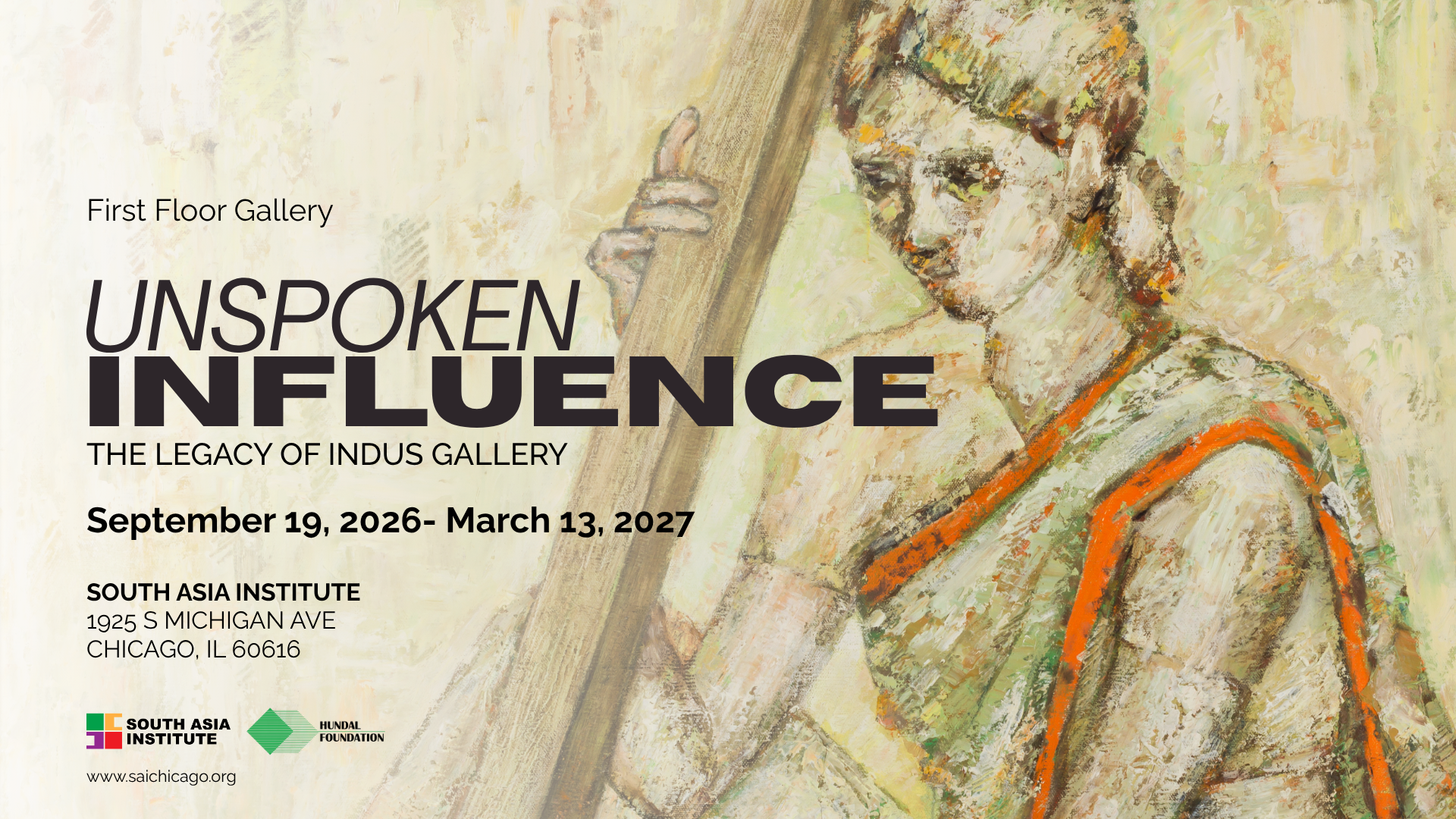
South Asia Institute is pleased to announce its new exhibition Unspoken Influence: The Legacy of Indus Gallery. Featuring works from 30 artists in the Hundal Collection, it presents a series of relationships cultivated in Pakistan’s first art gallery in the decades following independence. Peer mentorship drove Indus Gallery’s impact and lasting legacy, demonstrating art’s significance as a social practice.
“Ali Imam was one of the six main figures of the Lahore Art Circle collective whose art ushered in the first decade of Pakistan’s independence. This moment in a newly independent nation offered creatives the opportunity to decide what art should be in their time. The struggle to define contradictions between grand histories and anecdotal experiences left a vacuum that only consistent social engagement with fellow South Asian artists and thinkers could fill. ” – Sydney Barofsky, Exhibitions Manager and Curator of Collections
This exhibition features works by Anna Molka Ahmed, Waseem Ahmed, Zahoor ul Akhlaq, Shakir Ali, Rashid Arshed, Abdur Rahman Chughtai, Colin David, Ayesha Durrani, Ismail Gulgee, Zarina Hashmi, Maqbool Fida (MF) Husain, Iqbal Hussain, Ali Imam, Wahab Jaffer, Aisha Khalid, Hajra Mansoor, Bashir Mirza, Jamil Naqsh, Syed Sadequain Ahmed Naqvi, Ahmed Parvez, Nusra Latif Qureshi, Mansoor Rahi, Rashid Rana, Talha Rathore, Nahid Raza, Syed Haider Raza, Anwar Jalal Shemza, Tassaduq Sohail, Francis Newton Souza, and Muhammed Zeeshan.
Unspoken Influence: The Legacy of Indus Gallery is supported by the Hundal Foundation.