
Rahul Sharma
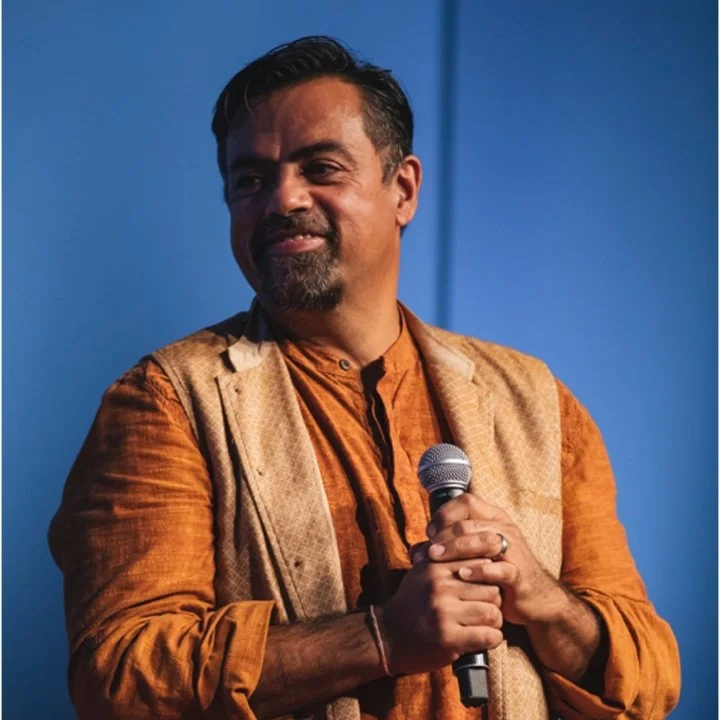
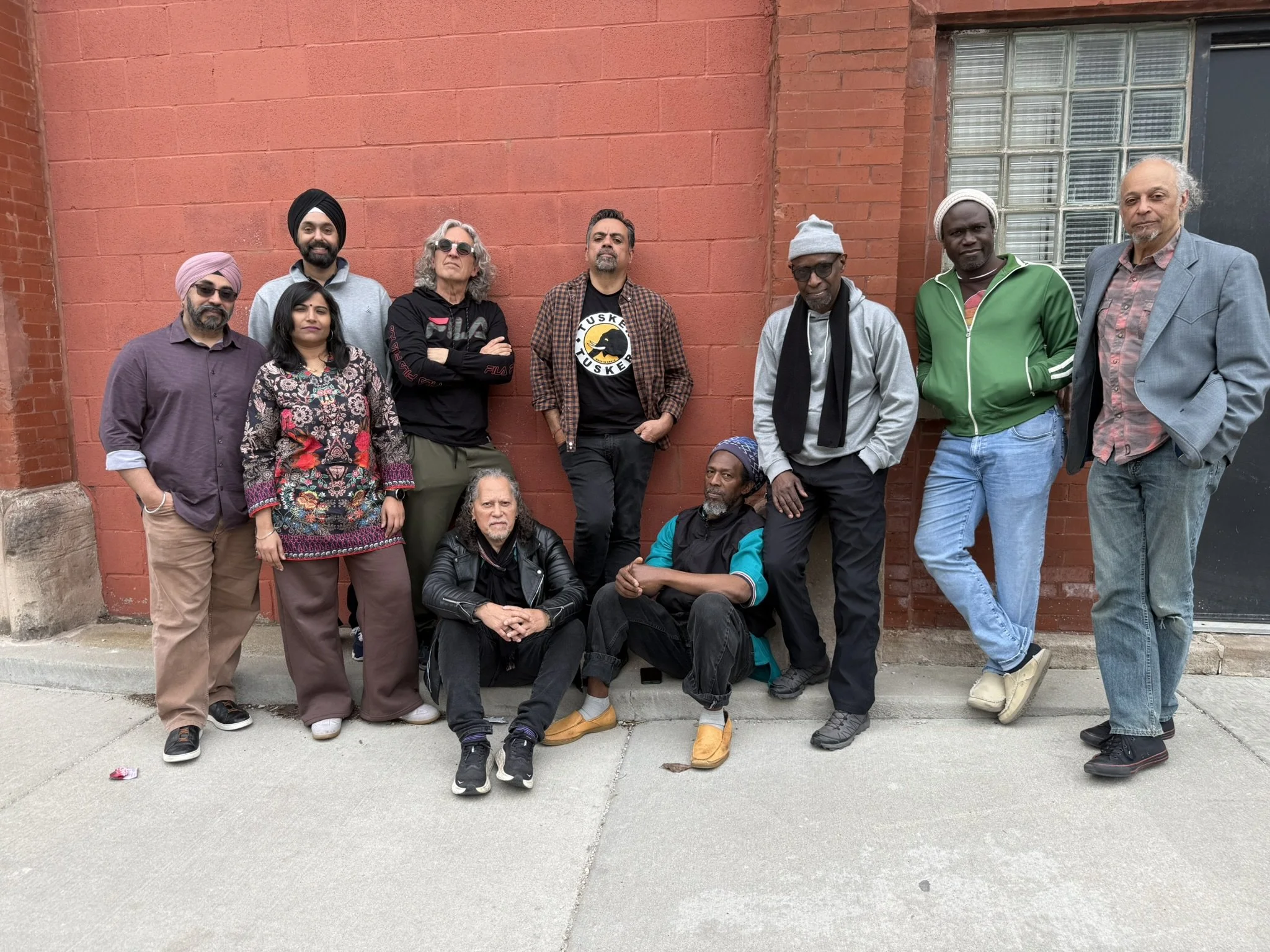
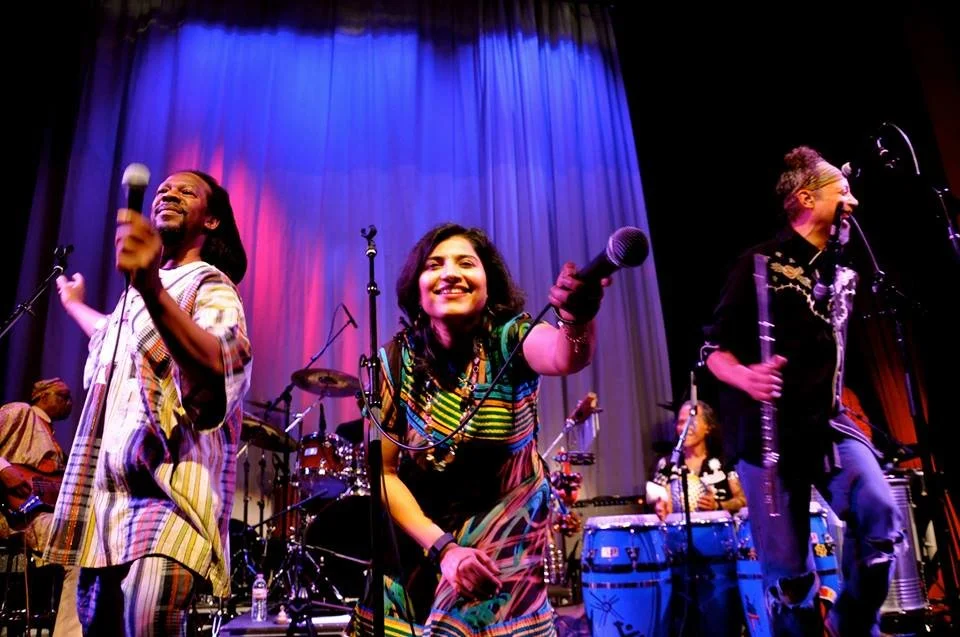
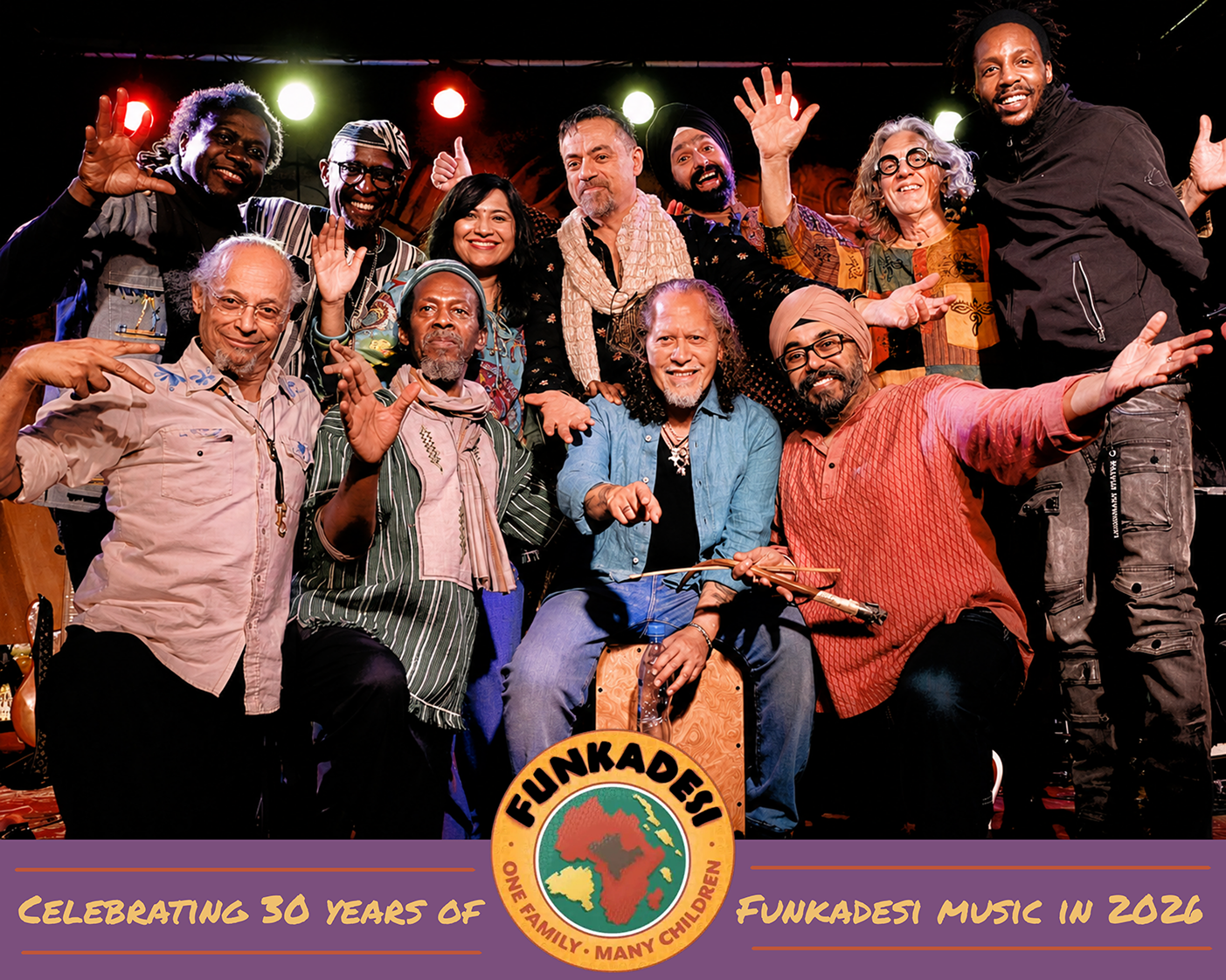
Rahul Sharma is the founder, bassist, and band leader of Funkadesi, Chicago’s legendary, six-time Chicago Music Award-winning intercultural ensemble celebrating its landmark 30th anniversary in 2026. The ten-member band is renowned for its bold, signature “bhangra-reggae-bolly-funk” sound with Funkadesi’s music a rich tapestry blending South Asian classical, folk, and film melodies with West African, Caribbean, Reggae, Latin, and American Funk and Soul. Performing in over a half-dozen languages — including Hindi, Punjabi, Spanish, and Jamaican patois — the group reflects its roots-affirming philosophy illustrated in Funkadesi’s motto: “One family, many children. . . . Insisting we all belong.” Funkadesi’s ensemble features includes vocalists Valroy Dawkins and Pavithra Anand, percussionists Carlos Cornier, Kwame Steve Cobb, and Rich Conti; keyboardist Inder Paul Singh, flute/saxophone player Lloyd Brodnax King; guitarist Gerald “Toto” Alfred; and tabla player Maninderpal Singh.
Sharma is also an award-winning clinical psychologist, community facilitator, and educator working at the intersection of multicultural psychology, restorative justice, and world music. Engaging with questions of cultural reclamation, collective healing, and shared leadership, Sharma leads Experiential Drumming and Dialogue workshops alongside Funkadesi members. His collaborative creative practice is informed by his experiences growing up as a person of color in the Midwest with ancestral roots back to Kenya and India.
He received the Joyce Foundation Award as co-composer for “Quantum Englewood” — a public arts initiative that united hundreds of musicians across jazz, blues, and classical Indian traditions — and has been recognized as a Mental Health Champion for his efforts in community-based healing. Most recently, he was the recipient of the American Psychological Association’s 100 Psychologists Rising Award.
As Funkadesi gears up for their highly anticipated fourth studio album — their first in over fifteen years — in this installment of SAI’s Community Conversations, intern Shireen Amna Waraich speaks with Rahul Sharma about his musical journey, his philosophy of reciprocal leadership and cultural engagement, and the way his clinical and artistic practices weave together personal memory, cultural heritage, and the radical insistence that we all belong.
You have navigated a long and impressive career, with Funkadesi going strong and coming up on its 30th year anniversary this year. What were your earliest interactions with music or some memories that shaped your musical foundation?
There were a couple different iterations before I ever considered myself musical. My family had my siblings and I take violin lessons, but none of us really took to it. I felt no connection; it was simply a pain. Around the 5th grade, when we were allowed to take band instruments home, I brought along the cornet. I would sit and home and play the theme song from Rocky — or at least I thought I was playing the theme, my family very defiantly told me I never got the melody right.
After a couple of starts and stops that didn’t lead to anything, the big shift happened in the seventh grade. After a new kid moved into our town and started talking about forming a band, I kept pestering my parents for a guitar. For them it kind of came out of left field, but they indulged me and one day I came home to an electric guitar in my room. I was immediately enamoured and plugged it in and though I didn’t get lessons for the next couple of months, I became fascinated with the mathematics of the instrument — the harmonics, the dots on the fretboard, and the resonance of the strings.
I’m a very mathematical oriented thinker and was completely fascinated with all of that before I started taking lessons. Once I started taking lessons, I was frustrated by the initial learning curve on just a physical level of getting one note sound out of guitar and it took a while for me to get the basics.
But once I did, music became my therapy. I would’ve never called it that at the time but growing up in Southwest Michigan in the late 70s and 80s, coming into my formative years as someone of Indian heritage whose parents were born and raised in Kenya, trying to find my place wasn’t always an easy thing. I’d feel a greater sense of belonging a lot of times going back to my extended family, spending time in Nairobi and really feeling the bustling nature and vibrant family culture there. But then I’d come back to the Midwest where I was a lot more subdued and quiet.
Music, then, was this infinite world — I could express myself fully and I felt like I immediately belonged without having to be invited. Though some of the first songs I learned were Day Tripper by the Beatles and the live version of Sweet Home Alabama, I ultimately gravitated towards blues and funk and got really fascinated with improvisation.
How did you transition into playing the bass?
That part was purely practical. In high school, I started a band and I met this monster guitar player in my junior year. He started to jam with us and looked at my playing and simply said “Yeah, you’re going to play bass.” I was in no position to argue with the guy since he was that good and that’s how I transitioned to the bass guitar. We didn’t play or or perform too much in high school, but I kept up with it.
I brought my bass with me to the University of Michigan. I had a really nice amp and on nice summer days when everybody else was out and about, I’d stay in the dorm, open up the windows, and just crank up my bass. I’d play for hours on end and near the tail end of my freshman year, my brother asked me to play at a house party with a bunch of people I jammed with. We didn’t rehearse; I would just turn to the band and say “This one is in C” and we’d start a groove.
The house was so packed it was a fire hazard — people had to crawl out of the windows — but that night was the thrill of my life. It was the first time I played in front of so many people and realized the power of spontaneous, unprepared connection with a crowd. It was a huge moment for me.
You’ve described your undergraduate years at the University of Michigan as a pivotal time for your cultural identity — a time where you were developing as a musician but realized you hadn't attended to your own Indian heritage. What was the impetus for you to start “watering your cultural roots” and exploring your heritage through your art?
When I first got to college, I hadn’t really come to terms with what it meant to be from a different culture or what it meant to be a brown skinned person. I intuited these things, but I never consciously thought of myself in that way.
On the first day of my freshman year, this African American student came up to me with a clipboard and asked if I would like to be a part of the minority student group. I remember my immediate, defensive reaction was: Why are you talking to me? I’m just trying to fit in. At that stage, I lacked any real analytical framework or self-knowledge about navigating life as an Indian American and as a person of color in the US. I was far from understanding the complexities of what it meant to exist as a brown person in America.
That changed after I got involved in peer education work and began to work as a facilitator and leader within the sexual assault prevention center. It was while I was working there that we formed a people of color caucus, and it was through the that dialogue, that support, and that affirmation that it really started to hit me that I hadn’t done a good job trying to water my cultural roots or come to terms with who I am and where I come from.
Those realisations coincided with a trip to Kenya in 1990 where it really hit me; my history does not begin with the United States. I was living in a culture that was perfectly fine with me losing my roots and not preserving my heritage or even thinking it was important.
So, I took it upon myself to water my roots. My cousins from India were visiting and dressed me up in a kurta pajama — which I’d never worn in public up till that point — and took me to my first classical Indian music concert featuring Ravi Shankar. My jaw hit the floor; everything sort of came together in that moment and I thought “Why don’t I use music as my vehicle for getting in touch with my cultural roots?”
The process of reclaiming my roots led me to study tabla in India for 3 months in 1992, which was also the first time I’d ever been to India. I eventually switched over to the sitar but that trip on its own was my mini world trip after I graduated from college. It was a big deal for me to travel solo, as the youngest and more ‘aloof’ kid in my family, and I went to Thailand, Taiwan, Switzerland, Germany, Spain and England but India was the biggest part of my trip by far. I went all over the country with a massive traveler’s backpack and my tabla housed in a heavy fiberglass case. Carrying that case through every city was a bit crazy, but it was my anchor.
I was already in touch with Ustaad Zakir Hussain by this point, having met him at his concert a few years back. I had to make up a reason to talk to him and said I was thinking of learning tabla, which I wasn’t considering at the time. But he’s so magnanimous, just the best of the best and gave me his home number right there and told me about the classes he offered in the Bay Area. Fast forward to my trip, when I told Zakirji I was heading to India, he invited me to his father’s school in Mumbai — the school of the great Ustad Alla Rakha. I was set up with one of his senior students and there’s a hilarious irony in my arrival: here was the “brown kid” who finally gets in touch with his cultural roots, returns to the motherland, goes to the virtuoso’s father and who does he learn the tabla from? Chris Riley — an American guy living in a Mumbai hotel. It was because I was only there for a short while and we laughed at the irony, but the training was foundational. I learned my first few gats there, which set me off on a three-month trek practicing my way across the country.
On a personal level, I also visited my ancestral village, Gondpur on a daytrip from Chandigarh, and that whole experience was bone chilling. While I was there I was handed a manuscript of my grandfather’s life story, just detailing stories about all of his travels and all the things that happened to him all written up on a typewriter. At one point, he had travelled to Haridwar to record the family lineage in the traditional scrolls. I remember looking at that document and reading the vertical, patrilineal history of nine generations recorded under our clan’s name, and right at the end was my name since I had just been born. The effect was majestic — a defining moment of belonging where the realization hit me: We are from Gondpur. I am from Gondpur.
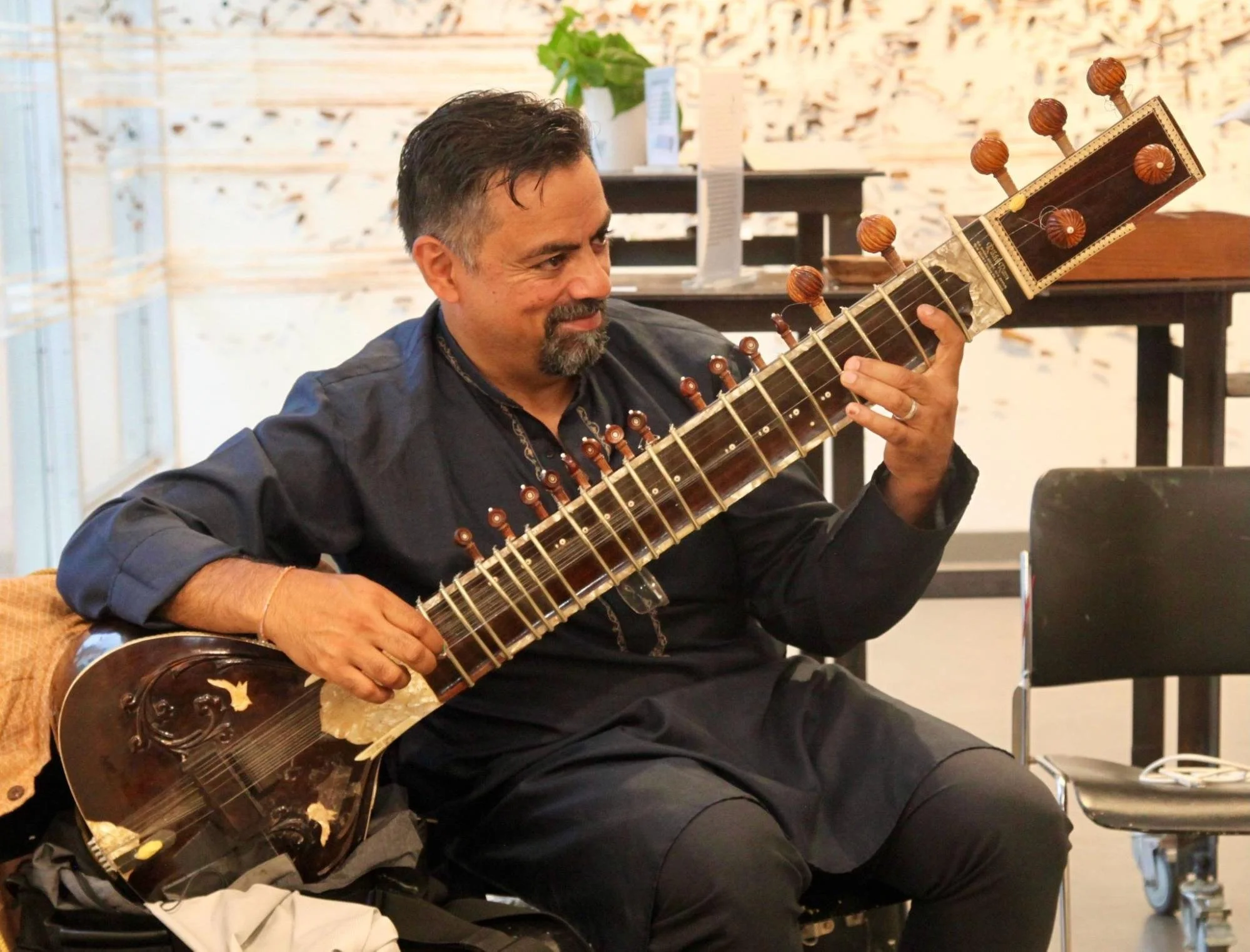
At the same time in Chandigarh, I took a few sitar lessons at the Pracheen Kala Kendra Music School. I began to dabble with the instrument there, but that interest did develop further along my musical path. Once I got back to the states and eventually shifted from the tabla to sitar.
I’m curious to hear more about your relationship with the late Ustaad Zakir Hussain, who seemed to impart a specific philosophy on you. You wrote a wonderful essay commemorating him about seeing him perform and how it was a transformative point that changed the trajectory of your journey in integrating music and identity and that you were transfixed by his lighthearted and approachable nature with the audience. How did that influence how you see the intimacy between the audience and the artist and the broader humanism of Funkadesi?
Meeting Zakirji blew me away. When you’re at his level of virtuosity, it boggles the mind. It’s kind of like watching a real life magician. To see anyone of that calibre is beyond description and he stands alone among so many talented musicians. But beyond his virtuosity, he was incredibly approachable and kind — from giving me his number after I said I was interested in learning the tabla and driving me back home from San Anselmo to Berkely. He once told me, “When you’re performing a concert, you develop such an intimacy. Why take away that intimacy when the concert’s over?” That sent a chill down my spine.
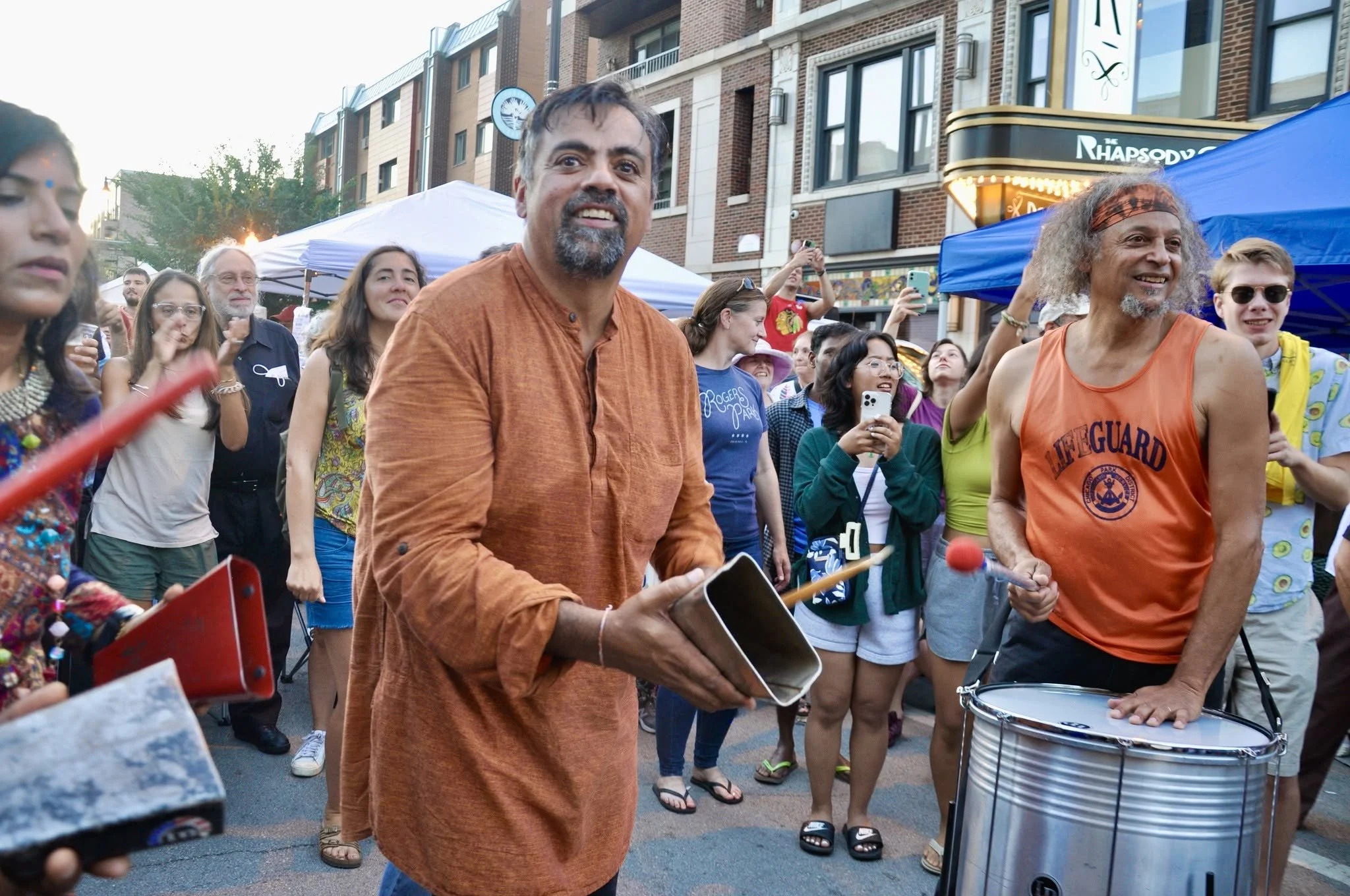
For me, virtuosity and humanism are both related. Starting Funkadesi, what was nice to me about the band is we all have our heroes. There’s always echelons and levels. Zakirji is inarguably at the top of the tier for tabla. But Carlos Antonio Cornier, our conguero, looks up to Raúl Rico and Carl Ferazzo from Santana. He got to interview one of his heroes in Santana and the guy said “You know what? I had to come to terms with the fact that I'll never be a Giovanni Hidalgo” So Carlos has his hero, but his hero had his own and had to come to terms with he'll never be at that level. There’re people that look up to us, but we also look up to other people. Having conversations about it helped us all see this whole thing as relative and on a continuum. That lesson in humanism and virtuosity is tied together and the core of Funkadesi. We’re open about our own insecurities regarding virtuosity, so we can move beyond them and get back to the joy of making music.
That lesson from Zakirji about the intimacy that music can afford carries through in our conversations about why we perform. Are we doing this to be at the top or be the best? Or are we doing this as a vehicle for us to heal and connect? That’s in part why we do a prayer circle before any show — a ritual started by our late drummer, Meshach Silas. We invoke his name at the start, sending power and love with “Ache Baba Mesha” and also greet each other with a hug every time we see one another. All of that together sets a tone and are different ingredients that work as a reminder to ourselves that we are there to affirm each other, and not just show up to a gig and make a paycheck. Members of the band also get really excited about inviting new people into the prayer circle. Everyone’s welcome. Carlo always says “This is not for us to keep, this is for us to share.”
You often talk about Funkadesi’s late drummer Meshach Silas and his profound impact on you and the group, evident in the prayer circle and this sense of sharing that turns a performance into a ritual of affirmation. In your roles as a musician, band leader, as well as a practicing psychologist, how did you develop and foster such an environment?
The foundations of a lot of that comes from my work as a facilitator before becoming a psychologist — learning the internal labor required to “hold space” and the specific work you do on yourself to set a tone for others. This sensitivity/interest was likely born from my having navigated starkly different cultural environments of the Midwest in the 70s and 80s against the vibrant family energy of Nairobi, Kenya and feeling out the vibe of each place. I often think of Maya Angelou’s philosophy and quote as a litmus test: “People will forget what you said, people might forget what you did but people will never forget how you made them feel.” That emotional impact is more defining than the color of one’s skin or the language they speak.
Fast forward to my time at the University of Michigan, I became a peer educator and ended up leading the training in subsequent years. I loved learning the subtle architecture of holding space and seeing how facilitators had their own style — through body language, gestures, or seating arrangement set up. How all of those things came together to affect one’s experience made a big impact on me.
My great first mentor, Kada Isari, the therapist at the Sexual Assault Prevention Center, modeled this beautifully. She saw countless people on a daily basis, but she always insisted on a ritual of “opening” and “closing” rounds at every staff meeting for us to share how we were doing. It wasn’t just a simple check in but a profound, meaningful gesture that recognized each of us as a complete human being before we ever got down to “business.” It was a way to “grease the line” and allow everyone to truly arrive. Her most powerful tool was her visible empathy — you could sense it in the way she would match your excitement with a sparkle in her eye or through their crinkling. It was so powerful and engaging and became my model on how you set the tone, work on yourself, empathise and the things you can do to set the tone of a place.
Learning from that, I was intentional with Funkadesi vis-à-vis the prayer circle and greeting each other with a hug. Those gestures and rituals set the tone and between them, the band, to me, became a sacred space. All of the members have been through a lot together — marriages, divorces, children, grandchildren— and losing Meshach only 9 years in. Throughout it all, we chose to get closer and use those moments as ways for us to move ahead together.
Walk me through the personal inception of the band during your grad school years. How did you find the right mix of people for Funkadesi?
By 1993, I was looking for programs in either psychology or social work, and specifically wanted to specialize in multicultural psychology. I eventually landed at the Chicago School of Professional Psychology because it was one of the few institutions at the time offering a proficiency in cultural competence and my goal was to make psychology accessible and relevant to diverse populations.
The seed for the band had been planted after I performed at a Diwali program at the University of Michigan. I called it Funkadesi and received such a rave response that I came to grad school with Funkadesi on my brain. I kept thinking I got to start this band, I got to start this band. But here’s something about being in a doctoral program in clinical psychology: you don’t have all the time in the world to go find your band, just textbooks and papers and internships and externships. So,
I struck out for a while on trying to find the band and it wasn’t till the fall of 96 that things picked up. As I applied to internships around the country, the number one thing on my mind — and this will disappoint my former psychology students out there — was where am I going to start this band? More than any concern about the best training or internship opportunity or learning trajectory, it was making Funkadesi happen. And the month after I finished up all my applications, the band fell into my lap in Chicago. The gamble was though, out of the 17 programs, I’d only applied to one in Chicago.
It was already one of my top choices but after the band came into place it became my number one pick. Luckily I got the phone call and was accepted into my internship there. It was one of the best training programs in the country, but more importantly, it was the place that made the manifestation of the band possible.
What about the city of Chicago that spoke to you? What about Chicago made you feel you could root Funkadesi here?
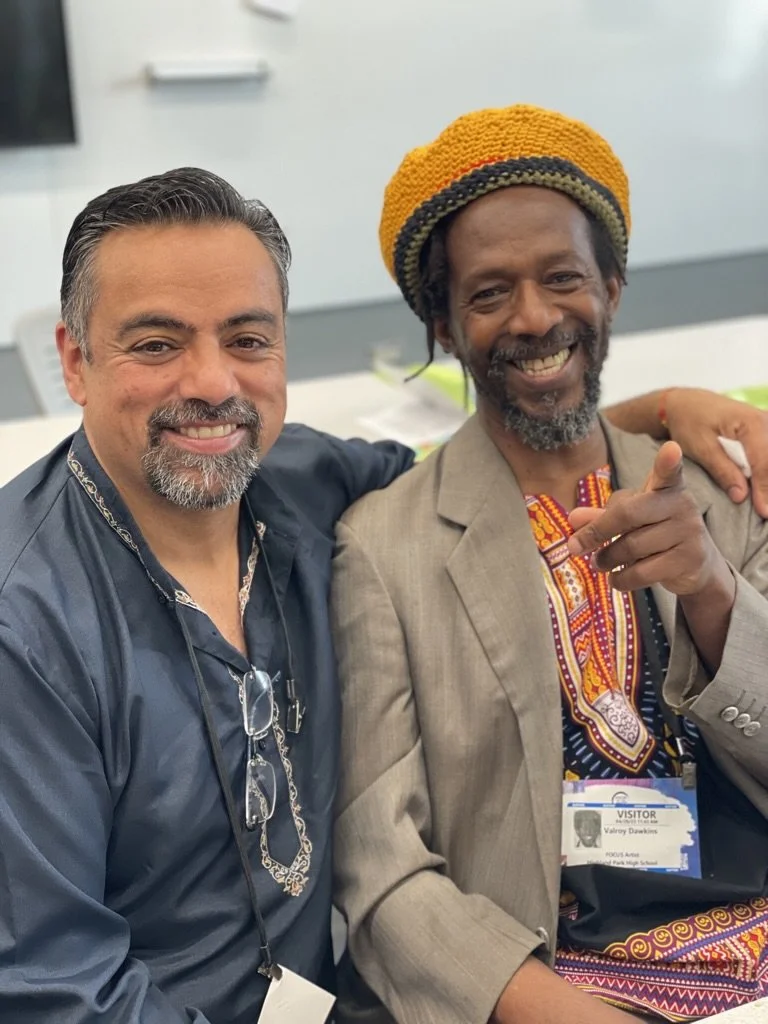
My calling card to Chicago initially materialised through the Cultural Impact Conference in 1992. I was floored by the work being done at the Intercultural Center, and that experience magnetized me to the Chicago School of Professional Psychology. Two years later, I saw this drummer playing with a band at that same conference.
There was something about him, the way he played the djembe and a drum kit simultaneously, that made me go right up to him. That was how I first met Meshach. At that point, I envisioned Funkadesi as a primarily instrumental project — a fusion of funk with Indian classical and Arabic instrumentals — but the band morphed by who came into it. I asked Meshach if he sang and he insisted that I meet a singer named Valroy, who was at the same conference. When I met Valroy we looked at each and realized we’d met before.
Two years earlier, while I was scoping out musicians for the then-theoretical band, I had approached a singer at a reggae club and asked if he knew anyone mixing Indian music with reggae. He said “No man, but that’s a good idea.: We’d exchanged numbers but I never followed through. That singer was Valroy.
This was one of many full-circle moments that happened with the band in Chicago. The city gets a bad rap for being segregated but I think the frequency and the energy of Funkadesi is a good reminder in Chicago of what happens when we lift each other up and affirm each other.
You’ve mentioned in other interviews that people often look at Chicago solely through these segregated demographics and suggested that Chicago needs the band to encourage all of these inter-cultural and cross-cultural interactions. How has the city acted as both a challenge and a muse or fuel for your work?
There’s definitely been some challenges but the challenges we face are often less about “culture” and more about the complex intersection of race and class assumptions. It’s something we’ve had to navigate and struggle with even within the band with the Indian American folks coming from more upper middle-class academic backgrounds, and socialization which created some internal friction within our diverse group.
As the band leader, in the early years I frequently felt caught in the middle, balancing these differing perspectives while being questioned on whether I was being too “conciliatory” toward one group or another. The way we navigated that internally was by being honest with each other, sometimes telling me or telling each other how the other person was coming across. There were definitely some tensions, but we decided to show up for each other and work through them. To “scratch at” at our own internal biases and ask ourselves when our own stuff was preventing us from being in a better relationship with one another. That was our internal work.
On the structural level, we do face the realities of the city; we don’t perform on the South Side nearly as much as I would like. I always love it when we do have an opportunity or create an opportunity or a relationship with a community — through a festival, pop-up a community funded thing — but I’m also on the lookout for how we can do better.
You received the Joyce Foundation Award for “Quantum Englewood,” which was a project aimed at providing arts opportunities for youth in high-risk environments. How was the experience of working with and mentoring the youth?
The project was primarily carried out by me and Ernest Dawkins, a great jazz saxophonist who had a residency in Englewood. We worked as co-composers on the project, Quantum Englewood, that was spearheaded by Old Town School of Folk Music. The community work was organised through the Old Town and the vision was to combine multiple genres of music and reach and engage hundreds of musicians. I collaborated with the likes of the Chicago Children’s Choir or Fernando Jones’ Blues Kids Summer Camp. It was a huge production and an amazing experience.
Funkadesi served as one of two house bands for the various genres we played, and we got to interact with so many of the other performing artists on stage. We did West African dance, Blues, Gospel, Irish and even an Indian-Irish kind of combination. It was great fun but more importantly, incredibly meaningful.
Endeavors like these show the core principles of Funkadesi’s music — one that spans numerous genres and revolves around a constant process of cultural exchange and learning through sessions where members constantly educate one another on their respective specialties. Can you talk more about this philosophy of internal exchange, constant learning and cultural engagement?
I remember there was one Chicago critic who thought we were a gimmick and trying to throw in these random cultures. But our mixture is a direct reflection of the collective ancestry of this band. It’s why our first full length album was called Uncut Roots and included images of our grandparents and ancestors in the liner notes. That’s why we put these genres of music together; the connections aren’t random, they’re historical. The same way Punjabi reggae fusions coming out of the UK aren’t random either. If you look into the history of desis in the Caribbean, you find more musical connections. There’s a connecting line between Punjabi and Indian folk rhythms and the Soka beats of Trinidad for example. There’s a historical confluence of cultures.
We’ve found a beautiful fluidity in these intersections. We might start a reggae groove and then, the band leader will call out rhythm that means the bass and the drums stop playing. All of a sudden, the only thing you hear is the offbeat “skank” from just the keyboards and guitar that creates so much space in the music. In that moment we flip the reggae feel into a Punjabi folk song simply by having the tabla continue through the beat, and vocals from our Indian female singer and Jamaican male singer come on top.
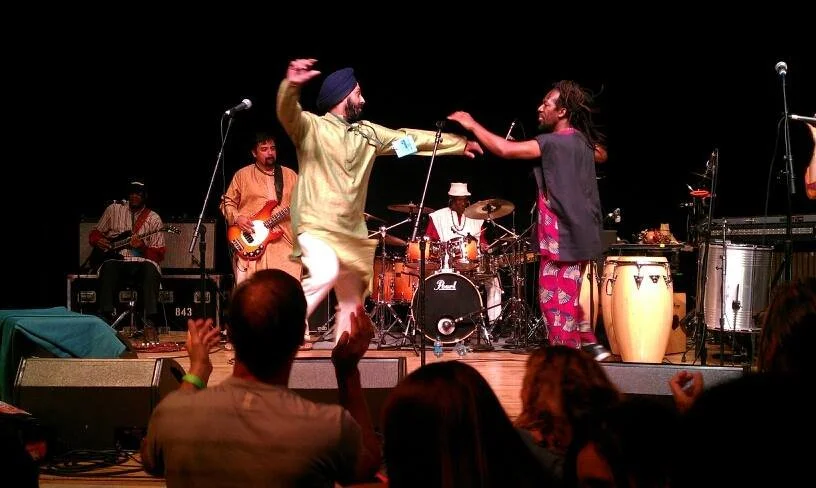
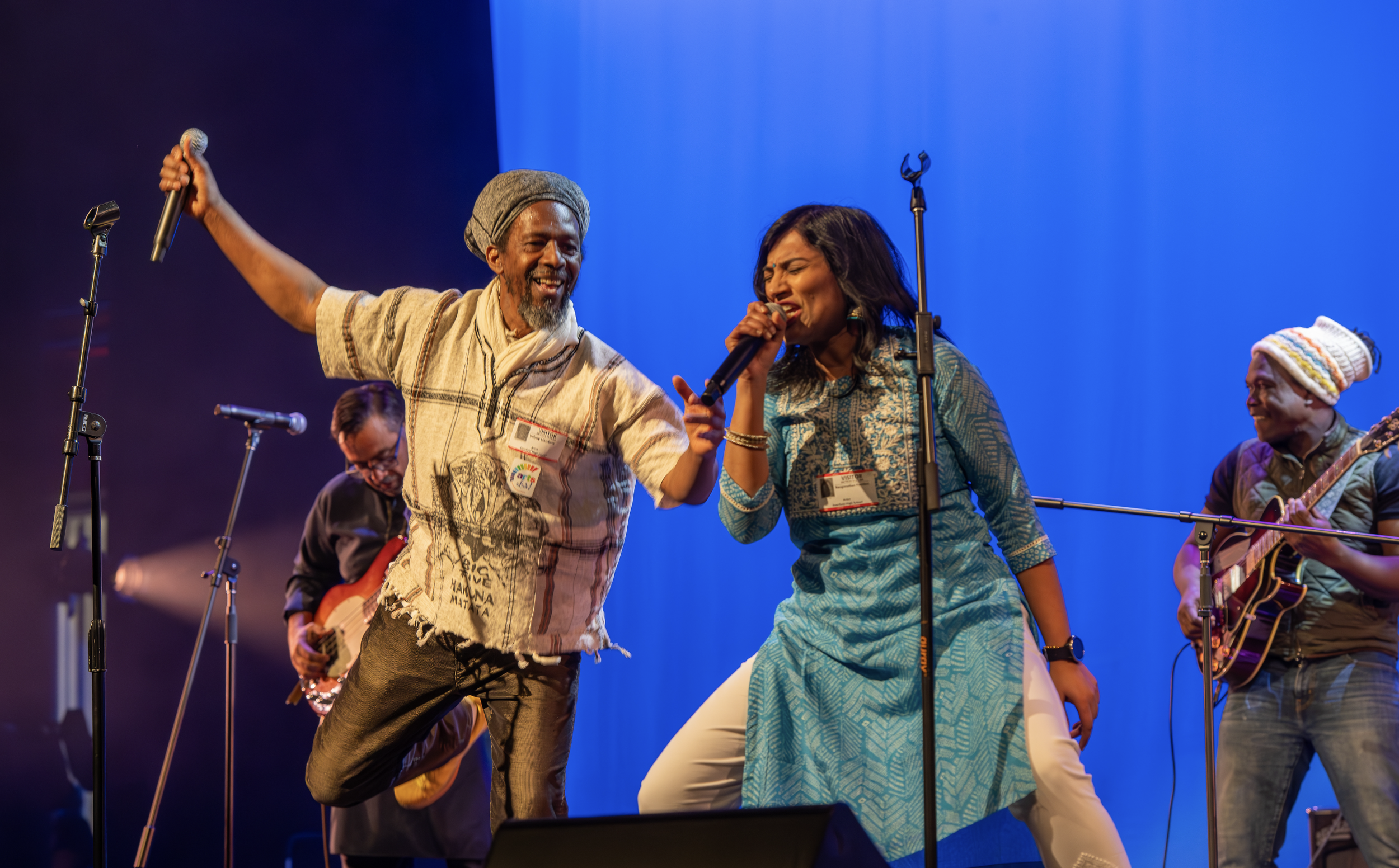
It feels especially amazing to not only be part of the fluidity but a thrill to see how the audience — and desis in particular — react to Valroy, who grew up in Jamaica but has been in Chicago the longest out of any of us, switch from English and Jamaican patois to Mast Kalandar. They get a kick out seeing this guy dance and sing and it’s a testament to the influence we have on one another.
The other part of the real “magic” of Funkadesi is accepting each other’s leadership. Our practice of reciprocal leadership means that if one person is teaching us or leading on bhangra for example (which is Maninder or Inder’s thing) then everyone else is their student. We’re listening. Regardless of our own expertise or experience we become assistants. If it’s a workshop Maninder is leading, Kwame, Carlos, Rich, Valroy and myself just say “You are the expert here. Tell us what to do.” It’s the same reciprocity if Kwame’s demonstrating a West African rhythm. We do that for each other.
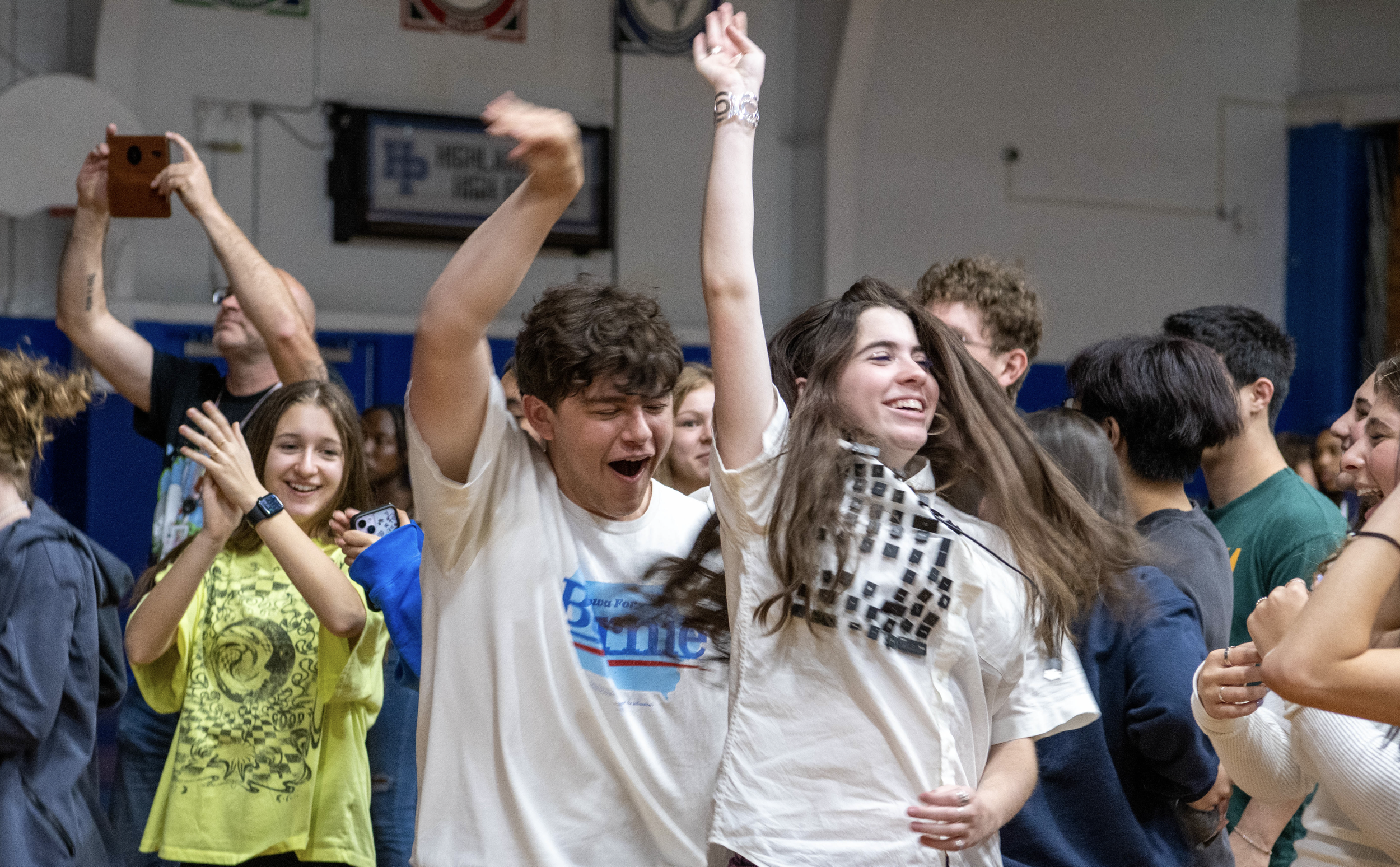
I saw the power of this philosophy most clearly and one of my proudest moments during our residency at the Latin School of Chicago. We’d done a few Diwali programs at the school in the past and our residency was similarly Diwali themed. But we did it Funkadesi style, which meant teaching different 4th grade classes Punjabi, Latin, and West African rhythms on different days of the week before bringing them all together for a performance at the end. What I’m most proud of, despite the kids completely stealing the show from Funkadesi, is how they saw these rhythms and cultural learning as being there in support of each other; an Indian rhythm can sound better with the support of a West African rhythm or a Latin rhythm and vice versa. Though it was a Diwali performance, we got invited back to play for Martin Luther King Day.
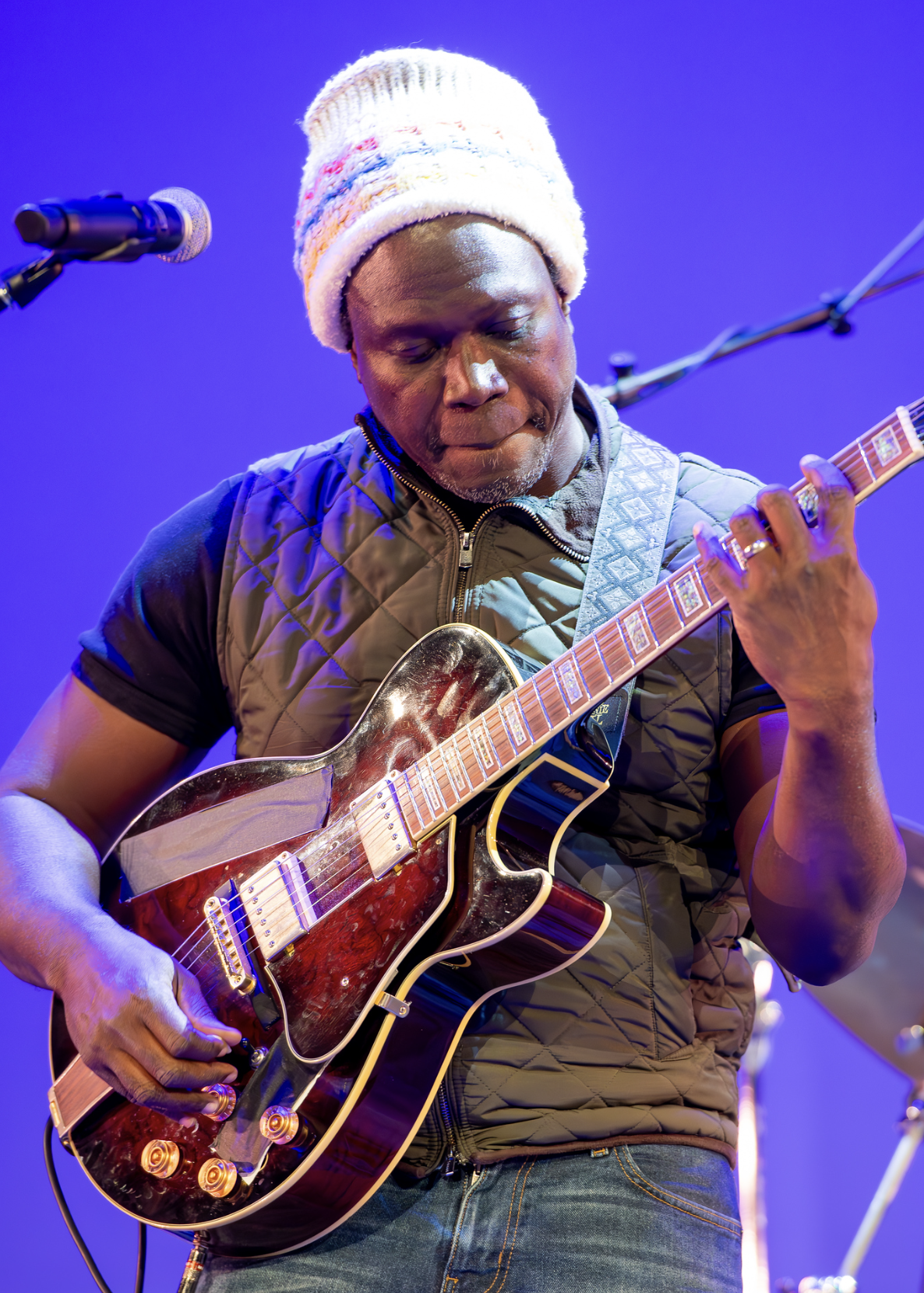
It was a full-circle moment a few years later when I got to deliver a keynote for Martin Luther King Day for the upper school students at the Latin School with Funkadesi on stage with me, and some of the fourth graders that had performed with us were now in high school. That performance, and all of Funkadesi’s work, modeled a world where cultural contexts aren’t just tolerated, but are seen as inherently valuable. It’s a lot more natural for us to learn to affirm each other’s cultural background than to fear it or deem inferior. Whether it’s your definition of culture, understanding of the world or design for living, what if we assume every heritage has a gift to offer. At our last anniversary show, our new guitarist Toto brought a bottle of rum and said a libation about the spirit of the ancestors, and we later adopted that ritual into our prayer circle. When we let our guards down and accept each other’s leadership, beautiful things can happen.
Someone in the band put it in a beautiful way, describing the pride Funkadesi feels by representing a microcosm of “what could be” not just in terms of intercultural harmony and fusion but as a vision of an alternative expansive American identity. Seeing it as simply American rather than a hyphenated identity and prodding us to rethink what we even mean by American. Yet, as these conversations are going on in the band, how did you guys navigate finding the balance between celebrating cultural differences and showing these encounters without feeling like you had to accentuate differences or overperform?
Boy, do I have stories for you. Backtracking a bit before I get into it, I often think about what it means to be in the US and doing what we do. Carlos would sometimes say “We’re an American band” or my tongue in cheek reply to questions about describing our music would be “We’re just a 21st century American garage band.”
To me, the title is kind of like a reclamation of what it means to be born in the U.S. and having undergone my own journey to realize it’s up to me to embrace my cultural roots. Growing up there was this subtle and pervasive notion that suggested you should “forget where you came from.” It wasn’t explicit but in the ethos — “why would you make a fuss about or accentuating your difference? Why can’t you just sort of blend in?” I was unconsciously performing that assimilation for a long time. There was a profound sense of shame attached to being different. It’s enough that my skin color is different but also worrying about if I opened the lunchbox and my food would smell different or that my family, or I, would wear traditional clothing in public.
I spent years trying not to "embarrass" myself by accentuating my heritage. Today, I see Funkadesi as a radical experiment in cultural identity where those same ancestries are not just tolerated, but cherished. We’ve moved from a place of hiding to a place where I can expressively wear a kurta pajama on stage as my own cultural skin.
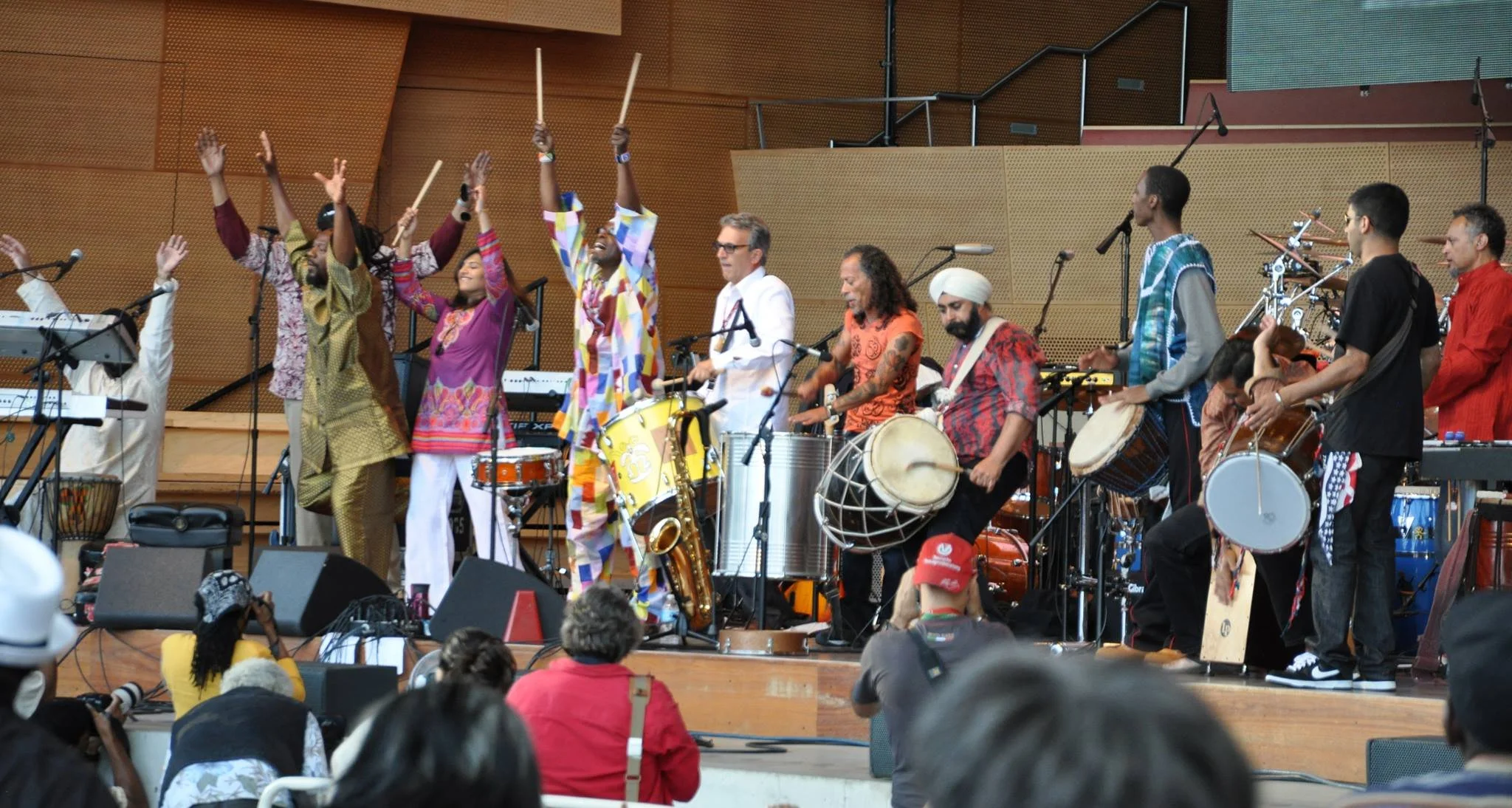
Fast-forward to now, I’m in a band where I’m happily and expressively often wearing a kurta pajama when I perform. To me, Funkadesi is an experiment in cultural identity where you can see what happens when all the aspects of who you are not only allowed or tolerated, but cherished. We see what happens when we add to the mix and we get to do this through music which is a gift. We encourage people to extend that logic too. The band is both a manifestation of and a metaphor for what can happen in our country. It’s also happening critically at a time when some forces are doubling on the idea of supremacy and exclusion.
To be Funkadesi then, we counter these struggles of privilege and power with our shared leadership approach. Everyone has a chance to lead or shine and have developed their own signatures within the band. I feel it the most when we have someone subbing out for a band member for a performance. I remember one show where we were in the middle of a reggae set, and the percussionists shared a look — a twinkle in their eyes — and suddenly launched into an unexpected Punjabi folk song. I looked over at the rest of the band because this was unexpected and not only are they not hesitating, but they’re also seeing it as their job to make that Punjabi song sound as good as possible. That’s the vibe we cultivate, bring your culture, bring the things that you know about and that are near and dear to you, and the rest of us will stand behind you and support that. Everyone lobbies for their interests or what song for us to play next and what direction to take it and nobody’s stopping that. It transforms the music from a performance of difference into a ritual of mutual affirmation.
Everyone in Funkadesi seems to have the agency to advocate for their own parts, which gives the band such a strong sense of individual identity and style. Was it always that way? How did you get to this point of where this is how you guys go about composition?
There are a couple of different ways to think about this and the process has evolved over the years. In the early years, we would get together, have a notion of what we were doing and would ask our lead singers — Radhika Chimata and more recently Pavitra Anand — to find what fit with the song. Or we’d do a reggae version of Chura Liya and Valroy would start singing some of his own lyrics, but might bring in a Gregory Isaac tune. A song might begin with a classic groove, then transform as members like Meshach or Valroy wove in their own cultural and musical influence.
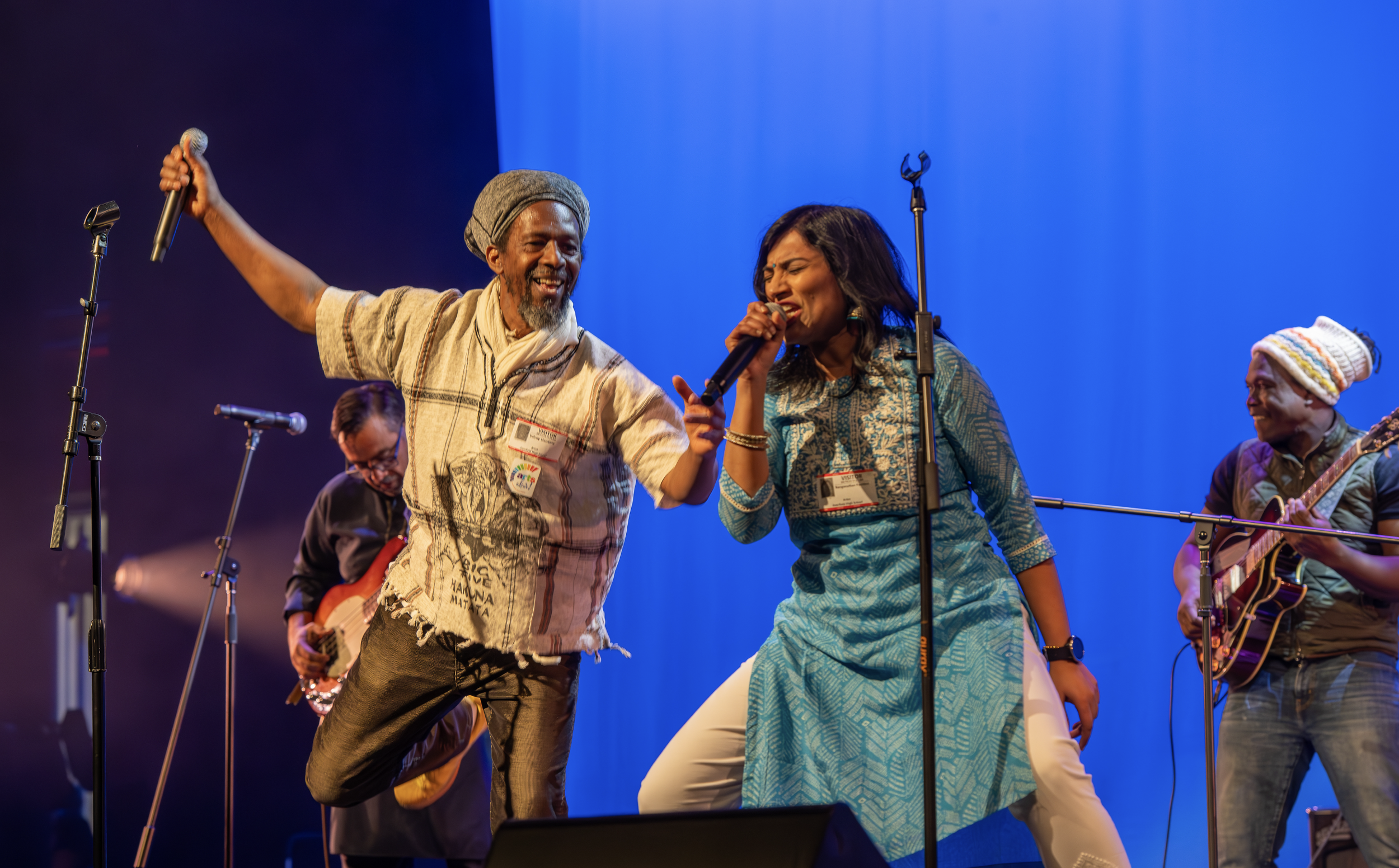
For our original pieces, some people might come up with a whole song from start to finish — Indar, our keyboardist, is quite gifted with composing, playing or sequencing the various parts. Then the band might add on lyrics in English, Hindi or Jamaican patois and we of course reinterpret how we play on live instruments.
Some of the coolest stuff happens either at a rehearsal, where we’re just jamming and seeing what ideas stick. The best one is when we’re at a show, and the two of us do something unexpected but it syncs up. When that happens, we give each other a look that says yeah, we’re going to do that from now on. We snatch that spark out of the atmosphere and just make it a permanent part of the song; just this dialogue between structure and spontaneity.
This philosophy of shared leadership also defines our professional decision-making. I remember a pivotal moment early on when we were offered an opening slot at the House of Blues for a fraction of our usual fee. Meshach was firm about our professional value, while others in the band argued for the exposure we’d get by opening for Third World, the renowned international reggae band. We couldn’t negotiate since it was a set budget and we ended up doing the gig at the Third World concert which ended up being less well attended than we’d hoped due to inconsistent marketing.
In that case in retrospect, I wished I’d listened to Meshach but as a leader, I often had to mull over these conflicting, yet equally valid, perspectives. You see whether a decision was good or bad in hindsight but in the meantime you try to hear every different perspective. The band deals with me and my style of band leading with all my imperfections over the years and I’m very appreciative of that: I’m appreciative of their emotional maturity, because you can’t have 10 people in a band with strong feelings and strong opinions. I’m very appreciative of the fact that someone is not necessarily in agreement with a certain way we’re moving forward, but they’re rolling with it. They trust that I don’t act out of ego and by being transparent and truly listening, we’ve created an environment where members can support a direction even when it doesn’t perfectly sit with them, knowing that we are all acting for the best of the collective
It’s great how that collective trust opens up such a deep space for technical and cultural exchange. You mentioned those spontaneous sparks that happen on stage — is there a specific musical style or perhaps a particular synergy between instruments or memory that stands out in your memory or the way you think about composition?
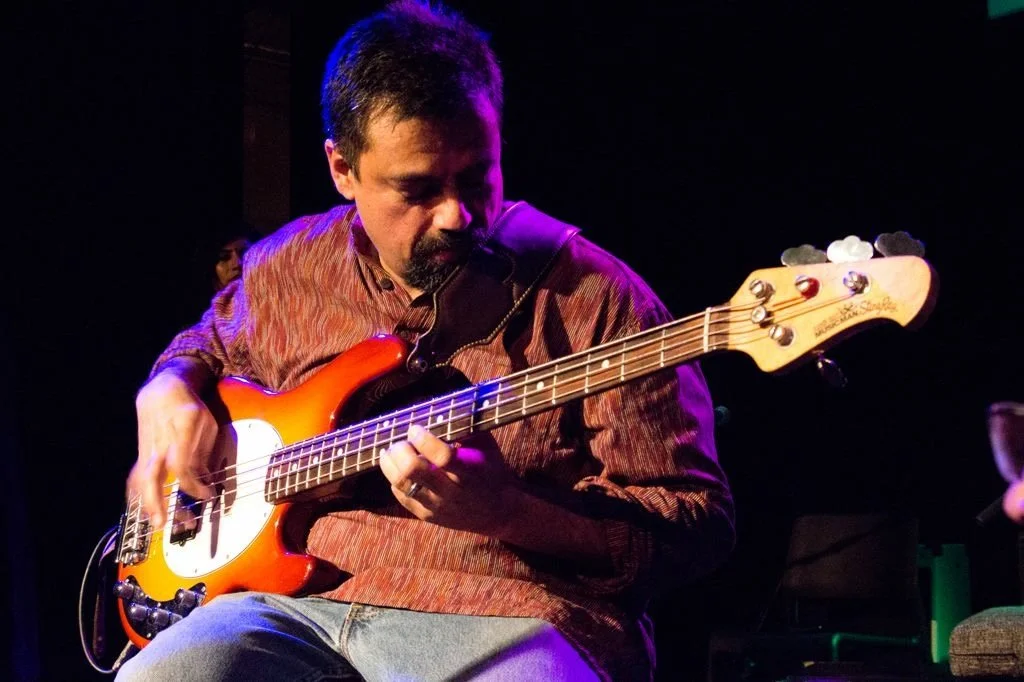
I think the answer lies in the concept of sensibility over technicality. For instance, I’m not naturally a reggae bass player, but for the past 30 years, I have played with musicians who grew up in the “rough and tumble” environments of reggae clubs, where the vibe was everything — if you didn't get the groove right, the audience would let you know. So I’m always reminded when even if I’m technically playing a part correctly, that Rahul, you’re playing too aggressively or you need to slow down and focus on the feel.
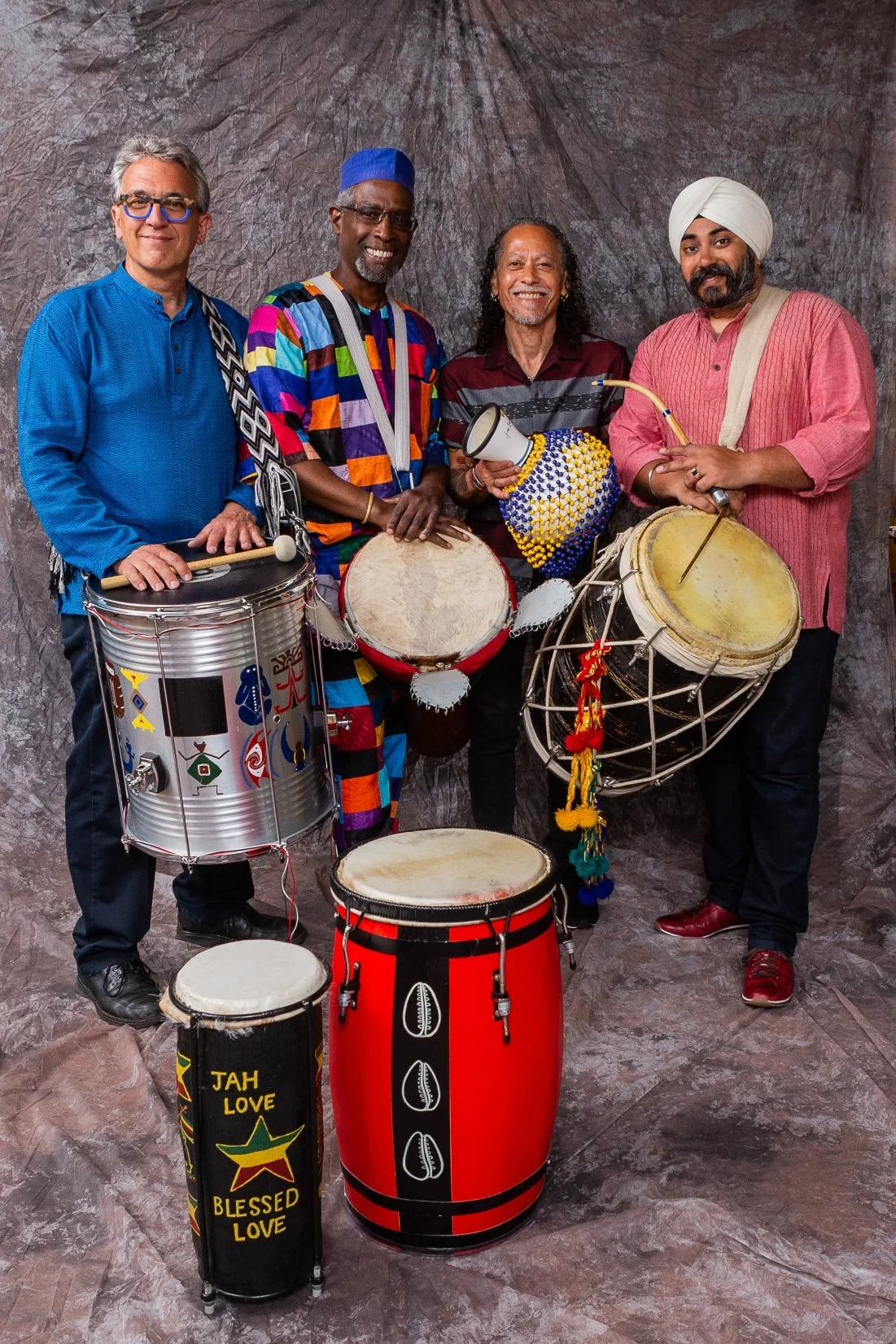
Playing reggae bass is a different sensibility and it’s about creating a richer tapestry or an interwoven fabric so that other expressions can happen on top of it. I’ve always thought of the idea of making a groove between a drummer and a bass player something akin to the Tanpura in Indian classical music. How we create a hypnotic lock and stay there in the resonant space to allow the soloist to truly unfold on top.
Our unexpected synergies and sparks happen all the time. Our four rhythm ambassadors bring a massive vocabulary and range of global styles — whether it’s tumbao, a guaguancó, or a Mozambique beat— and it’s an instinctive adaptation to suit whatever song is playing. It’s never a straightforward cultural rhythm but one that’s shifting and blending.
It sounds like every time you play, it’s so fun and unexpected.
It is fun and unexpected. Every time I get ready for a show, my wife witnesses the full weight of my stress as a bandleader. She’ll hear me worrying about hiccups in the agenda or someone running late, and she’ll watch me dart out the door, then come back in because I forgot my keys, and then head back out again — it’s a real cacophony of stress
But by the end of the night, if she’s still awake when I get home and asks if I’m okay, I’ll honestly say, “What do you mean?” Because the show is a total palate and the most ecstatic experience possible. That frantic snapshot she saw of me leaving the house has zero to do with what we eventually experienced on stage with each other and the audience. It’s absolutely a joy every time.
How do you adapt when you guys have to handle smaller, more intimate requests? How do you decide who goes where without losing that core Funkadesi identity?
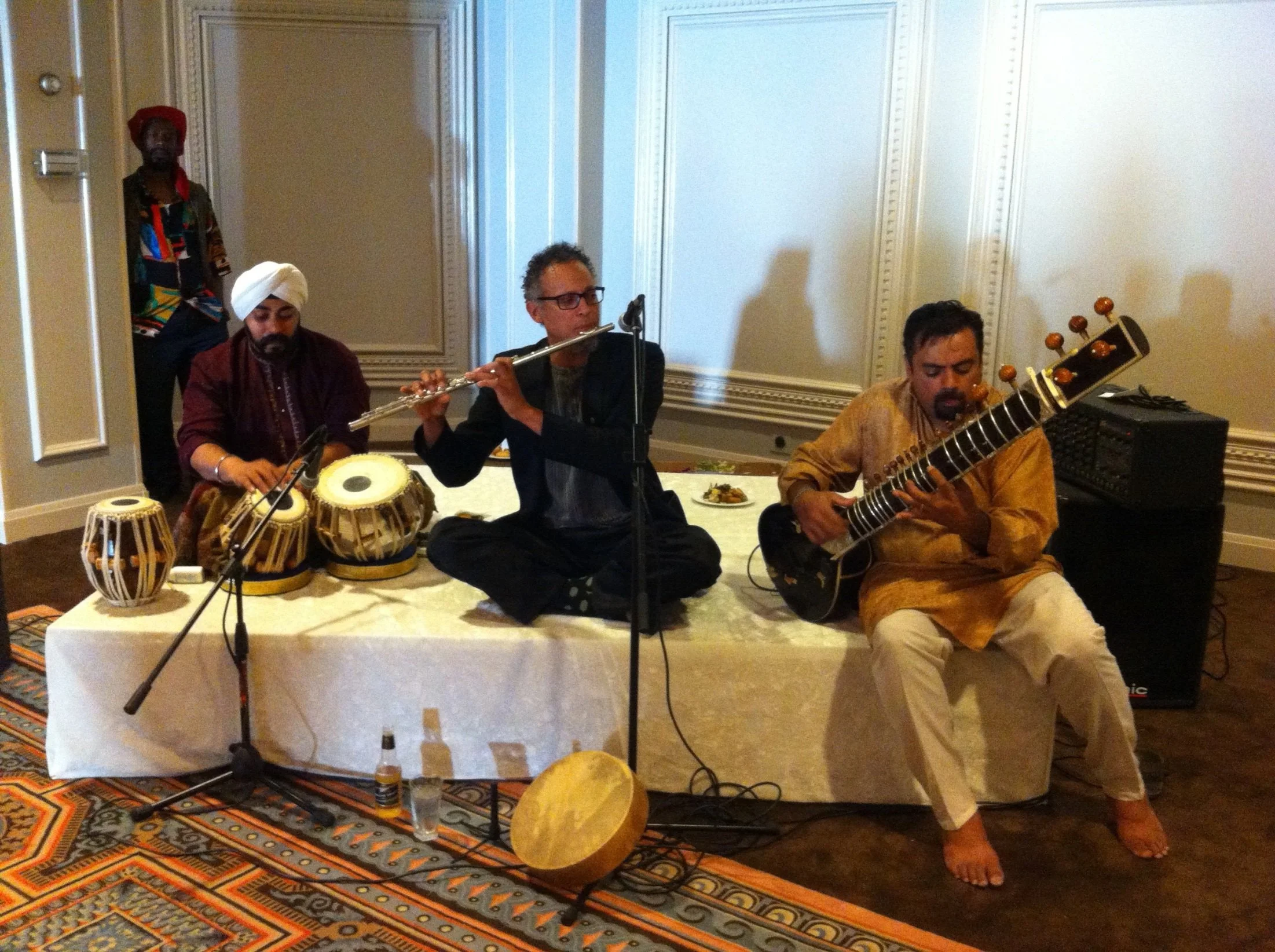
It’s a practical exercise in the shared leadership we’ve built. Over thirty years, we’ve developed “signature combos” or sub-ensembles that allow us to stay flexible. Though we ideally want to have more opportunities that involve the whole band or other types of ensembles, some popular ones are our four rhythm ambassadors who lead workshops, or our popular sitar, tabla, and flute trio for more traditional settings. Sometimes we can do enhanced instrumentals too with guitar from Toto and Brazilian percussion from Rich.
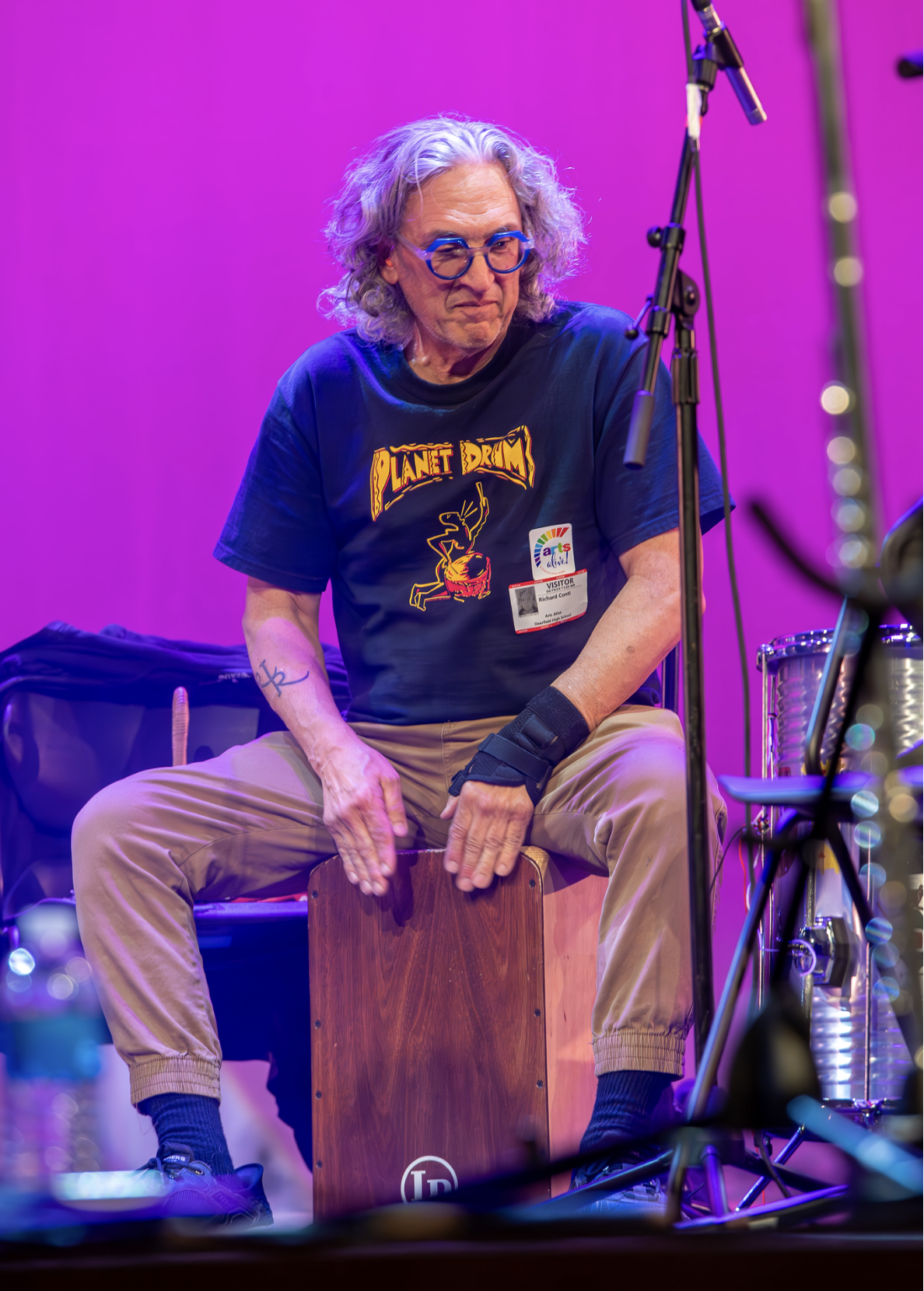
I love it when the whole band plays together but that decision-making is another example of our mutual understanding. I want to involve as many band members as possible and they want to play too since we are all working musicians, but I have to balance that with the client’s budget and vision. Some of my consulting background plays into these conversations, by asking a client “This will have been a success if...?” If they want people dancing, I configure the group one way; if they want a "fly on the wall" ambient vibe, I curate another. Sometimes the boundaries blur too — like a band member joining a sub-ensemble just to celebrate a family milestone at a festival. The ultimate goal is to always configure the group so that it knocks it out of the park for the community. Even in the smaller iterations, we’re channeling the rhythm ambassadors and the collective energy of the full band.
It’s been in the subtext as we’ve been talking but how has it been balancing your professional life and working in multicultural and diversity psychology and playing and leading a multi-cultural ensemble? How have those roles worked in tandem or informed each other?
Even before I started doing this crossover work, I’ve always been deeply fascinated by the parallels between the rhythmic foundation of music and the skills it takes to be a good listener, a space-holder, or a therapist. As a bass player there’s this phrase I sometimes use: It’s not about you, but it’s up to you. There’s a responsibility between the bass player and the drummer to hold the foundation and the space to allow the singer to sing or the soloist to perform. It’s about setting the tone or to use the therapist term “providing a container” to allow the healing to happen or in this case, the expression to happen. It’s remarkably similar to the work of a facilitator I did before becoming a psychologist. The literal translation of “facilitate” is to make things easy and to allow a free flow of conversation and connection.
I made a conscious decision early in my career not to treat this intersection as a flashy selling point or a gimmick. I decided to keep making meaning for myself, keep observing, keep noting, and maybe write some things down. I’ve allowed the roles to “marinate” as a slow burn over decades before bringing them together professionally. Because of that, I feel like I’m getting success with knowing how these things can come together. So for the drum circles I conduct for example, it becomes this interplay between entertainment and connection.
We’ve found that the band can be quite healing for people. In the 90s Funkadesi played at the Double Door and brought more Desis into that room than had ever set foot there before. I had so many young people come up to me and say how important it was for them to see this representation on stage in a commercially accessible way. Ankur Varma, of Brown Man Therapy, once told me that “I wonder what my life would be like if I grew up with a Funkadesi around.” That was so very meaningful and there can be real healing in entertainment
Even if it’s a corporate workshop with its own learning objectives and whatnot, people do want and need some artist expression and entertainment. Ultimately, the roles are working towards the same thing — providing the ground so that others can find their voice and their sense of belonging.
It’s interesting that you bring up belonging and communal healing, since I wanted to ask about the slogans Funkadesi uses. Your longstanding motto is “One family, many children. Insisting we all belong” but I’ve also noticed the phrase “Always for the youth” appearing alongside it. What drives that specific commitment to the next generation?
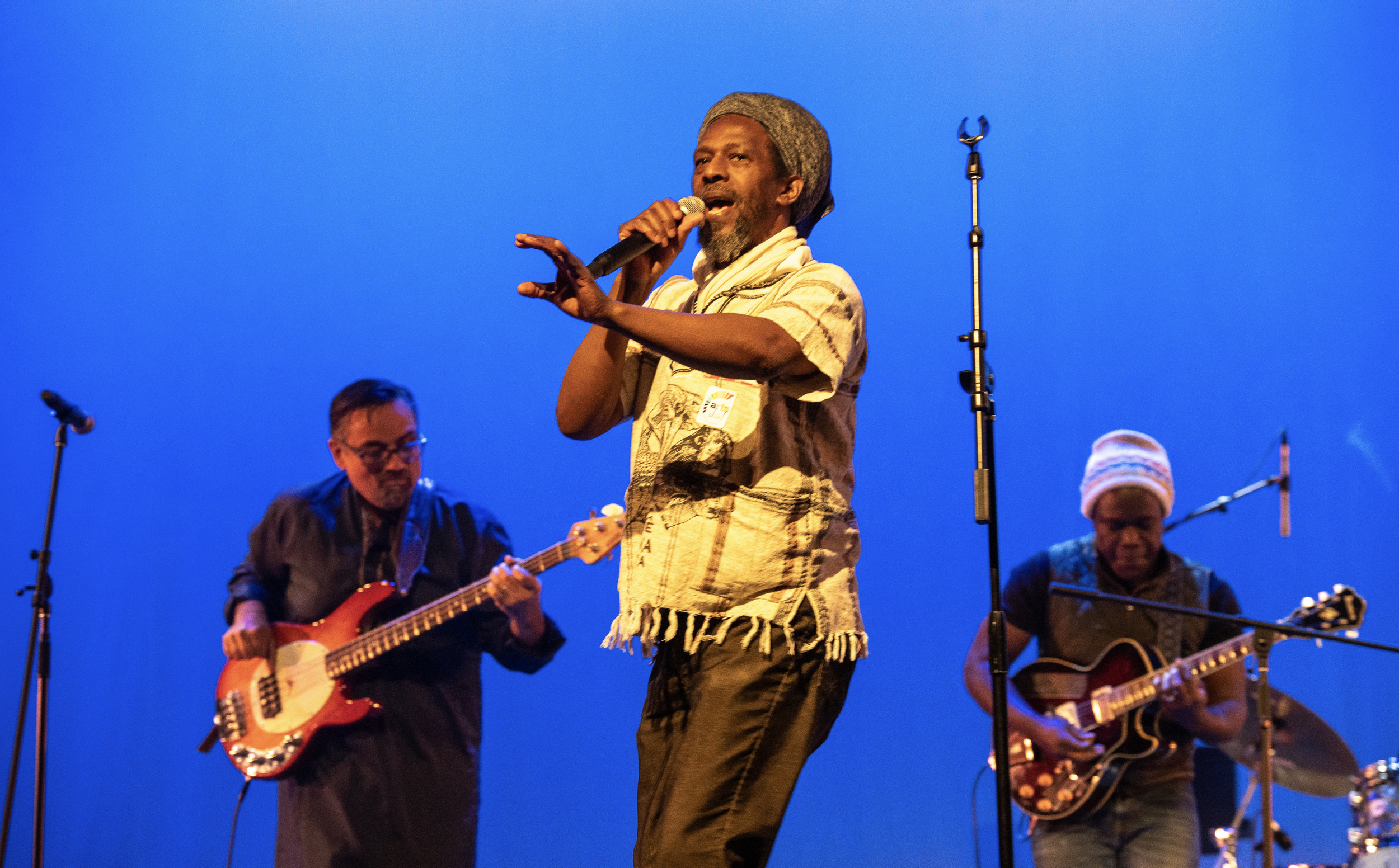
That phrase, “Always for the youth,” really comes from our singer, Valroy. He is a grandfather now and has always been incredibly attuned to the development and empowerment of children. For us, it represents a reminder to think about the future. To ask: “What’s in it for us? What are we building? What is the scaffolding we’re providing for future development and the values our children are imbibing and carrying forth as they go into the world?”
We’re living in a critical juncture right now where there’s a tremendous amount of cruelty, disconnection and lack of empathy. But we are also at a point of incredible advancements and where we can choose to affirm each other’s humanity. I’ve always loved the quote, “The job of the artist is to make the revolution irresistible.” I smile when I hear that because that is exactly what we aim for with Funkadesi.
Who wouldn’t want to embrace each other after hearing what it feels like and seeing what we look like. I’ve had people come up to us and say, how did you all get together? It’s not only the music but seeing the unmistakable one family vibe on the stage. We want to make that “one family” motto so natural it’s not seen as a performance, but as a natural way of life. Let’s make that vision irresistible.
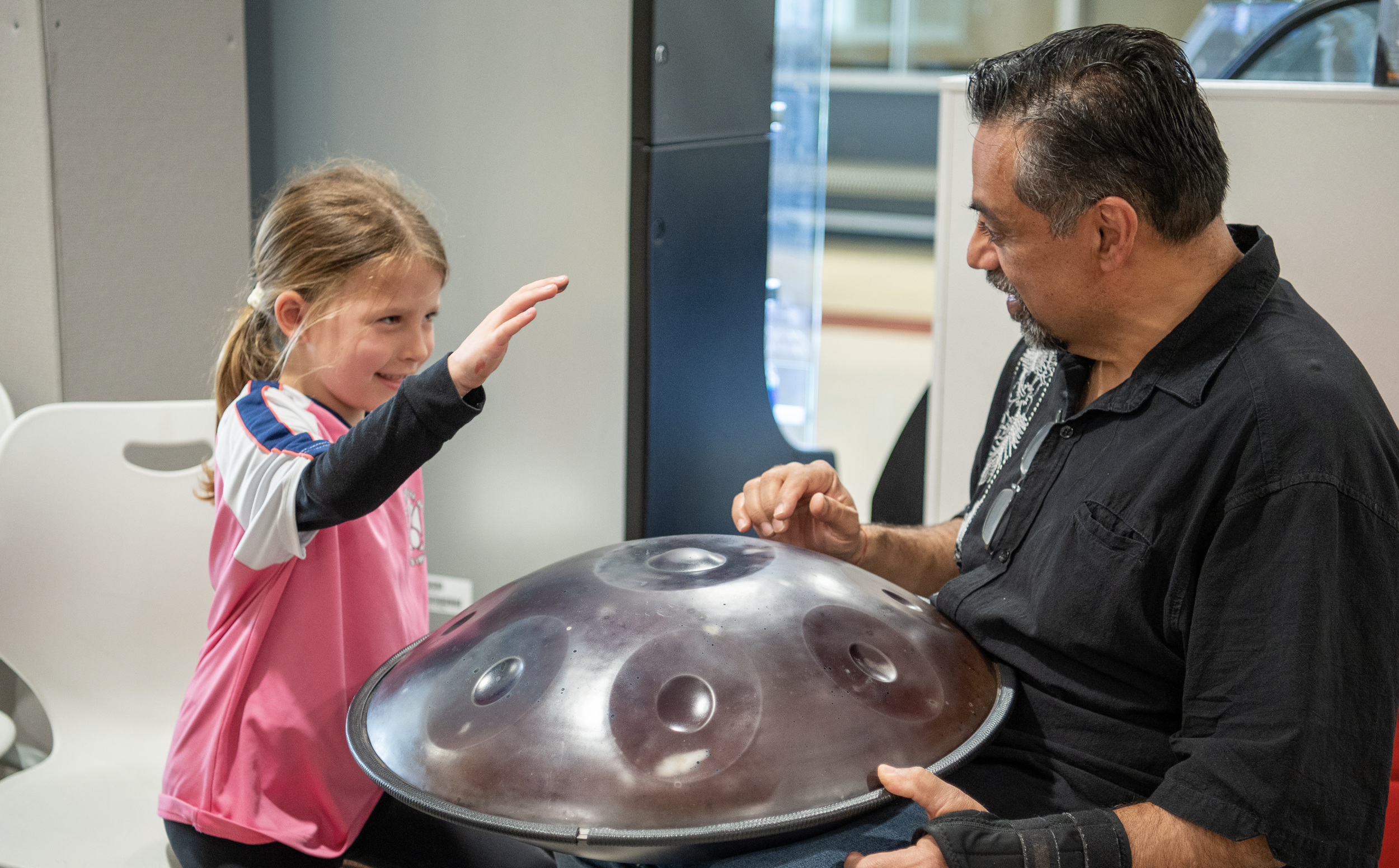
You see this clearly in our community engagements like the Latin School residency. We were so proud of having these K-4th graders see dreadlocks and turbans in community with each other like family. Modeling that reality and moreover, living it is immeasurably important.
By modeling that relationship, we’re showing the youth that protecting and nurturing their cultural roots is an act of strength.
This "Funkadesi world" is even baked into our visual identity. If you look at our logo, it’s a redrawn map. It isn't just a sphere; it’s a globe where India is embedded in the heart of Africa, surrounded by a scattering of Caribbean countries. It represents our specific orbit—a world where no one is left behind and every ancestry is cherished. We want to make this vision of a shared American identity so compelling that it becomes a natural way of being for the children who watch us.
I also love the Funkadesi logo and how it has evolved through your albums — specifically how the map has become much more prominent.
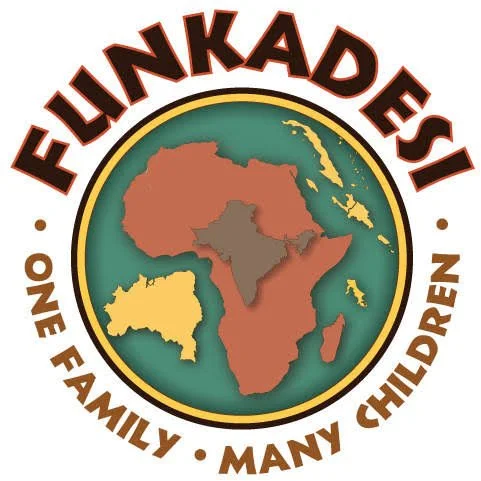
To me, that logo represents the Funkadesi world. At first glance, people see a sphere or a globe, but when you look carefully, it’s a redrawn map. India is embedded inside the heart of Africa, surrounded by a scattering of Caribbean countries. It’s a reflection of our specific ancestry and cultural mix — who’s in the band, who we are, and what we play. I also like the parallel contour of India with the contour of Africa and shows a bit of an Indian heart to the band. Afterall, the impetus for the band for me was watering my cultural roots. But then, I found other musicians who were watering their roots. Meshach was someone I bonded with so early on around this. So, the logo has a lot of meaning in the Funkadesi world.
It isn’t about leaving anyone behind or choosing to not depict certain countries. Rather, it’s an invitation for people to come orbit around our world for a minute. I love the logo for that reason — it’s our world.
Staying with those redrawn maps and roots for a bit, how has your understanding of diasporic connections and networks changed throughout the years?
My understanding of these connections has deepened through the lived experience of our performances. I love the moments at major festivals like Taste of Chicago when a desi couple walks by the main stage and stops in their tracks — stunned to hear a familiar song being celebrated in such a massive, public space.
It tickles me because for those of us often labelled as ABCD (American Born Confused Desi), I see the band’s work as a way to challenge that confusion. It’s not being lost between the two cultures but actively forging new connections.
Because of my own diasporic connections to Kenya and India, there’s an immediate, intuitive kinship with Desis from Guyana, Trinidad, and the global diaspora. The diaspora of Indians really responds to the music too.
2026 marks 30 years of Funkadesi. Since we’re talking about the youth and diasporic reactions, I’m curious about the shifts you’ve seen in how audiences engage with you. Across three decades of performing, from drum circles to festivals, what have you noticed as you and your audience have grown together? What shifts have you seen in the way audiences have engaged with Funkadesi?
It’s been an interesting evolution. It’s funny ; in the start our diversity was such a big deal to the audience. Some members of the band wanted us to showcase different styles, cultures and genres while others just wanted to make the music we wanted to make. In the start especially, there was some internal impulse to follow a formulaic showcase — a Jamaican section, then an Indian one, then back to Jamaica — to explicitly highlight the blending. But we moved towards an organic desire to simply be a band playing the music we love, whether that meant Motown covers or original grooves. I don’t think we were ever overly formulaic, but it was really easy to rely on the synergy of a reggae vibe with an Indian folksy groove that sat so well together. We reached a point though, where we don’t have to showcase the diversity of the band; we just exist.
However, in the current state of affairs and backlash of white supremacy and the rise of othering and vitriol, our diversity has become a significant statement once again. It’s weird to be riding this wave again, especially after we’ve been together so long and it had become much less of a big deal over the decades. But now, there’s an intense, renewed meaning in the simple act of showing up for each other on stage.
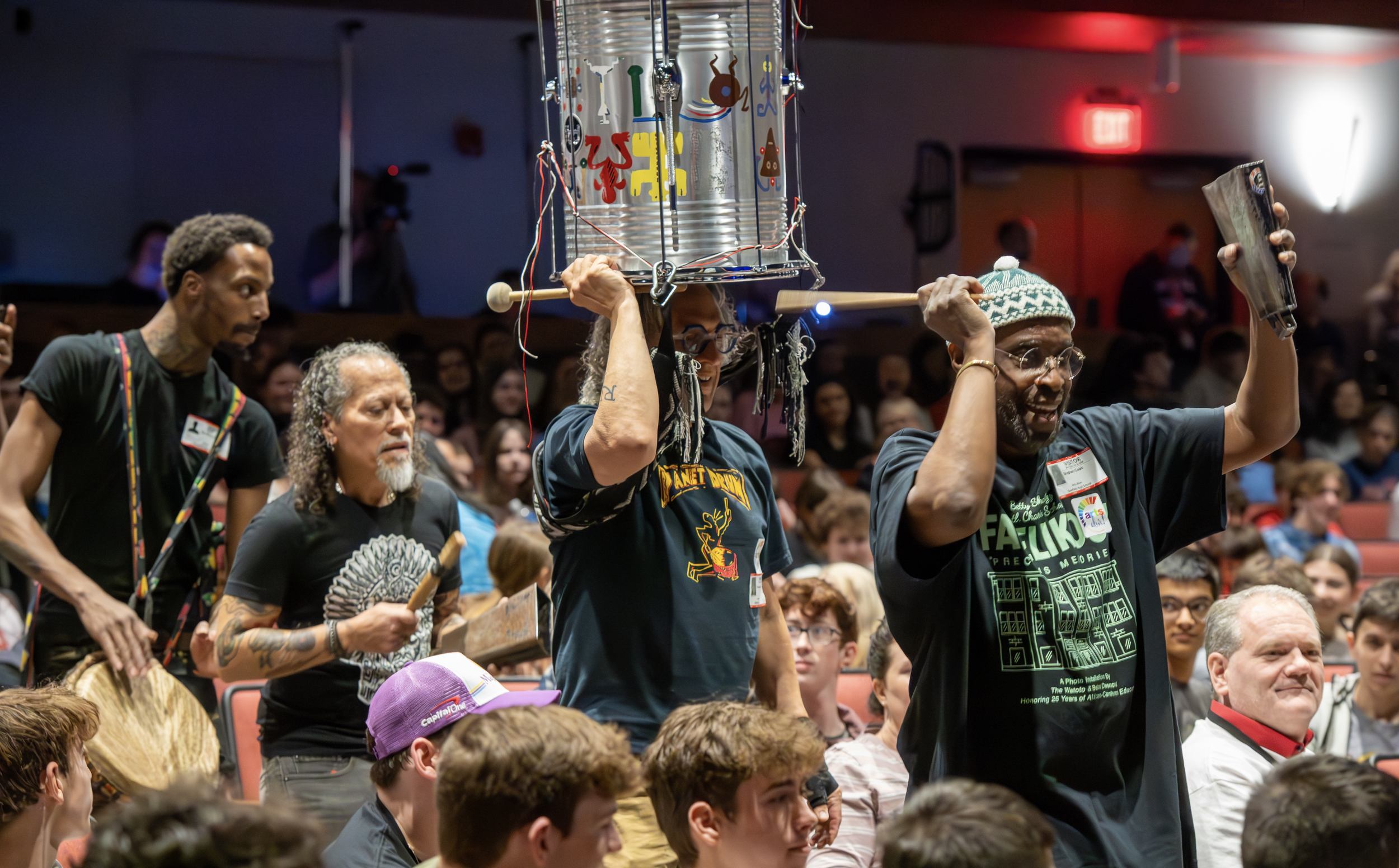
The other aspect of the audience response is my focus on what we do and can do to get the audience more engaged. Kwame calls them “events” or these spontaneous special moments that break the fourth wall, such as when Maninder, Carlos and Rich sneak into the crowd during Laung Gawacha to play directly with the audience or when we surprise the audience with drums or have them participate in some way. We’ve had a tremendous audience response and want to keep figuring out ways to have more of those special moments with them.
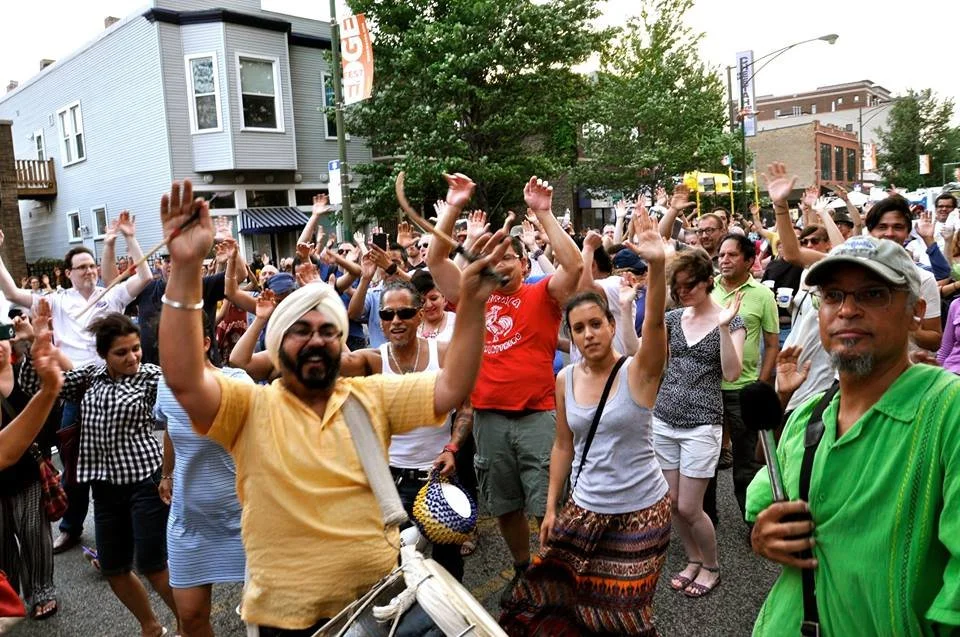
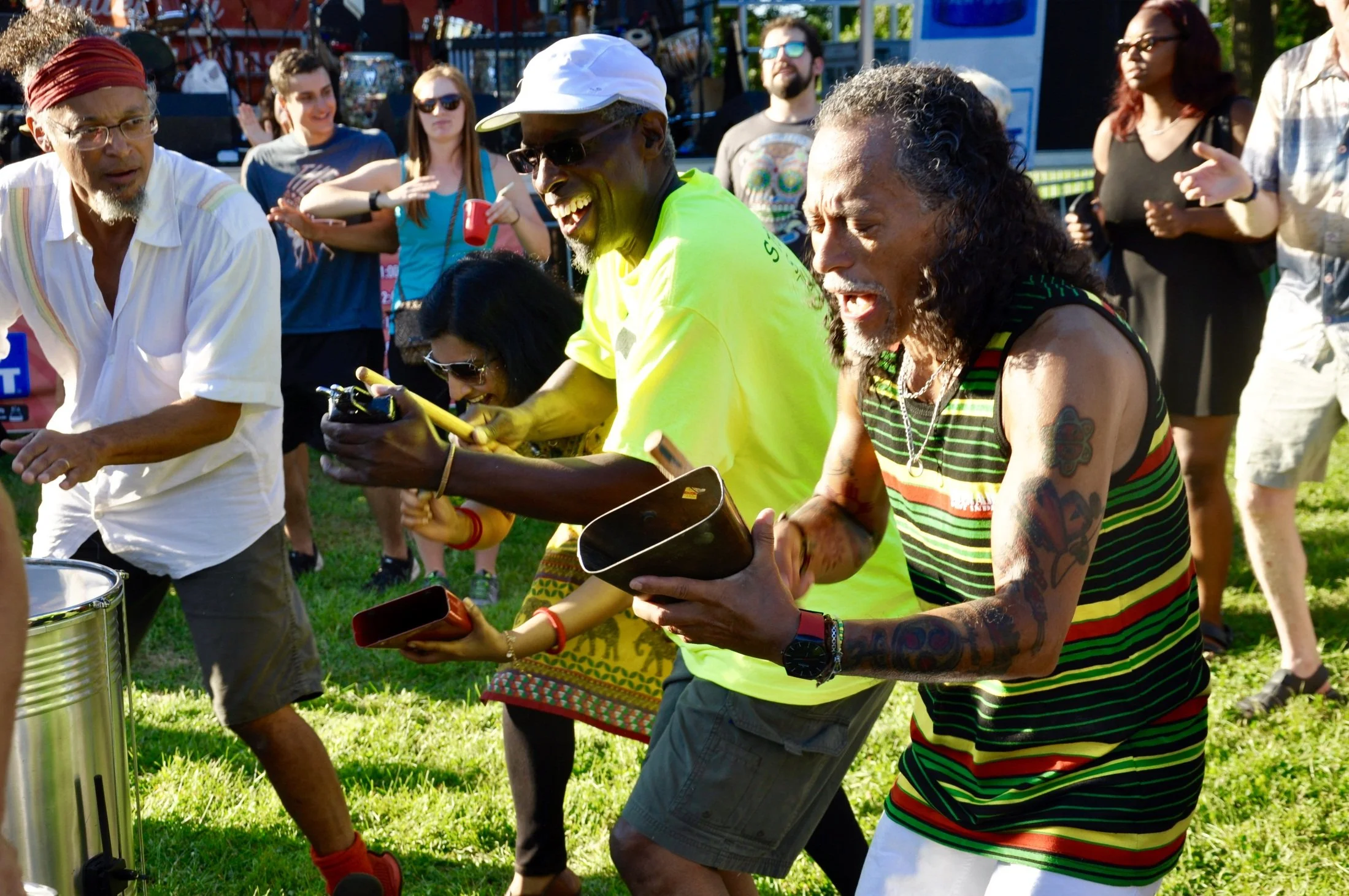
The most consistent and rewarding feedback we have received throughout these thirty years is: “My kids love your music.” I love that compliment. I do think us being 100% live is also a big deal. I would like to think we remain a breath of fresh air, coming in 10 or 11 strong and being completely live. In the musical landscape, where some acts do rely on laptops or sequencing, the energy you get from fully acoustic, spontaneous performance is its own thing. I’m grateful for our audience and I always see how new audiences need about a song and a half to fully digest what’s happening on this stage. Sometimes there’s an immediate thrill but sometimes it takes time for them to sort out what language we’re speaking or our identities before seeing it’s a bit of everything.
Looking back over the years, what are some of your favourite memories or stories? Anything you’d like to share with SAI readers?
Meshach’s face comes to mind. I always joke that he made my hair turn grey the fastest because there’s ‘people of color time’, ‘musician time’ and then there’s ‘Meshach time.’ One time I booked a rehearsal room specifically because it had a drum kit, and ninety minutes into the session, he called to say he wasn't going to make it.
People who knew and loved him just laughed because, while someone else might have been fired, I have never met a human being who had a more positive impact on my life. He had a vision and certain ferocity regarding why we do what we do. There’s so many gifts I get from Meshach. He was a week shy of 44 when he passed, and at his funeral, I shared a quote someone had written on his memorial page: “It’s not the years in your life, it’s the life in your years.” In another beautiful full-circle moment, the person who wrote those words — keyboardist Ralph Moat — now plays with Funkadesi whenever Indar can’t make a show.
One story from the late 90s illustrates the bond we all shared. We were at a show at Fitzgerald’s and we were all invited to an after-party hosted by a bunch of young Indian guys we’d just met. Our singer, Radhika, was the only one who decided to go along with them and got into their SUV. Meshach took it upon himself to walk up to the car and asked them to roll down all the windows. He looked them in the eye and said, “You’re taking out my sister, Radhika. I need to see all your faces before you do.” It didn’t matter that he was Black and they were Indian or closer to Radhika’s age than he was; in his heart, she was his sister, and he made it clear they were in charge of her safety. That was how profound the kinship was among us.
Thank you for sharing that. Every memory you share of Meshach paints a picture of such a profound presence — not just in the band, but in your own life. It sounds like a true privilege to have known him so deeply.
Shifting toward the broader journey of the band, what advice would you give to the next generation of South Asian musicians, or artists in general, who are trying to carve out their own paths?
My first piece of advice is simply to show up. I’m so thrilled with organizations like Chicago Mehfil, Ruthie Box Studios, Chicago Kasam, the South Asian Institute, Mandela Arts, and Kala Priya: spaces that are actively creating beautiful synergies. The first step is to show up and support these young creatives who are experimenting and expressing themselves in entirely new ways.
For the artist themselves, I often think of a quote: “It’s hard to judge a flower that hasn’t fully blossomed yet. You might have an idea and you know that this idea is amazing and you’re working on it, but you don't want to judge it for what it looks like now. You have to nurture what it is that you have inside of you.
I had this drive and Funkadesi actually turned out much bigger and quite different than I originally envisioned. I thought we would be a largely instrumental, improvisational group mixing funk, Arabic, and Indian classical music. But I made pivots based on the unique influences of the musicians who joined the project. If I had given up because things weren’t going exactly as planned, I would have stopped years before the band even came to fruition, as it took a solid three and a half years to fully form. Protect your dream.
The great bassist Victor Wooten once flipped and reframed the classic advice of leaving your ego at the door. Have your ego and bring it in— not to inflate yourself or say you’re the best — but to say “I have something special inside of me that deserves to be shown.” I remember once having the sheer audacity to approach the legendary singer Sheila Chandra after a concert. She was playing at Tinley Park and Funkadesi was an unformed new idea at that point but I went up to her as she was signing CDs and autographs and said “I would love for you to be the singer of my band.” There I was, absolutely nobody. Nothing. But I had the audacity to ask her. Her manager/husband politely declined but I was struck by the phrase he used: “We can’t wait to hear about you.” It was clear no to my request, but it felt like an invitation to show what I had — as if he’d said “Show us what you got” If he’d completely shut me down, I wouldn’t have quit but it definitely wouldn’t have left a good taste in my mouth. I liked his phrasing because it drove me forward.
My general advice to young people, artists or not — which I’m stealing from my cousin’s boyfriend — is to be confident now. Think of what you can achieve if you simply set aside your self-doubt. The secret of our band —where members range from their 40s to their 70s — is that we all still have insecurities. The voice of imposter syndrome never completely goes away. In 1994, while in graduate school, I attended a lecture by Dr. Richard Suinn, the first Asian American president of the American Psychological Association. He was incredibly accomplished, yet he spoke candidly about his own imposter syndrome. When I ran into him again in 2012 as he was receiving a lifetime achievement award, I reminded him of that talk, and he smiled and confessed, “It still happens to me sometimes.”
But we’re able to situate the insecurities and put them aside to focus on the real thing, which for us is how we want to make meaning through music and how we want to be together. The important thing is to not let that part of you, which is a valid part, drag you down and keep you second guessing yourself. Find a way to deal with it and put it over there so that you can unabashedly engage with a level of freedom and confidence that will allow you to go further. The secret is the voice doesn’t go away. We all have our insecurities and sometimes it has nothing to do with what you actually achieve. The key is to normalize it, situate it and put it over there. Once you do that you can have a life filled with more passion and purpose.
And as we look toward Funkadesi’s future, what is the core message or legacy you want to leave behind?
The core legacy I would like Funkadesi to leave is that we all belong. No one should ever be in a situation or be made to feel — whether it’s interpersonal, familial, or in a specific place or country — that they don’t belong and that they don’t have value.
When we talk about insisting we all belong, it’s insisting on self-respect but also how we show up for others when their sense of belonging is getting threatened or thwarted. That threat can be anything from a situation that makes someone feel inferior or hurt by a barrier or another person, all the way to a message of, “We don't care who you are, you don't belong here, and we want to send you elsewhere.” The level of cruelty we see is astounding
Funkadesi’s legacy then, this is what a future could look like. I don’t want to say that we’re completely futuristic but we are a rare entity of being together 30 years as an unprecedentedly diverse group of people. When we lean into each other, validating each other, affirming each other and creating a sense of belonging, what you hear is the result of that. What you see on stage is the result of that. If you feel a certain way about what our music looks, feels, and sounds like, it is because it is rooted in a sense of mutual affirmation and belonging, of watering your cultural roots and expecting that people respect that heritage.
That is a beautiful, warm feeling for people to carry with them after you perform. For my final question: you are currently in the process of recording Funkadesi's fourth studio album — your first in about fifteen years! Congratulations. What has it been like getting back into the studio, what inspired this return, and what can people look forward to?
To be completely candid, part of the delay was about me getting out of my own way and sorting out my own challenges around organization and focus. As the bandleader, I’m the one in charge of pulling the levers to make things happen, and we had a couple of starts and stops. We did do a pandemic project where we all recorded in our home studios but part of the delay was also the artist in me.
I want to see and feel something come together. Especially after our Yo Baba album — which was deeply meaningful to us as we navigated the passing of our drummer — we had a tremendous amount of new songs, but they were scattered. I wanted to cohesively think about what we wanted to say.
All the while the backdrop of all of this was financial reality: we hadn’t even recouped the money from our previous albums. Just as we were poised to make money back on CD sales, the entire industry model shifted. Today, the streaming model on platforms like Spotify is essentially criminal to artists who aren’t at the very top of the charts. That financial hurdle made me hesitate, wondering how we could even afford to go back in.
Finally, I pulled the trigger on a GoFundMe campaign, and we were absolutely astounded by the community’s response. It completely loosened us up — we booked the studio time, and it has been tremendous. We are sixteen years tighter than we’ve ever been so we blew through tracking ten songs in a single weekend. I was just in the studio yesterday doing mixing and editing. The songs are incredibly wide-ranging: we have a rock-infused Punjabi song, and a beautiful instrumental track featuring sitar, tabla, flute, violin, and vibes over a cool groove. It has meant so much to us, and the goal is to release it at the end of the year as the final culmination of our 30-year celebration. Every bit of support truly helps keep us going and this new album is just incredibly exciting because we finally get to showcase a little bit of everything we've been up to over these last fifteen years.