
Indira Freitas Johnson
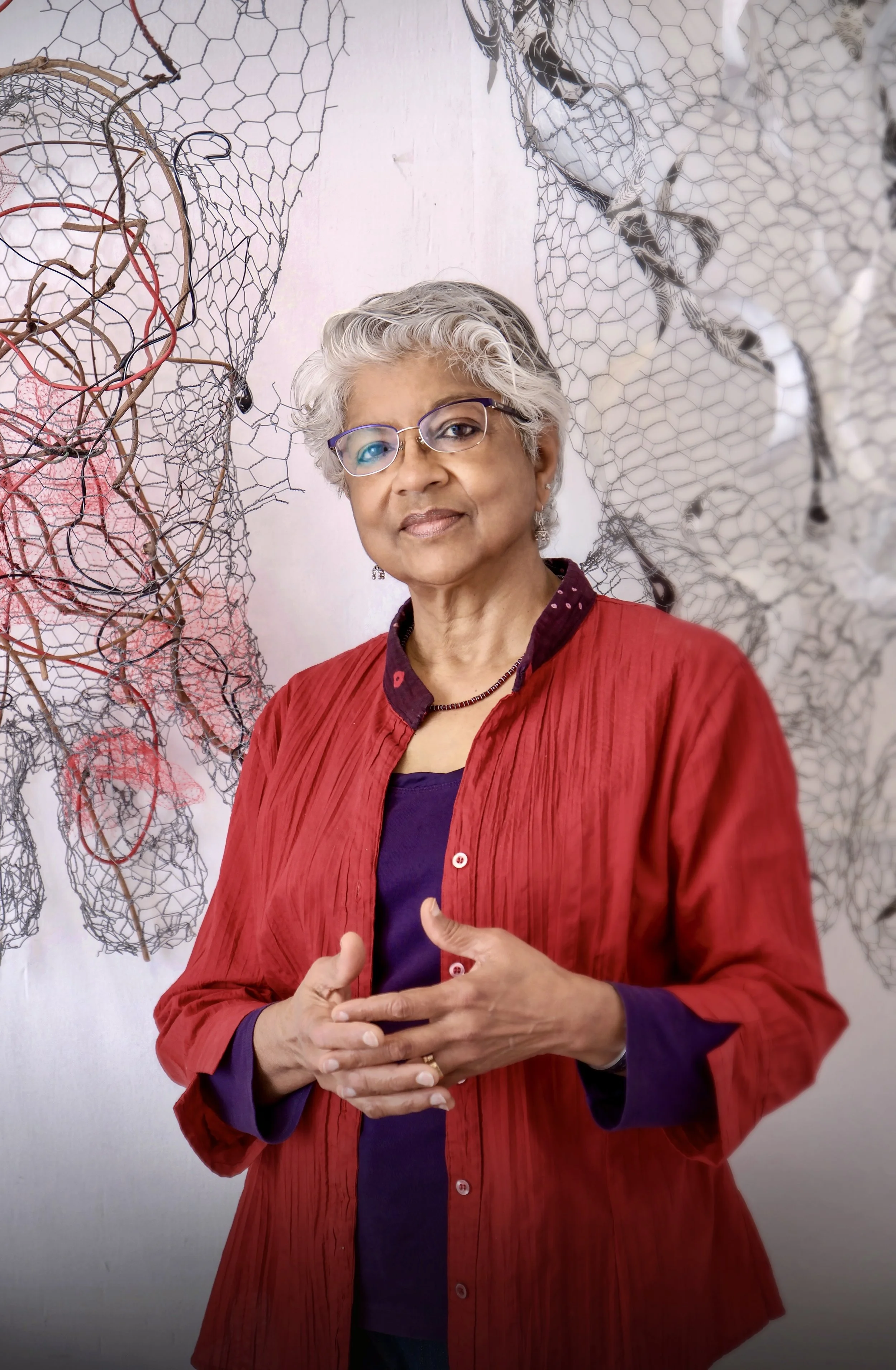
Indira Freitas Johnson is a Chicago-based artist, educator, and community activist who works across sculpture, installation, public art, and community-engaged projects. Born and raised in Mumbai, her formal art education is in Advertising Design from Sir J.J Institute of Applied Art and the School of the Art Institute of Chicago, where she was one of its earliest South Asian graduates. Influenced by an artist father and an activist mother, Johnson’s practice views art not just as a visual medium, but as a vital tool for non-violence and civic engagement.
Johnson has received numerous grants over the years and was named the 2013 Chicagoan of the Year by Chicago Magazine. She is the founder of the Shanti Foundation for Peace, which develops arts-based initiatives promoting nonviolence and dialogue, and co-founder of the fair-trade organisation MarketPlace: Handwork of India. She is widely recognized for community-engaged public art projects including the acclaimed Ten Thousand Ripples and numerous participatory installations that have brought together communities across Chicago to reflect on healing, collective memory, and social change.
Drawing on found objects, natural materials, and ritual practices Johnson’s work blurs the boundaries between art and everyday life and posits a practice rooted equally in reflection and collaboration. Informed by South Asian philosophical and artistic traditions, Johnson engages with universal questions of peace, transformation, loss, and the interconnectedness of human experience. Alongside her studio practice, Johnson has taught at institutions including the Rhode Island School of Design, led workshops, murals, and collaborative projects with schools, neighborhoods, and community organizations for decades. She is currently the Curatorial Fellow at the Evanston Art center and her exhibition Presence and Absence: The Space Between is on display from July 6 – August 2, 2026.
In this installment of SAI’s Community Conversations, intern Shireen Amna Waraich speaks with Johnson about her artistic journey, the foundational intertwinement of art and activism in her work and her lifelong commitment to fostering community and non-violence through the arts.
You’ve talked a lot about the importance of your parents’ work and ideology, and their influence is why art and activism has been so central in your life. How did they model service and civic engagement for you during your childhood in Mumbai?
Both of my parents were deeply involved in community service. I come from a family of six girls, and at that time people would actually offer my parents condolences for the birth of yet another daughter. My parents believed their daughters deserved the same opportunities as anyone’s sons. Education was the key. They told us there would be no dowries; instead, they would give us an education. There might not always be money for new dresses or shoes, but there was always money for education because it meant independence.
My mother led an organization working in Mumbai’s slums on leprosy and tuberculosis control. We grew up surrounded by doctors treating patients and often accompanied them to clinics. Service wasn’t something we thought about as a “category”—it was simply how we lived. Before school we might collect eggs or milk from neighbors for families in need, or people would leave food at our door for my mother to distribute. Helping others was woven into everyday life.
It was also through my mother’s work that my parents saw how vulnerable women could be when they depended entirely on their husbands. They encouraged all six of us to work and become financially independent.
My father was an artist and Art Director at The Times of India. Traditionally, the eldest child followed the father’s profession. Because my oldest sister had health problems, I often took on that mantle. I never consciously decided to become an artist—it was simply expected that I would follow in my father’s footsteps.
Ironically, I received a zero in art throughout high school. My teacher wanted realistic still lifes, while I was interested in stylization and ideas rather than realism — a limitation I still joke about today. After high school, my parents encouraged me to study art but steered me toward Advertising Design so I could earn a living. I earned a bachelor’s degree in English Literature while simultaneously studying at Sir J.J. Institute of Applied Art, where I received my diploma in Advertising Design
How did you end up in Chicago from there and enter the world of ceramics?
Coming to the US was contingent on me securing a scholarship that covered tuition, room, and board.
My mother knew Mother Teresa through her work in leprosy control. After returning from Chicago, Mother Teresa learned about my plans and helped arrange a full scholarship to St. Xavier College on Chicago’s South Side. Even after I transferred to the School of the Art Institute of Chicago in February 1965, I continued to live with the nuns at St. Xavier’s, where I did illustration work for the college.
At SAIC I earned my MFA in Advertising Design. Although I later became known for ceramics and sculpture, all of my formal education is in advertising. I think that no matter what it is, education contributes to your growth and well-being. Every stage shapes who you become.
After graduation I worked briefly at advertising agencies because I always intended to return to India. Instead, I met my future husband at SAIC. We became engaged before I returned home, and he followed six months later. We married in India, where I worked at another advertising agency before moving to Sweden after our first child was born, when my husband received a grant from the American-Scandinavian Foundation to study at the University of Lund.
In Lund, I tried to find work in advertising and even studied Swedish, but instead ended up freelancing for a magazine. More importantly, it was in Sweden that I got to work with ceramics for the first time. I discovered ceramics at the Folk Universität in Lund. I found a source for clay and began sculpting in our kitchen. In that sense, I’m largely self-taught as I started out small and kept sculpting.
We lived in Sweden for about 3 years, after which we moved to Denver before finally making our way back to Chicago. I worked in advertising for about a year before taking time off to look after our second child. That was when I started to pursue ceramics seriously. Saying I’m self-taught gives me too much credit — I learned from many people and by observing other artists. I loved African art and South American art and sculpture and especially their powerful portrayals of the female form. I learnt from them and my early sculptures featured large, voluptuous and figurative figures.
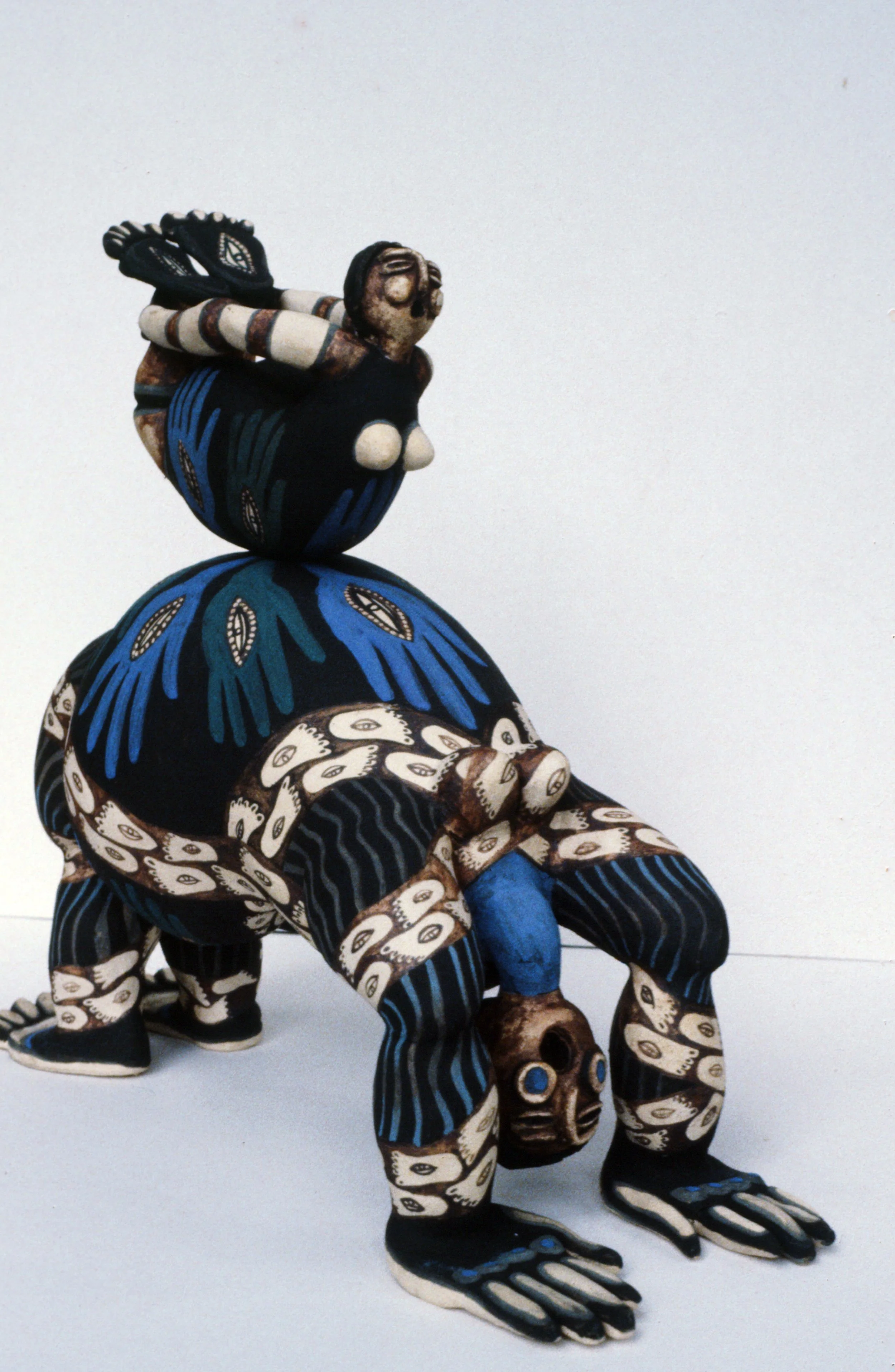
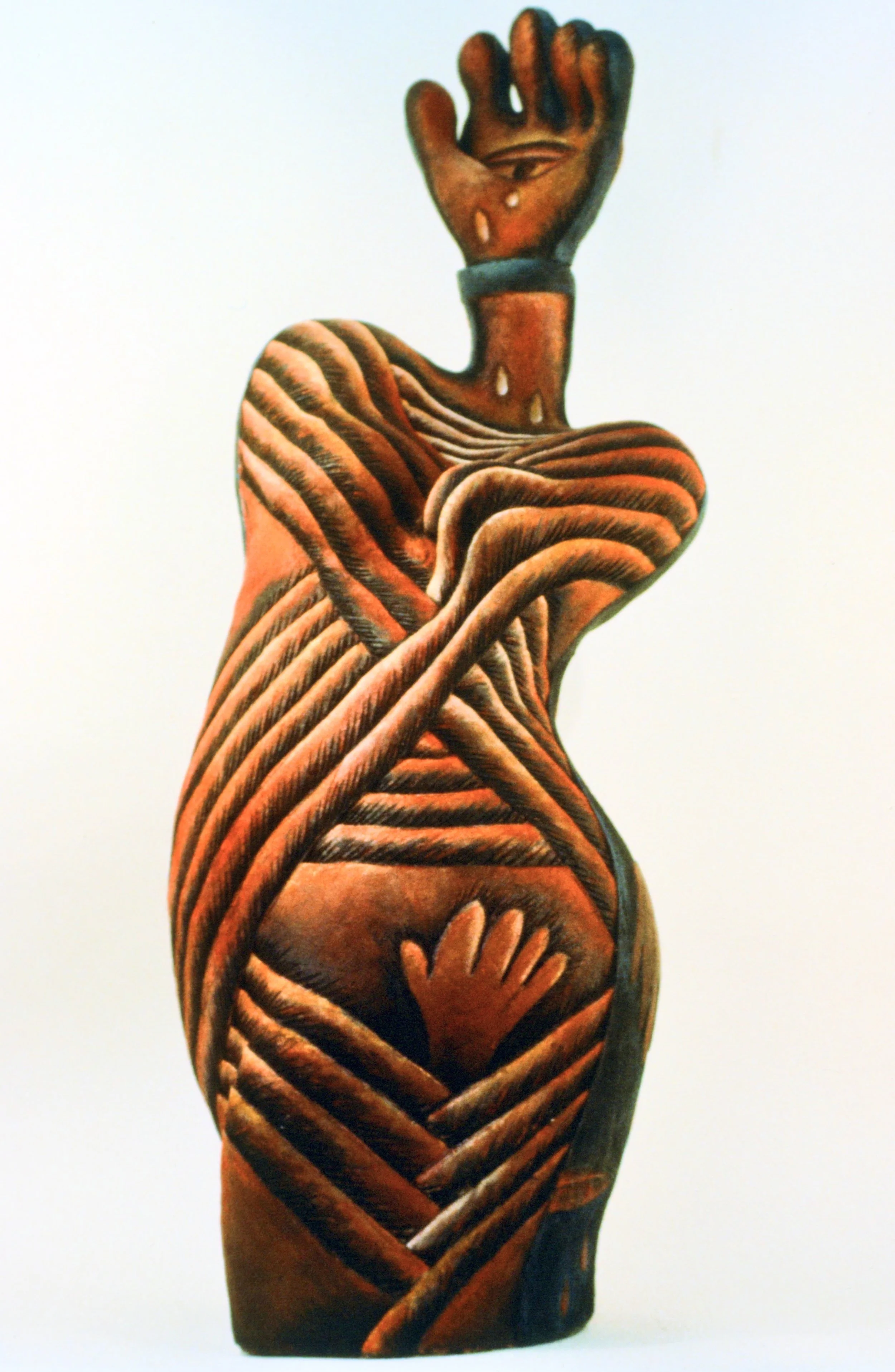
As I worked and exhibited, I found that, unlike today where ceramics have gained accolades and mainstream credibility, ceramics were seen as a craft, and not fine art.I was told in exhibitions that my work wasn’t really art and even though I was creating large sculptural works, I was never invited to the sculpture art shows. People thought of me and categorised me as a craft artist. That used to frustrate me, but I realized after a while that instead of fighting against the systems, I needed to figure out a way to do my own thing.
I sometimes envied friends who had moved to New York, but with my family that wasn’t possible. That’s when I decided that instead of looking at the things I don’t have, I need to ask myself, What do I have? One of my greatest resources was the organisation my mother had founded in Mumbai. I wanted to work in community and thought “If I can’t do it here or in New York, why don’t I do it there?”
Your first major community project, Our Own Vision, involved painting commuter trains in Mumbai to promote health education. What did that experience teach you about engaging a public audience?
One of my annual trips to India led me back to community-based work and my first public art project. I would usually visit India around Christmas and every January the Indian government sponsored a nationwide week of leprosy education to let people know the disease was curable if diagnosed and treated early. On my visit in 1993, I saw how my mother's organization Maharashtra Lokahita Seva Mandal approached the campaign. The posters they were using for leprosy education were incredibly dry and not at all engaging. I thought “How will anyone take the time to look at this?”
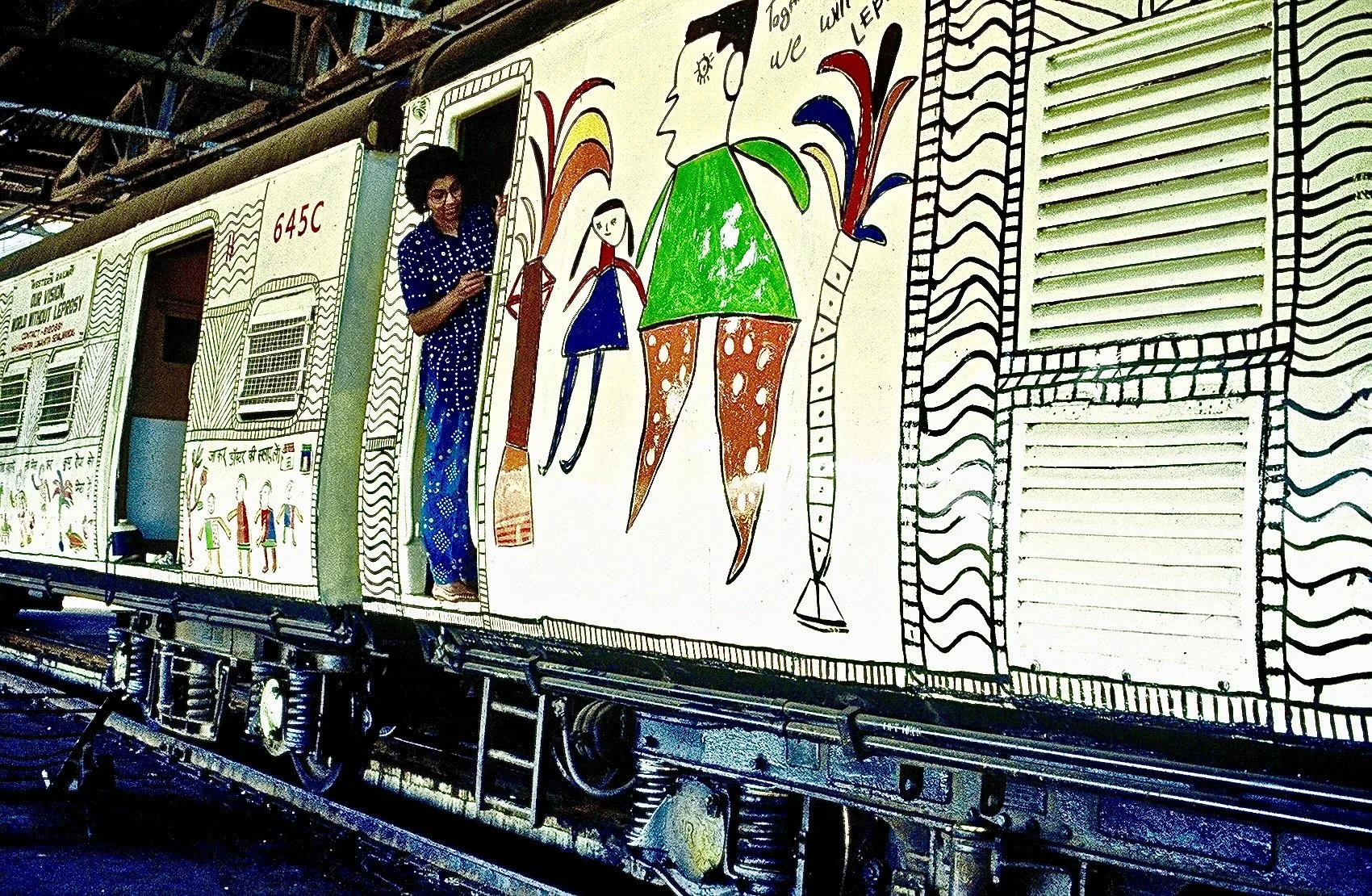
I decided to work with children who had either been directly impacted by leprosy or whose families had been affected. Their words, drawings, and experiences became part of the artwork painted on a Western Railways train. One child said to me, “I took my pills and I got cured.” That became our slogan because it really was that basic — it was honest and direct. The train carrying that message went from the suburbs to downtown Mumbai daily for a whole week. It reached and educated thousands of passengers and thousands went to get examined and treated due to the simplicity and approachability of the project. Long before I understood the full potential of public art, through Our Own Vision, I saw how art could move beyond walls and enter everyday life — creating awareness, challenging perceptions, and connecting communities.
How did your work in community projects continue back in Chicago?
In 1993, I founded the Shanti Foundation for Peace to teach non-violence through the arts. We brought artists into Chicago Public Schools, using art to teach a range of subjects while weaving nonviolence as an underpinning throughout the curriculum.
One project involved covering a CTA bus with drawings made by fourth-and fifth-graders in partnership with the Chicago Children’s Museum. The Getting Along Peace bus went throughout Chicago carrying the message of Shanti. Part of that project was inspired by my background in advertising, but instead of advertising products, I wanted to advertise peace and non-violence.
We also created greeting cards pairing quotations from very different voices—for example, Mahatma Gandhi alongside an eleven-year-old child, or Martin Luther King Jr. with the Bhagavad Gita or the Quran. I had hoped people would recognize the values they shared but many didn’t like the mixture. They preferred to keep religious and cultural traditions separate. Even though the cards didn’t work out the way I had planned, that experience taught me both how difficult and how essential it is to help people find common ground.
A major part of the Shanti Foundation involved direct work within the education system. What did your time in the schools look like?
Sometimes, it was quite heartbreaking because you’d be in schools where kids had so little art and so little individual attention for students. I was interested in ways to give children more agency in the classroom — Instead of the teacher making the rules, we’d get the class to decide the rules together and what should happen if they weren’t met. Not all teachers were willing to adopt that format but it was important for Shanti to give the children more agency.
I would also conduct the artist training for the Shanti artists. We emphasized working in groups so kids understood that each person has something valuable to contribute. Our methodology used these group dynamics as an integral part of the creative process. The student groups worked on theater productions and other art projects together, and when conflicts arose, Shanti artists would host conflict resolution sessions to help the students understand different points of view. Art and non-violence are very similar in their precepts. Regarding another person’s “point of view” for example, and trying to understand them fully is a basic principle for an artist and vital for non-violence.
I would periodically go to supervise the Shanti artists in schools and at the end of the year everyone would come together for a celebration so students could see that their work mattered and be celebrated for their hard work.
Later, as I got more involved in my art, Shanti merged with another Chicago based organisation, Changing Worlds, which coincided with Ten Thousand Ripples — an ongoing project with more than one hundred Emerging Buddha sculptures in different communities throughout Chicago.
Since you mentioned Ten Thousand Ripples, it’s often described as your best-known public art project and one of the largest community-engaged art initiatives in Chicago. Do you agree with that description and how people associate it with artistic legacy and message regarding art and non-violence?
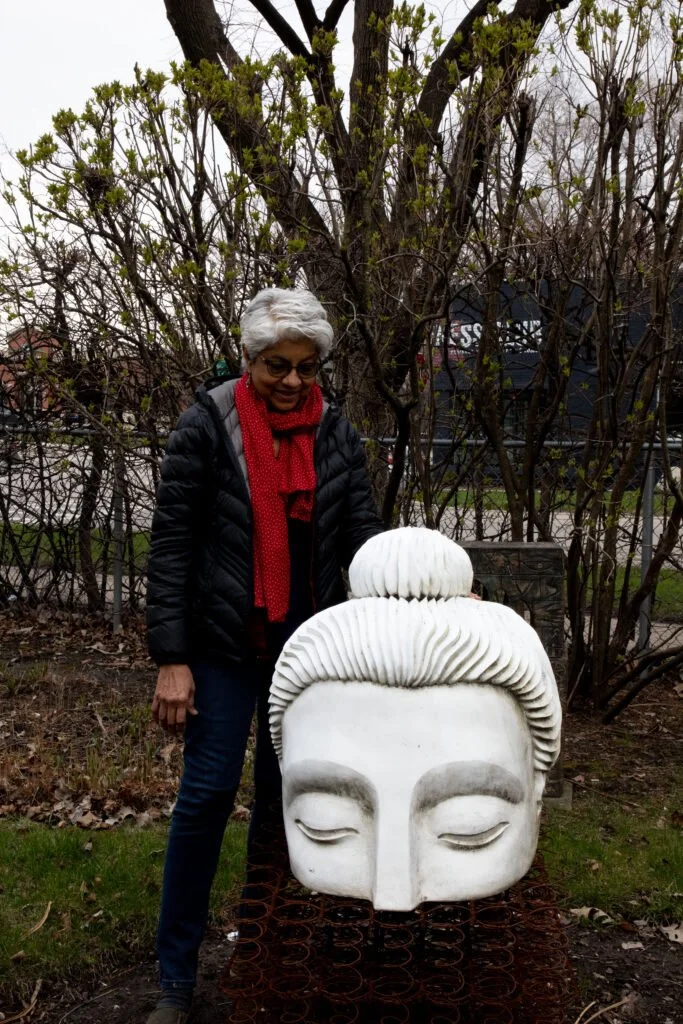
I never expected the Ten Thousand Ripples Public Art, Peace and Civic Engagement initiative (TTR) to be received the way it was. It started from an exhibition I had at the Chicago Cultural Center where I showed a series of partial Buddha sculptures. To me, the incomplete figure represented growth — that we're all still evolving.
Every time I visited the exhibition, I noticed people sitting quietly on the floor near the sculptures. I asked the visitors and they said it simply felt good to be in the company of the 11 sculptures. Later, when the sculptures were moved outside to Hallen Park Art center, the same thing happened with people sitting on the steps or on the grass saying they just like to be near them.
That’s when I thought, “What would happen if we placed one of these Buddhas in a marginal space? Would that place be transformed or thought of differently?”
Shanti Foundation had just merged Changing Worlds, an arts education organization that shared our values and objectives. Changing Worlds became the lead agency in this initiative with Ten Thousand Ripples based on our belief that art can stimulate a public discussion about violence, race, poverty, and social justice.
We worked with a plethora of Chicagoland cultural, educational and community organizations, and formed an Advisory Council to help shape the project — something I’d never done before. We got people from a wide range of organisations and institutions like the Art Institute, the MCA, professors, members of the Chicago Buddhist society and community heads and leaders. I couldn’t have done this by myself. TTR was a group project as we developed goals and objectives as well as a framework for community engagement.
Our plan was to put the sculptures in 10 communities across Chicago, and we partnered with strong community-based organizations in nine Chicago-area neighborhoods, from South Chicago and North Lawndale on the South Side to Evanston and Rogers Park on Chicago’s northernmost border.
Before installing a single sculpture, we spent a year talking to people. Everywhere we went, we worked with community organisations and spoke to residents to show we were invested. That was how we got into the communities taking part of TTR and that was the most important part. As an artist, my instinct is always to create and to jump right into a project. But if you want a project to belong to other people, you have to give them time to “get” it and make it their own.
I chose the image of the Buddha because it strikes a balance between its secular face and as a religious and spiritual symbol — the latter embodying a longing for peace in an increasingly frightening world.
I wasn’t promoting Buddhism, but different communities had different responses and interpretations. South Chicago was very enthusiastic about the project and people wanted to learn more about Buddhism. In Pilsen, which is predominantly Mexican and Catholic, someone asked why they should have a Buddha at all. One local director responded beautifully, explaining that it wasn’t about replacing one faith for the other, but recognizing that there is a wider world. A world of many traditions, and one where it’s not “this or that” but “this and that”
Another memorable conversation was with members of a Japanese Buddhist temple on the northside. I wanted to understand members of the community’s reservations surrounding the project. Traditionally, the Japanese prefer full figures of the Buddha and so they were uncomfortable with the partial images of my sculptures. The community members also informed me of the negative connotations in Hawaii regarding the term Buddha head and advised me to say Buddha sculpture instead.
Rather than dismissing these concerns, we wanted to show them and their community respect. So we listened. During the public discussion, a young man who was a student at Northeastern Illinois University — one of the first institutional supporters of the project — spoke up about how much he loved seeing the image of the Buddha on his campus, asking the community why would they not want to see an image of the Buddha everywhere? Other young people spoke up too and spoke passionately about embracing the sculpture, while older members expressed reservations. It became a moment of dialogue across the generations.
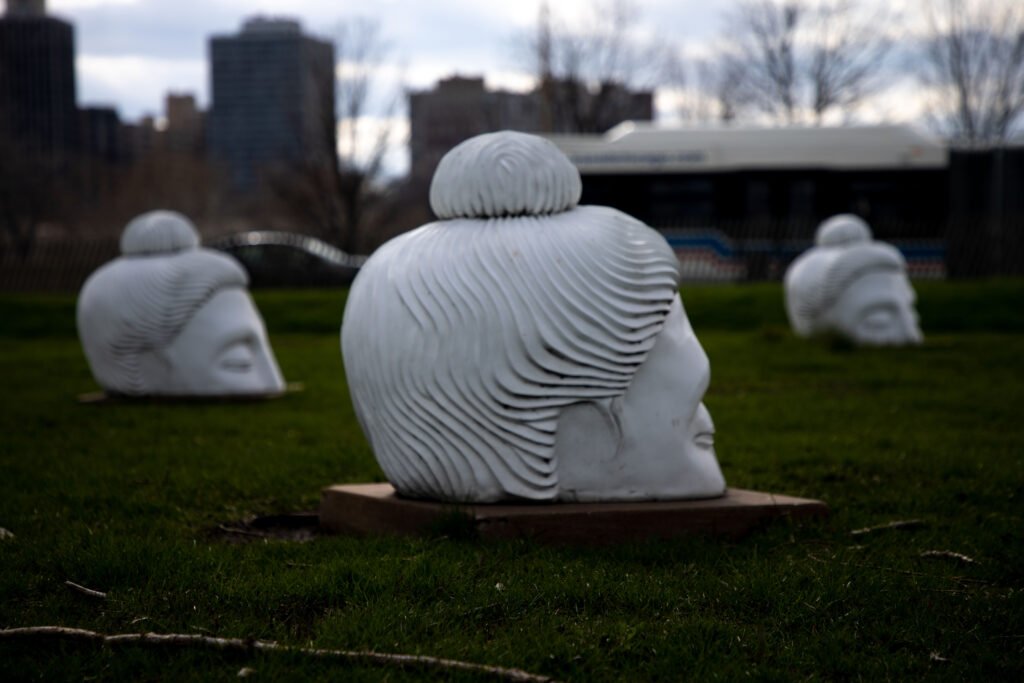
That experience reinforced something I've come to believe deeply: people need the opportunity to express disagreement. Giving communities the time and respect to voice their opinions was one of the most important reasons the project succeeded. The year of just talking to people was vital.
The project also involved us funding artists in each community to collaborate on specific problematic issues the residents chose themselves —some chose housing, while others chose health. For example, Pilsen organized a peace march to counter youth violence, Back of the Yards used the 2 Buddhas in front of Hedges School to create a neutral zone, and South Chicago traveled with one of their Buddhas to draw attention to the transformation of vacant lots into peace parks. The individual art projects were eventually gathered for a culmination exhibition at the Loyola University Museum of Art.
The 100th Buddha was installed in Little Village. Pastor Rodriguez wanted it placed in front of his church to remind parishioners to work for peace. The sculptures were welcomed, hugged, interacted with, ignored, debated, occasionally graffitied, and protected. Ultimately, they provoked questions, introspection, and conversation at a community level.
We permanently gifted 5 of the original Buddha sculptures to the communities and took back the rest because we wanted to share them with other communities and spark conversations elsewhere. However, the Chicago Park District invited us to create permanent installations in locations including Lake Shore Drive and Jackson Park.
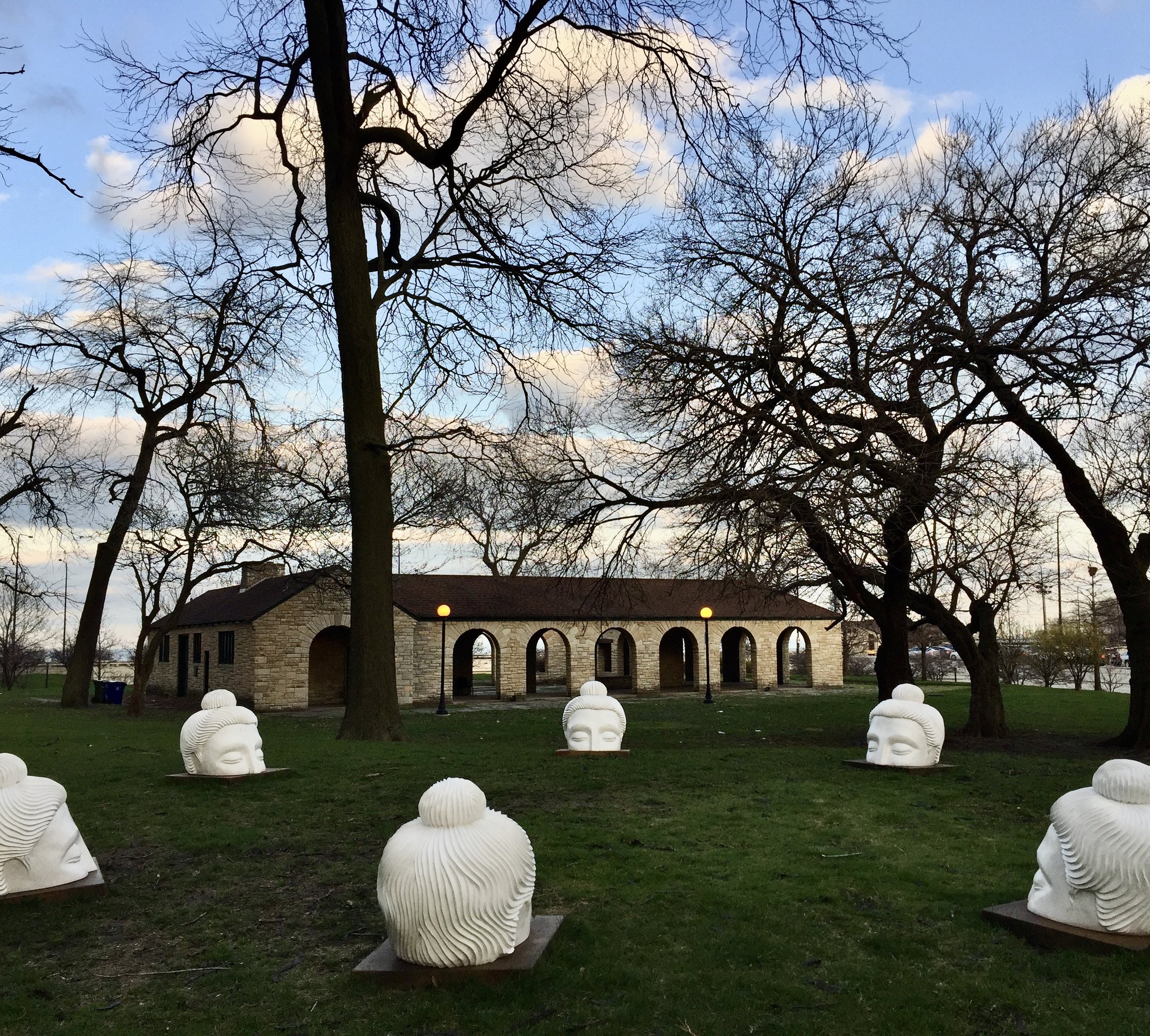
Jackson Park remains one of my favorite examples. The park committee invited us because, despite its beauty, people were afraid to use the park due to crime and drug activity. Though there is a senior center right across the street, the seniors never went into the park because they were afraid of the drug dealing. I attended one of the committee’s meetings with the Director of Changing Worlds and told them honestly “These are not magic sculptures. I wish they were, but you don’t just put them there and the negative activity goes away. They won’t change anything unless the community initiates the changes." As in other communities, we spent months working with residents and the youth before the installation.
When you see a circle of those Buddhas, they really are beautiful. They become a catalyst; people automatically want to keep them clean, and you’ll see passersby picking up garbage. Once the sculptures were in place, people began taking ownership of the space — neighbors gathered and the seniors who had once avoided the park returned. The sculptures were the catalyst but it was the community and their response to the Buddhas that transformed the park
Even today I receive messages from the park committee about new activities taking place there. This year we'll celebrate Peace Day at Jackson Park, and that feels like a beautiful continuation of what began all those years ago.
Across decades, you’ve transformed found objects, textiles, branches and even rifles. Beyond the act of assemblage, what draws you to materials that already carry histories and the act of transformation? What makes an object feel alive with possibility to you?
What draws me to these materials is that they possess a life before I ever encounter them. They have been touched, used, cherished, abandoned, or shaped by circumstances beyond themselves. They carry traces of attachment, rejection, regeneration, and the everyday experiences that often go unnoticed. Through my work, I seek to shift and disrupt traditional boundaries, questioning our perceptions of permanence and decay, strength and vulnerability, and the fragile relationships we have with the objects and materials that surround us. I am interested in listening to their histories and allowing the material itself to reveal possibilities that may not have been visible before.
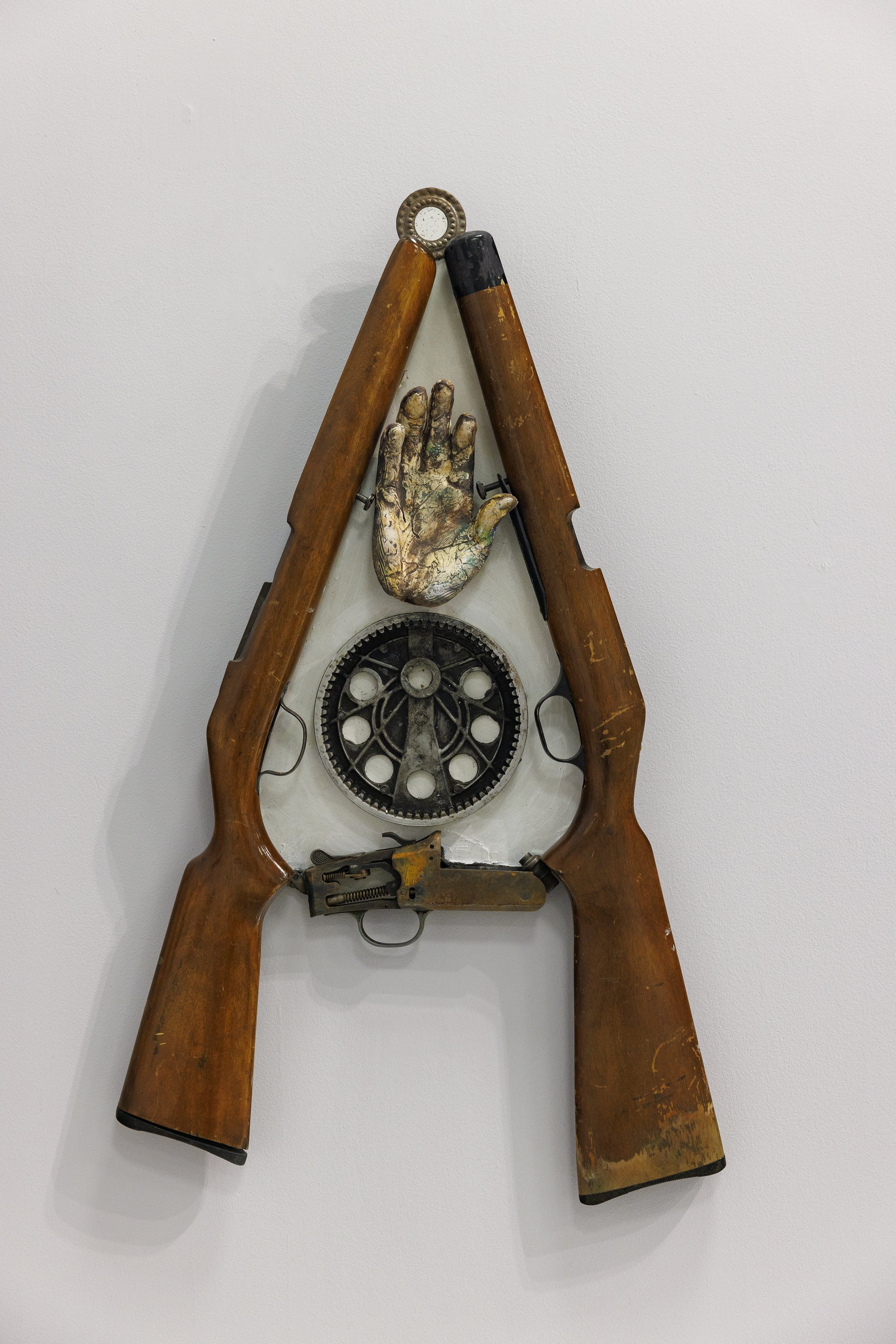
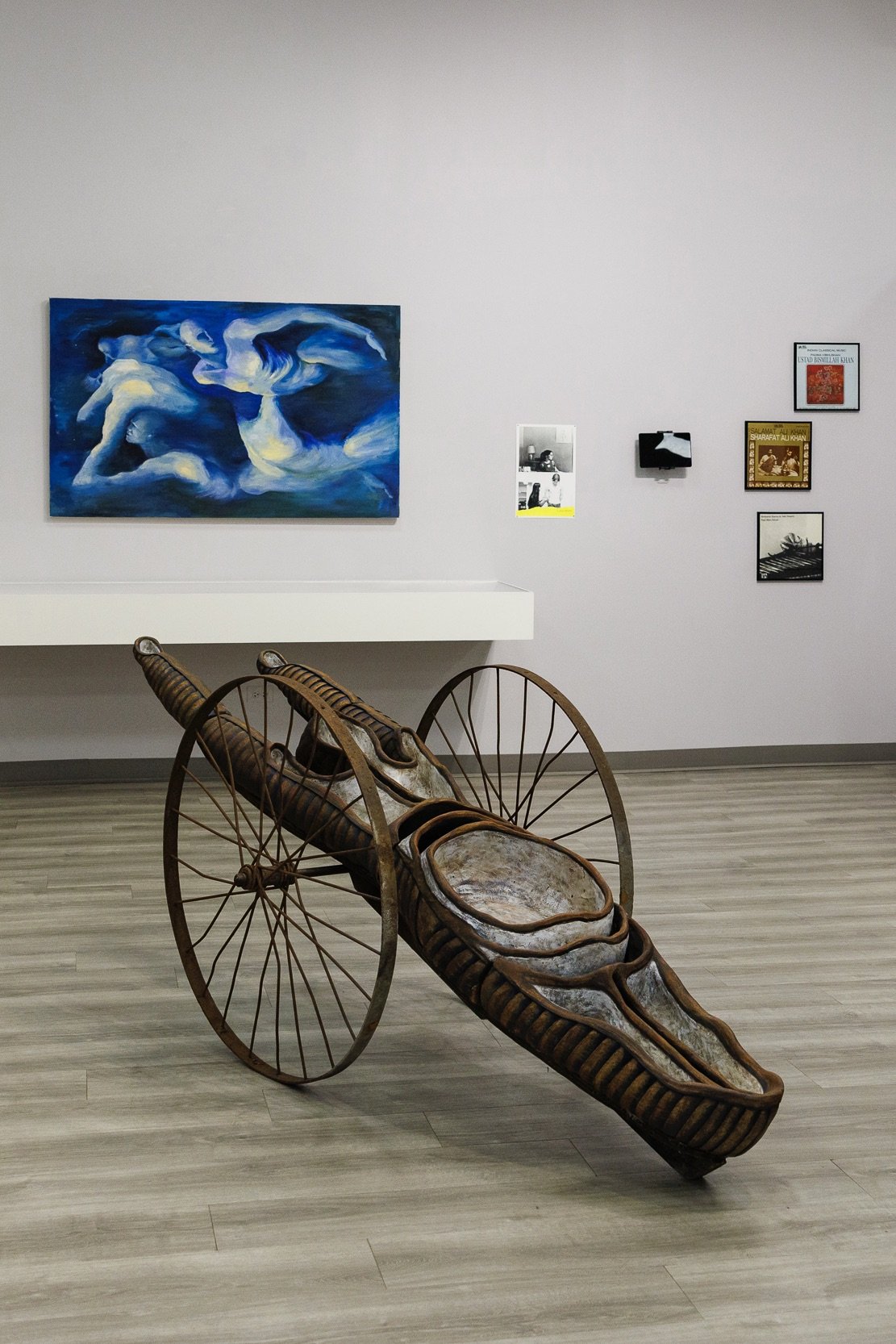
Transformation, for me, is not about erasing a history but revealing another layer of it. The concept of samsara—the continual cycle of transformation—has influenced the way I see materials and existence itself. Nothing is truly discarded; everything has the potential to become something else.
I am drawn to that moment of transition — the space between absence and presence, destruction and renewal, memory and imagination. I feel that my role as an artist is not to impose a new identity onto the material, but to create the conditions for its next story to emerge.
What is the importance of ritual in your work and in the way you think about art broadly?
My understanding of art has been shaped by a wide range of life experiences, but among the most influential have been South Asian female folk-art traditions. I encountered these traditions in a deeply personal way through my family’s four decades of involvement in the Golibar slum of Mumbai, my yearly visits there, and my residency in the villages of Mithila in Northern India. These experiences taught me a different understanding of art—one in which creativity is woven into daily life, where process is as significant as the final form, and where making becomes a form of sadhana, a path toward grace and connection.
Ritual has always been central to my work because it creates a space for reflection, connection, and transformation. Growing up in India, I was surrounded by rituals that marked life’s passages—birth, death, remembrance, and renewal. These practices taught me that art is not separate from life, but a way of honoring our relationships to each other, to nature, and to the cycles of existence.
I have carried these understandings into my own practice, transforming personal and cultural rituals into collective experiences. Through projects that invite participation—creating a rangoli or toran, making an offering to a river or lake, or leaving a footprint—participants engage in shared acts of remembrance, healing, and connection. These gestures create temporary sacred spaces where communities can reflect, honor memory, and recognize our interconnectedness.
The rituals and traditional forms that inform my installations and community projects are not replications of the past, but evolving practices that explore the transitory nature of life, the power of collective action, and the possibility of transformation.
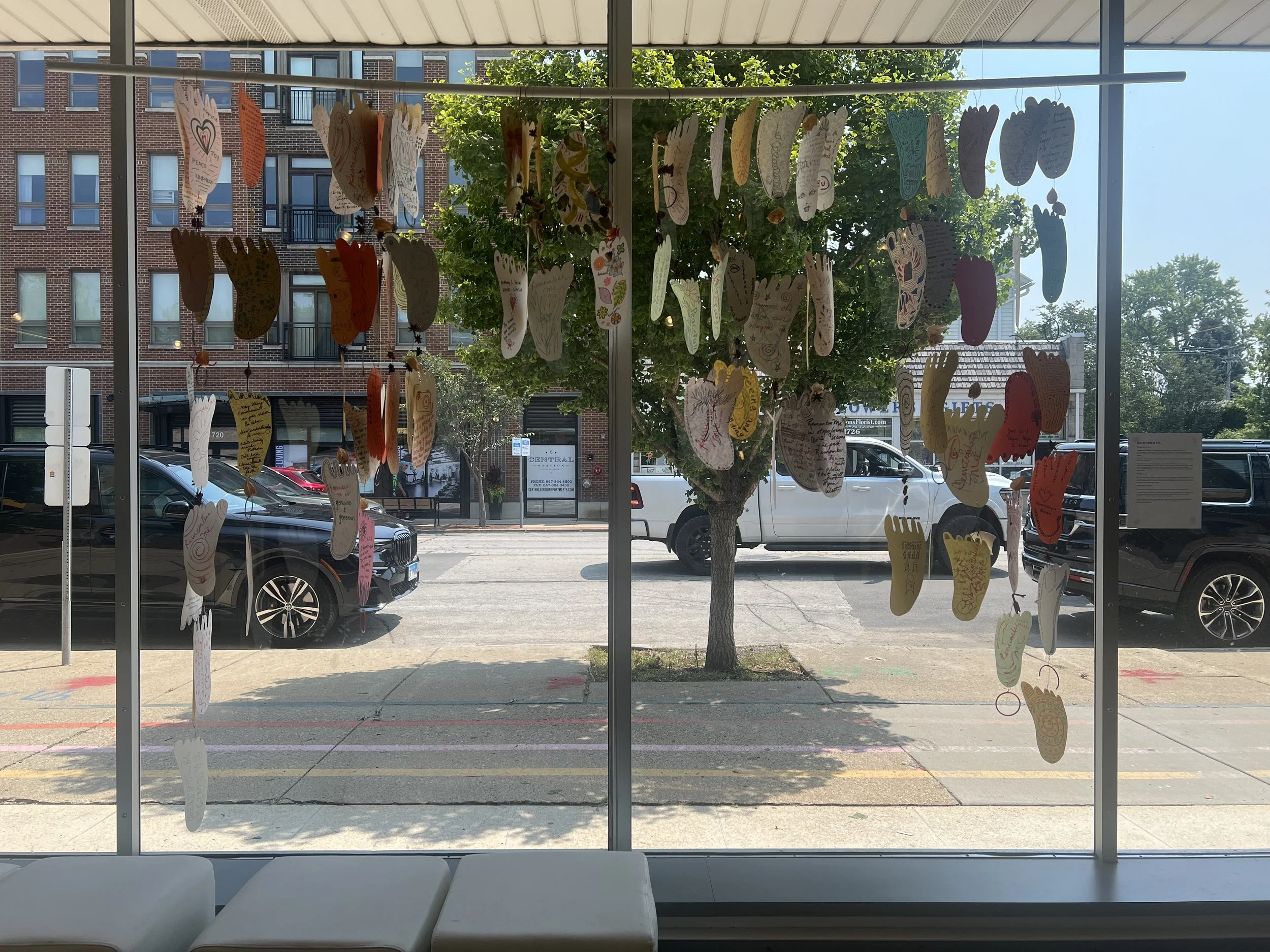
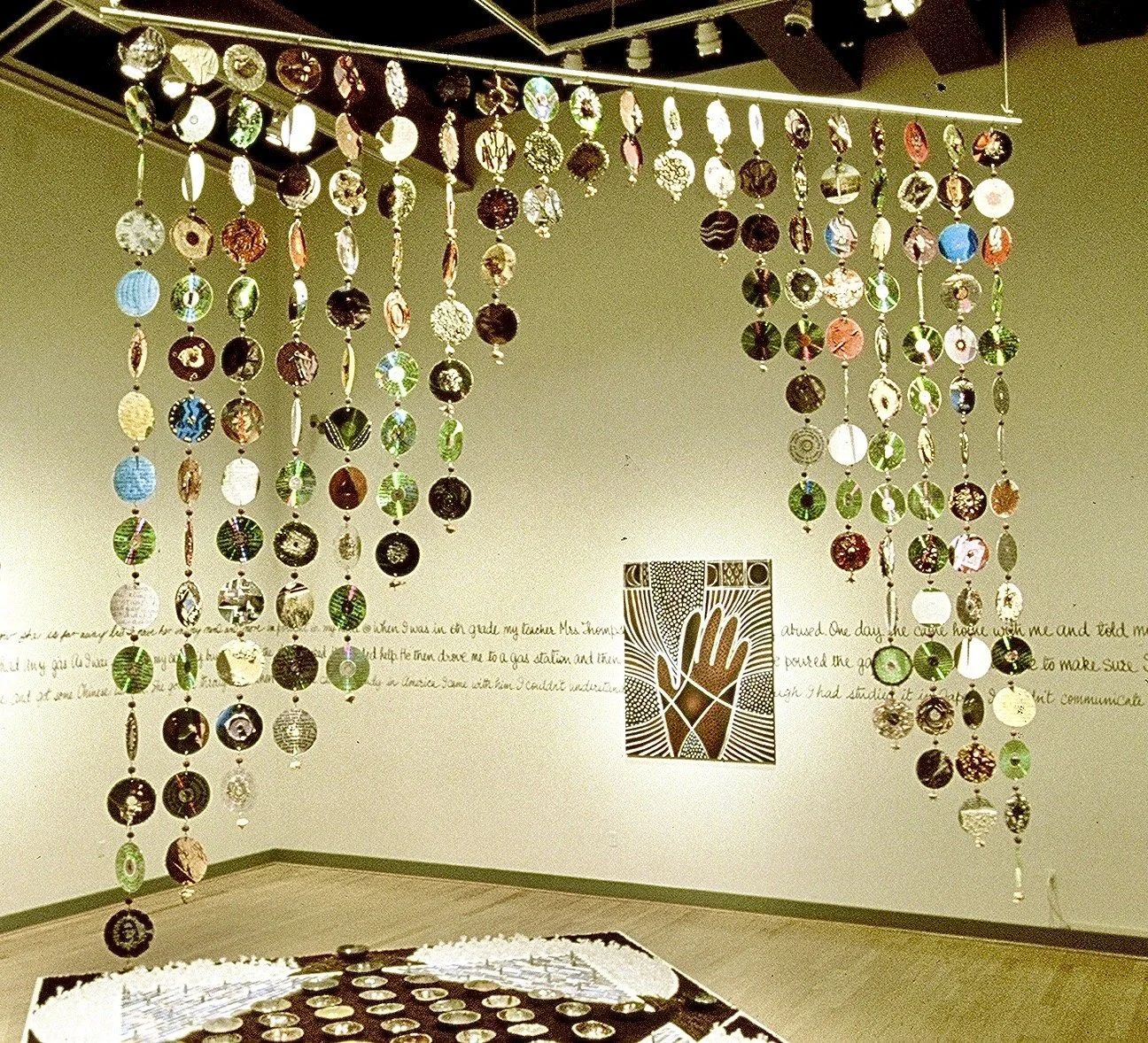
Your work often draws on South Asian traditions while using universal symbols — such as hands and feet — to speak a language everyone understands. However, you’ve mentioned a previous hesitation about being “boxed in” as a South Asian artist or even as a ceramicist. How do you balance your cultural background and family traditions coloring what you do with the larger universal aims you want to achieve?
When you grow up with these traditions you don’t even think of it as South Asian specifically. I use torans in my work and for other forms, getting people to understand the concept behind them has been the most important thing. I have actually taken several traditions that are traditionally rooted in South Asian culture or more family traditions and transformed them into community traditions. For example, Rangoli is mostly a family tradition, but I have used it in community work. The first one I did was right after 9/11 when everyone was suffering. We did a large Rangoli in the center of Evanston, and I called it Community Blessings. That’s the name I now use for the Rangoli because the community is invited to participate and then talk about what they do.
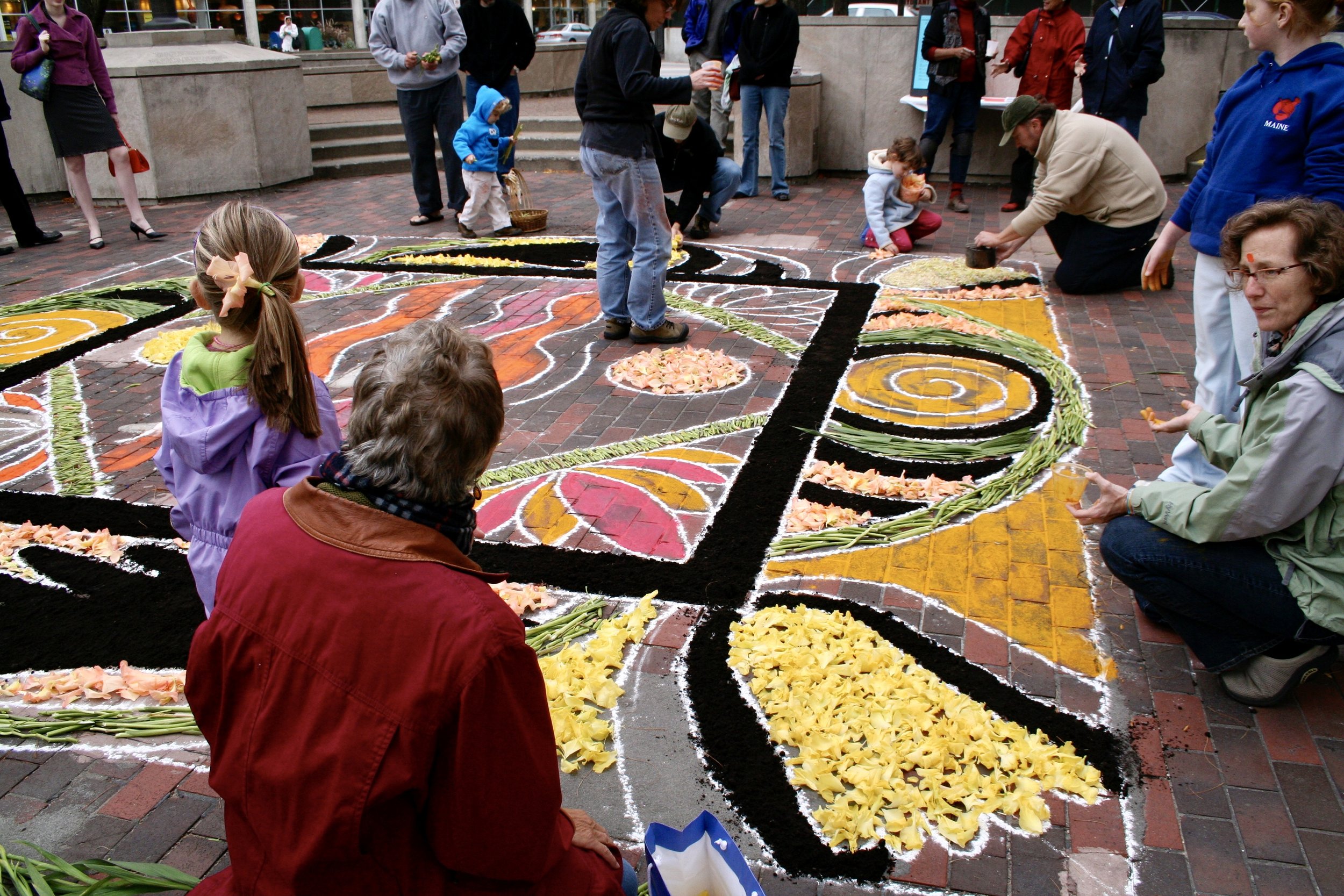
I do one at the Cultural center every year at the time of the Ragamala Festival. I like doing them outside too as I love seeing people work so closely together. Often the initial reaction for a lot of people is “I’m not an artist.” But because they are putting flowers or earth on the ground, rather than drawing, they’re not as inhibited. They start to work on a small area, then step back and see how everyone has worked together to create a beautiful whole. We then all walk over it, and it represents a tradition of trying to understand the cycle of life.
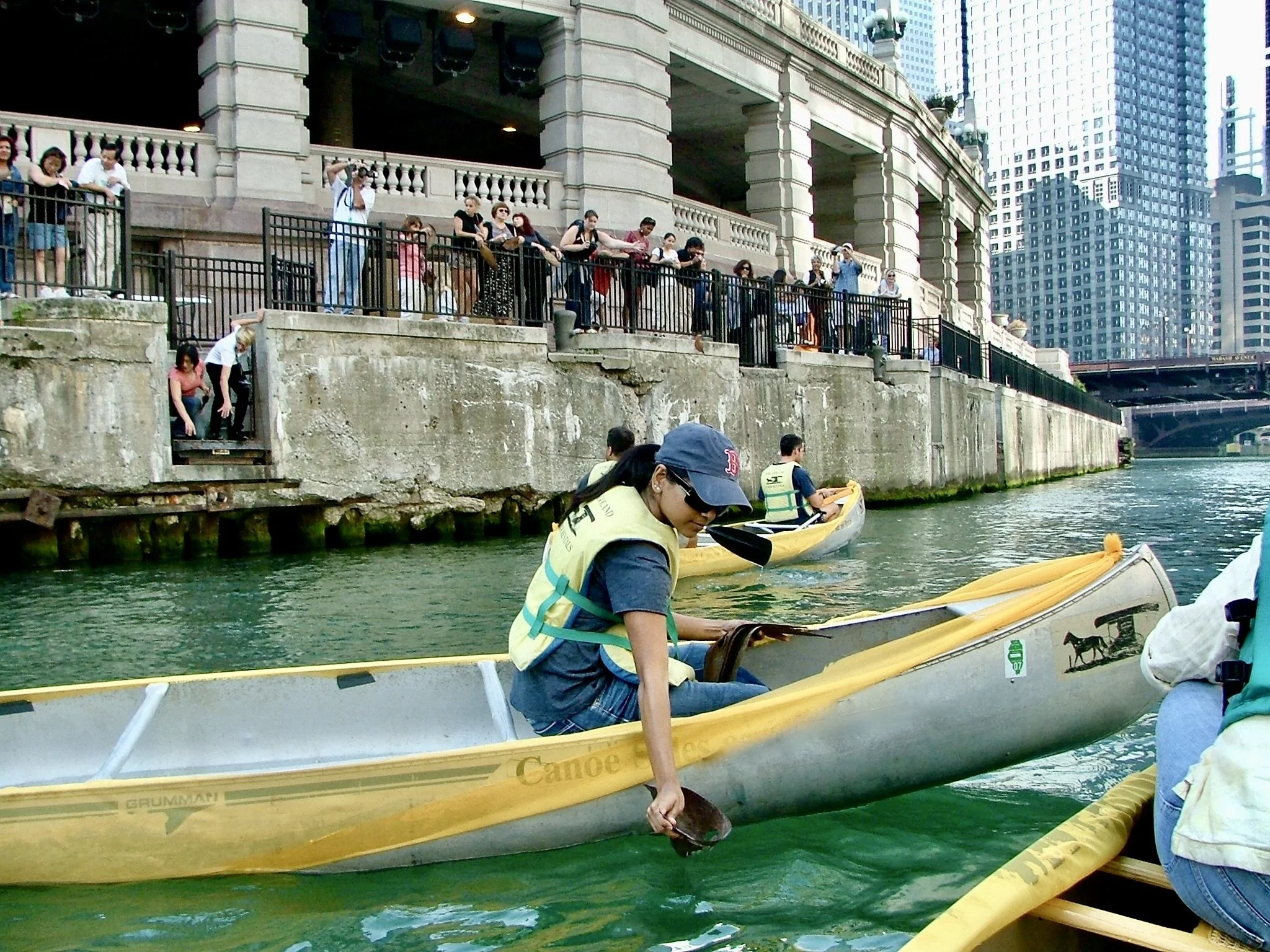
Another tradition I’ve continued is what I’m calling “Writing on Water.” Throughout South Asia, there is a tradition of placing offerings into the seas and oceans, perhaps floating an offering to a particular goddess in the river to ask for a blessing. We have floated these offerings in the Chicago River, usually on Water Day. It brings people together and makes them think about intention and the power of thought. Bringing leaves and flowers together and seeing them float away is a very spiritual experience for me, and I see how it affects other people as well.
I think we’re fortunate to be given the opportunity to be artists and that in some fashion, everyone is an artist. When you decorate your house for Thanksgiving or Diwali, you don’t think of yourself “as being an artist,” and just decorate with the things you like. My projects simply give people an opportunity to think and respond in some fashion and that can be art. Even on my latest community mural in Evanston, it made people think “How do I want to be remembered?”
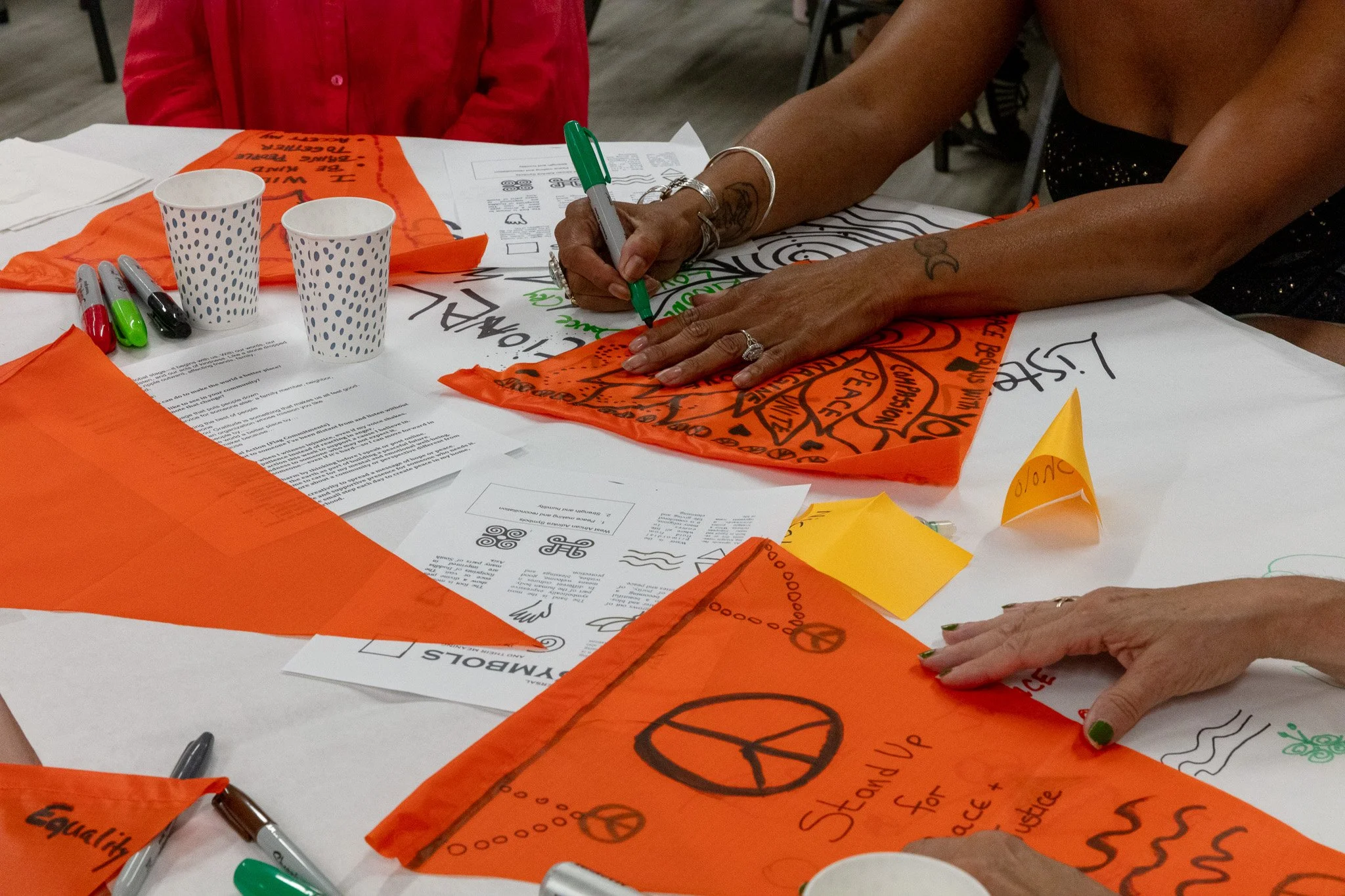
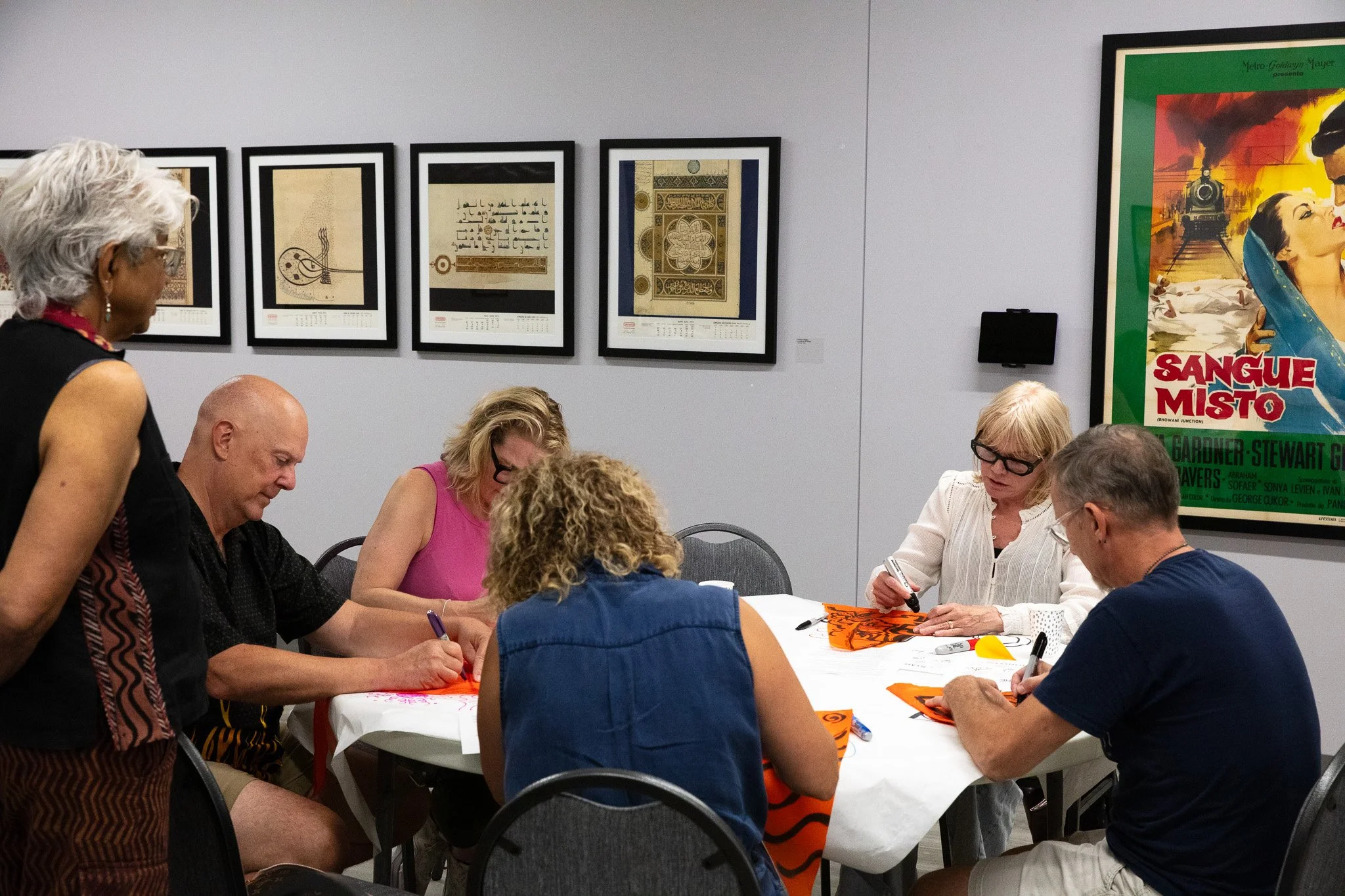
That mural clearly deals a lot with memory and legacy but throughout your work, you’ve tried to incorporate your own subjective memory as well as collective community history. How has memory influenced or impacted your artistic practice?
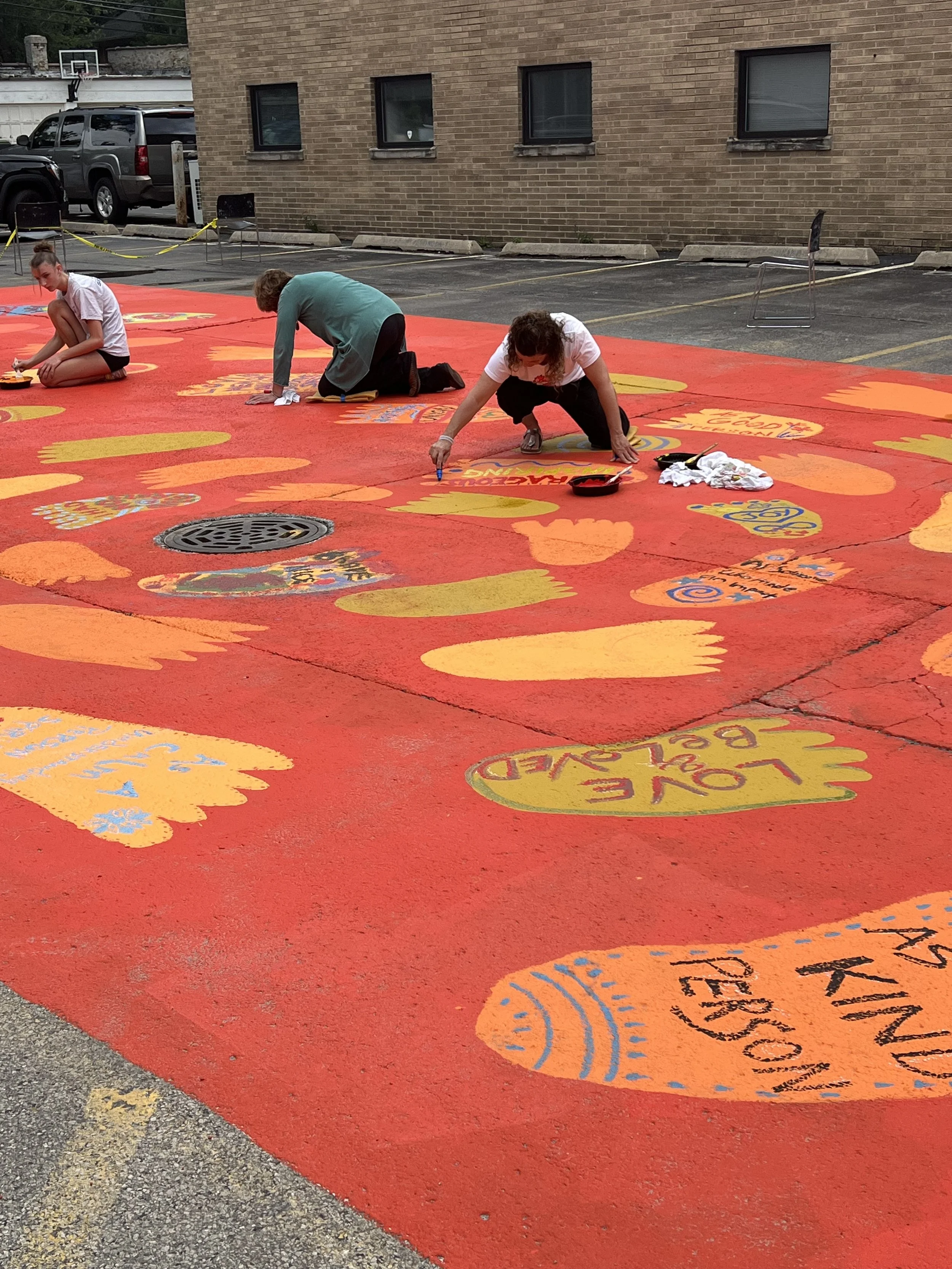
As I am getting older, memory has become much more important. I think of the things that brought us together as a family; I have a very close family, and two of my sisters live in Evanston with me.
When we come together to celebrate, I feel nostalgic for the kind of community I knew in Mumbai. In Chicago, people move all the time, whereas in Mumbai, people pretty much lived and died in the same house. You really had a sense that you belonged there. You said good morning to everyone you passed on the street and called everyone “auntie” or “uncle.” When I first arrived in the U.S., I missed that. For me, my work is perhaps a longing for community and a desire to be part of something larger and maybe that is where the memory is tied to.
You explored these themes in your exhibition, BeLonging/Belonging where you said that finding peace with oneself is how you truly feel a sense of belonging. Has that journey become easier over time?
Existing in an “in-between” space has become more comforting. It doesn’t happen as often now but people would ask “Where are you from?” When I would answer “Evanston,” they would inevitably follow up with, “No, where are you really from?” Even when talking to my friends here, they sometimes refer to things they grew up with that I have no clue about because we don’t have that shared history. In those moments, you realize you aren’t fully a part of that particular narrative
For me the question then shifted from “Where are you from” to “Where do you want to be?” That realisation was an eye opener for me. I used to go to India every year and on the way from the airport to our house, I used to think “How did I ever leave this place?” but two weeks into the stay, I’d feel that I had to get out. You see how you’re in an in-between space—not quite here, and not quite there. Learning to find peace within that space is how I’ve developed my true sense of belonging.
After reflecting on belonging as something you've had to cultivate over time, I'm curious about the place where that happened. How did Chicago or Evanston shape you as an artist? Were there any specific communities or spaces that helped you?
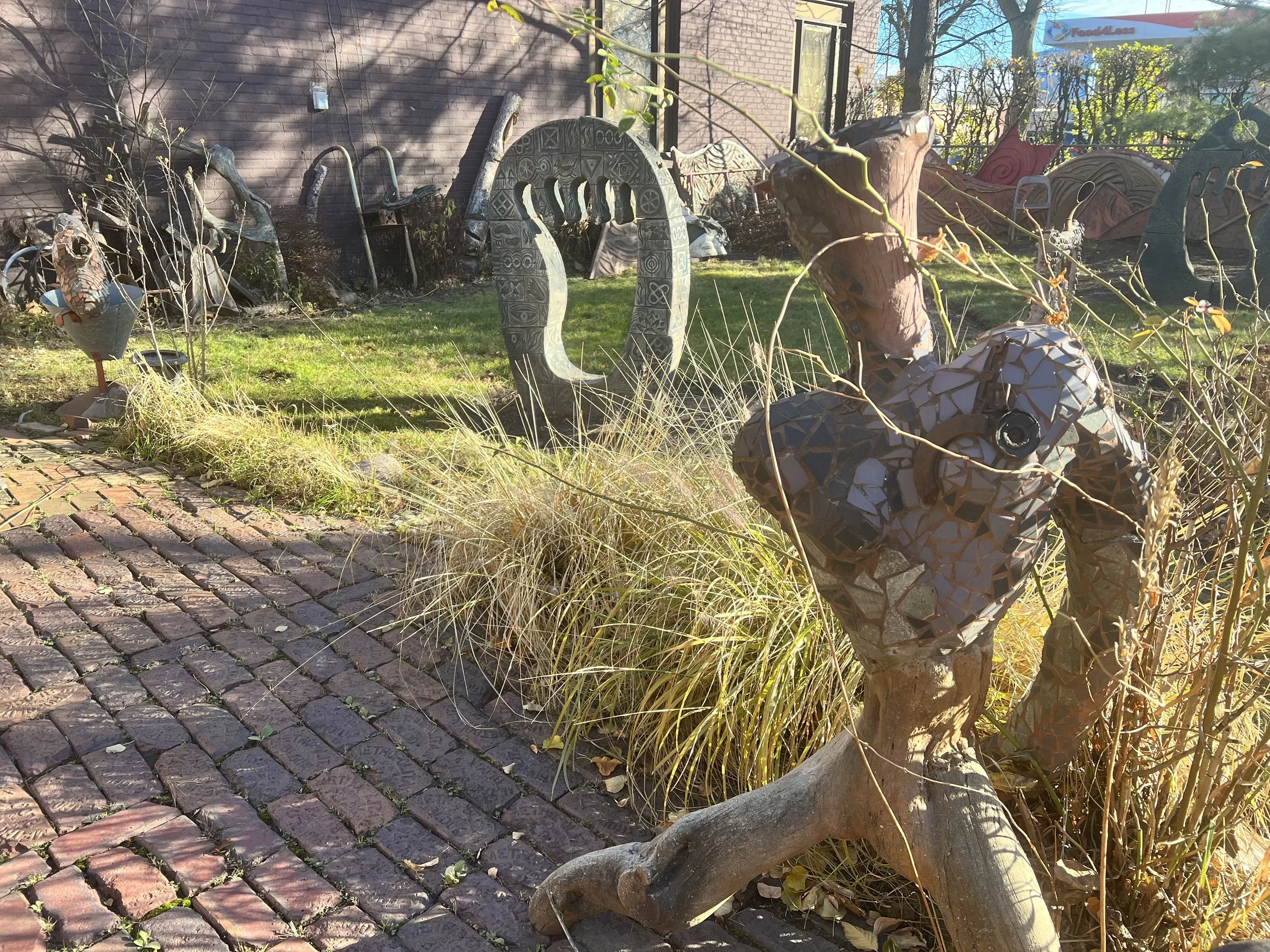
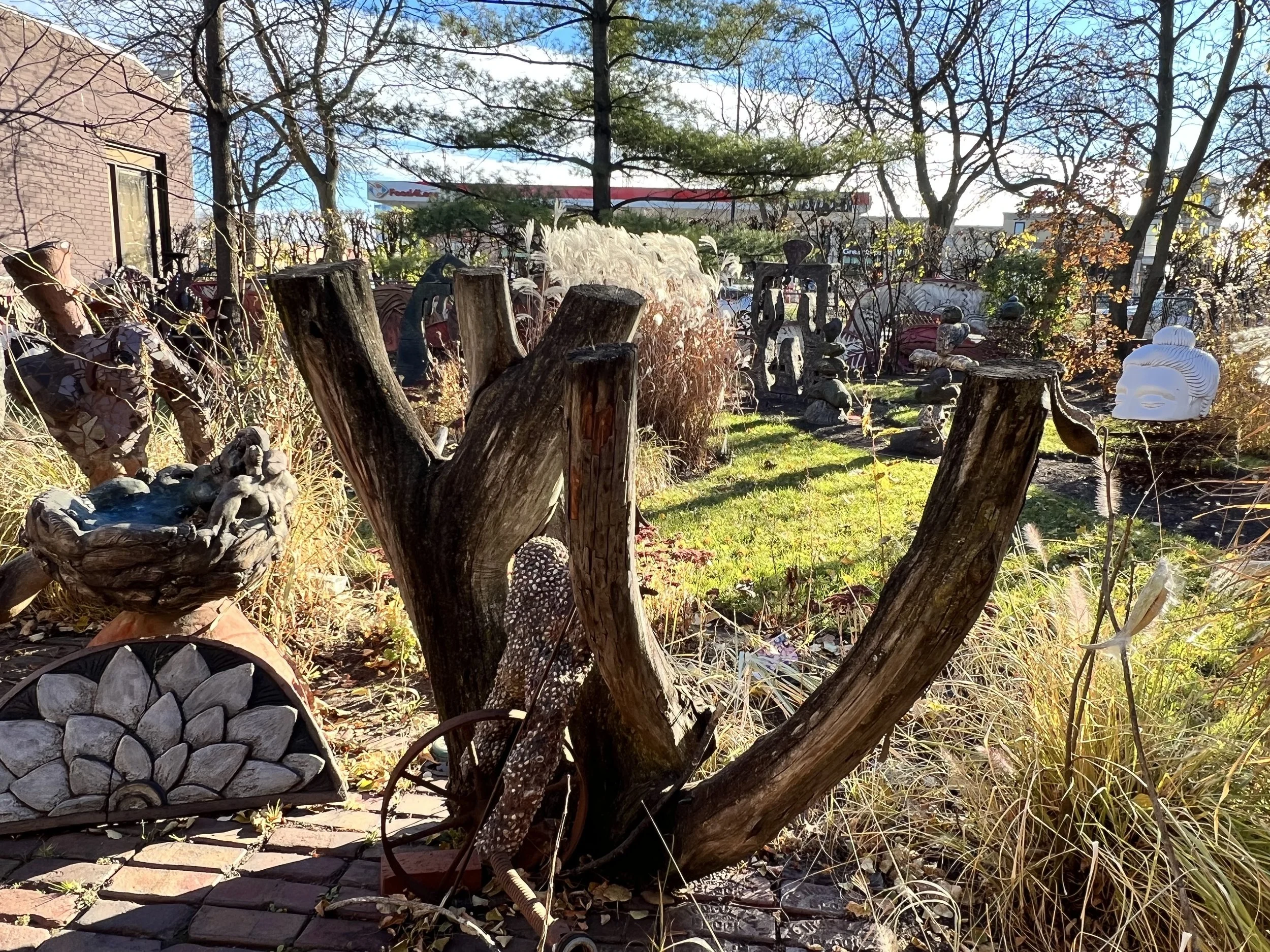
There were a number of neighbors who helped me right in the beginning in just introducing me to different people. When we first moved to Evanston, I was not as vocal or outgoing as my husband, but the neighborhood really welcomed me. We were taught to just keep trying to get what you want — if you can’t get it one way, look for it in another way. Chicago was very accessible in that way. If you knew one person, they introduced you to another, and that gave you a lead into something else. It was very easy to get into the community here.
You’ve worked hands-on training artists through the Shanti Foundation and with Marketplace: Handwork of India through which you’ve engaged in collective labor with artisans in Mumbai. Thinking about those experiences and beyond, how do you define an artist’s responsibility towards their communities or the broader world?
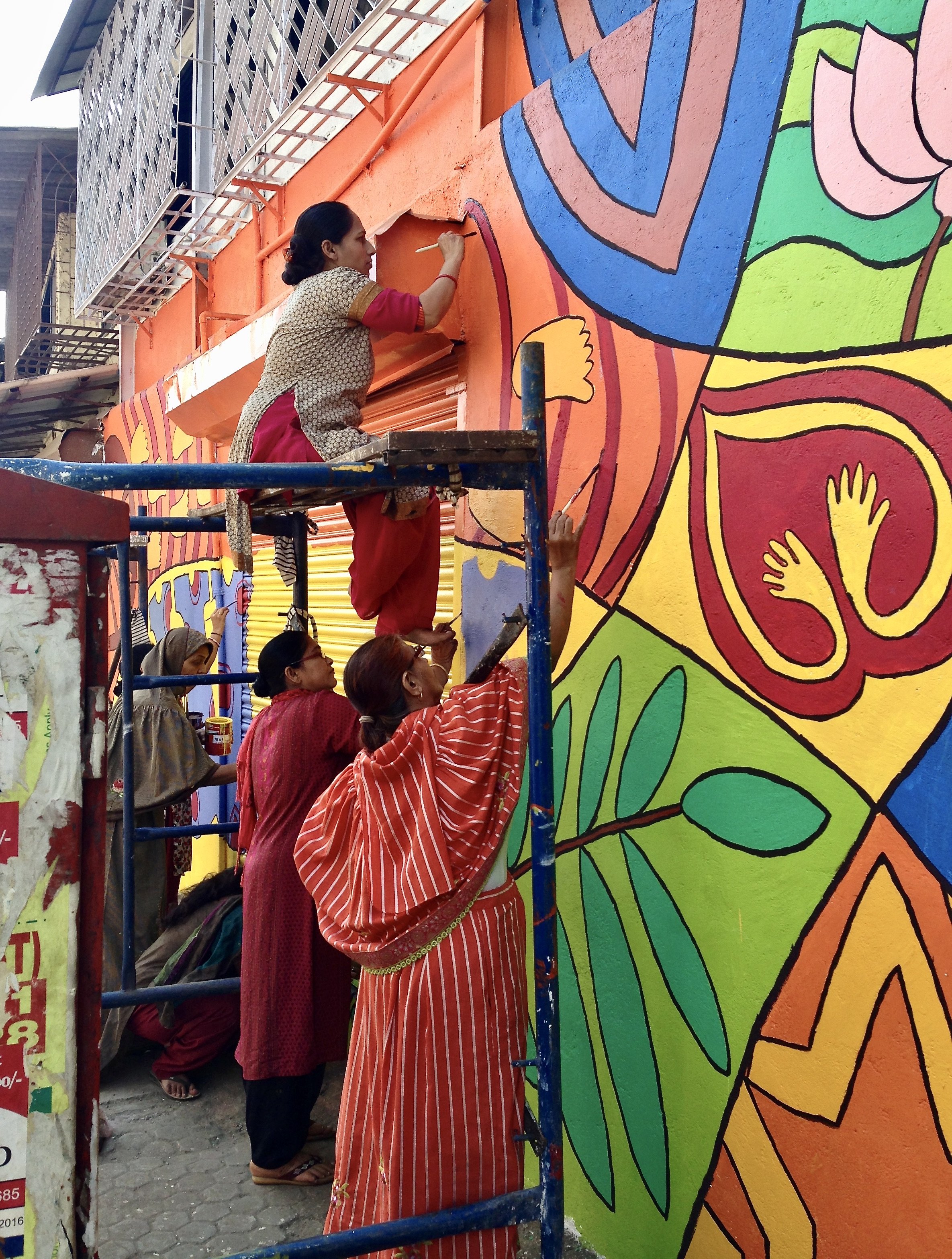
I have always believed that an artist is not separate from the community but deeply connected to it. My work with the Shanti Foundation and Marketplace: Handwork of India taught me that creativity is a collective act—one rooted in respect, exchange, and shared labor. Working alongside artisans in Mumbai, I learned the Gandhian idea of volunteerism—the dignity and value of working together—and understood that the hands that make are also the hands that carry history, culture, and wisdom.
As the Founder and Executive Director of the Shanti Foundation, I saw the similarity between the basic concepts of art and nonviolence practice. Our philosophy Nonviolence Through the Arts was embraced by teachers and students in the Chicago and Evanston Public schools.
For me, an artist’s responsibility is to listen, to create spaces for dialogue, and to build connections. Art is not only about personal expression; it is a way of honoring stories, bringing people together, and reminding us of our shared humanity.
What advice would you give to younger generations of South Asian American artists?
Most of all, to not let someone else define you. You have to be committed to your vision and understand that if you want to do something, you can. If you cannot do it by yourself, then you can get someone else to help you do it, but you must stay committed. I wish I had learnt that earlier on.
You have often noted that your work deals with growth toward a spiritual existence as part of a human continuum. How does personal transformation and social transformation intersect and inform one another in your practice?
For me personal and social transformation are deeply connected. Our inner journeys—through loss, healing, compassion, and awakening—shape how we engage with the world and with one another.
Much of my work explores cycles of life, death, and rebirth, not as endings but as opportunities for transformation. I believe that meaningful change begins within us, but it does not end there. Through projects like Ten Thousand Ripples, I have seen how a shared artistic experience can create moments of connection and reflection. For me, art becomes a bridge between inner transformation and collective healing—a reminder that our personal journeys are always part of a larger human continuum.
Through my art, I hope to create moments of connection and reflection where personal transformation becomes part of a larger collective healing and a shared human journey.
Your upcoming exhibition Presence and Absence: The Space Between and even older works like Love Letters on cholis and the Death and Rebirth series, are concerned with loss, remembrance, and spiritual continuity. How do you understand loss and its influence on the formation of the self? More broadly, how do “absence and presence coexist” for you in both your artistic process and your understanding of spiritual, cultural, or emotional continuity?
Loss, for me, is not an ending but a deep reshaping of who we are. It becomes part of the self—held in memory, in the body, and in how we move through the world. My work often returns to this space where absence is not empty, but active.
My work explores this space between presence and absence—the place where memory, imagination, and transformation meet. In Love Letters on Cholis and my Death and Rebirth series, I was interested in how objects can hold traces of lives, relationships, and experiences. The materials become vessels for remembrance, allowing what is gone to continue in another form.
Presence and absence coexist because what is no longer physically here still continues to live through remembrance, relationship, and ritual. In that sense, absence carries presence within it.
In my process, I work in that in-between space—where materials, gestures, and stories hold what is gone while also revealing what continues.
Looking back across your body of work, what continuous threads do you see connecting your practice from its earliest stages to today?
Wanting community is always there and of non-violence as a way of being. I always tried to teach that you don’t just say one day “now, I’m going to be nonviolent.” It’s something you do automatically and do often enough until it is your only response.
I think the way we think of kindness also needs to be thought of on a broader scale. It’s what makes everything function — being kind not just in our actions but in our thoughts. When I look back at my older figurative work, the conceptual idea behind it is very similar to what I’m doing now. The work or medium has changed, but the thoughts running through it have stayed the same.
You have spent decades weaving your practice into the landscape of Chicago and Evanston with your public art and community work centering civic dialogue. How do you imagine your legacy on the city? What do you hope your body of work says about the relationship between personal memory and collective history?
I don’t think of legacy as something fixed or monumental. I hope my legacy is not only the objects I have created, but the connections and conversations that have grown around them. Throughout my practice, I have believed that art belongs in the public realm—not just as something to be viewed, but as something that can bring people together, encourage dialogue, and create a sense of shared belonging.
Working in Chicago and Evanston has shown me the transformative power of community. Projects like Ten Thousand Ripples and other public art initiatives have taught me that collective participation can transform both a place and the people within it. The artwork becomes a container for many voices, memories, and experiences becomes part of the lived fabric of the city—something people remember through experience, participation, and encounter rather than authorship.
Through my work with the artisans of Marketplace Handwork of India, I hope I have helped women recognize their own creativity, agency, and collective strength.
What I hope my work holds is the idea that personal memory and collective history are always intertwined. A single story, a gesture, a footprint, a flag—these are individual acts, but when they are shared in public space, they begin to accumulate into something much larger. If there is a legacy, I hope it is that art can make space for those overlaps—where private remembrance becomes part of public life, and where a city can hold many layered histories at once.